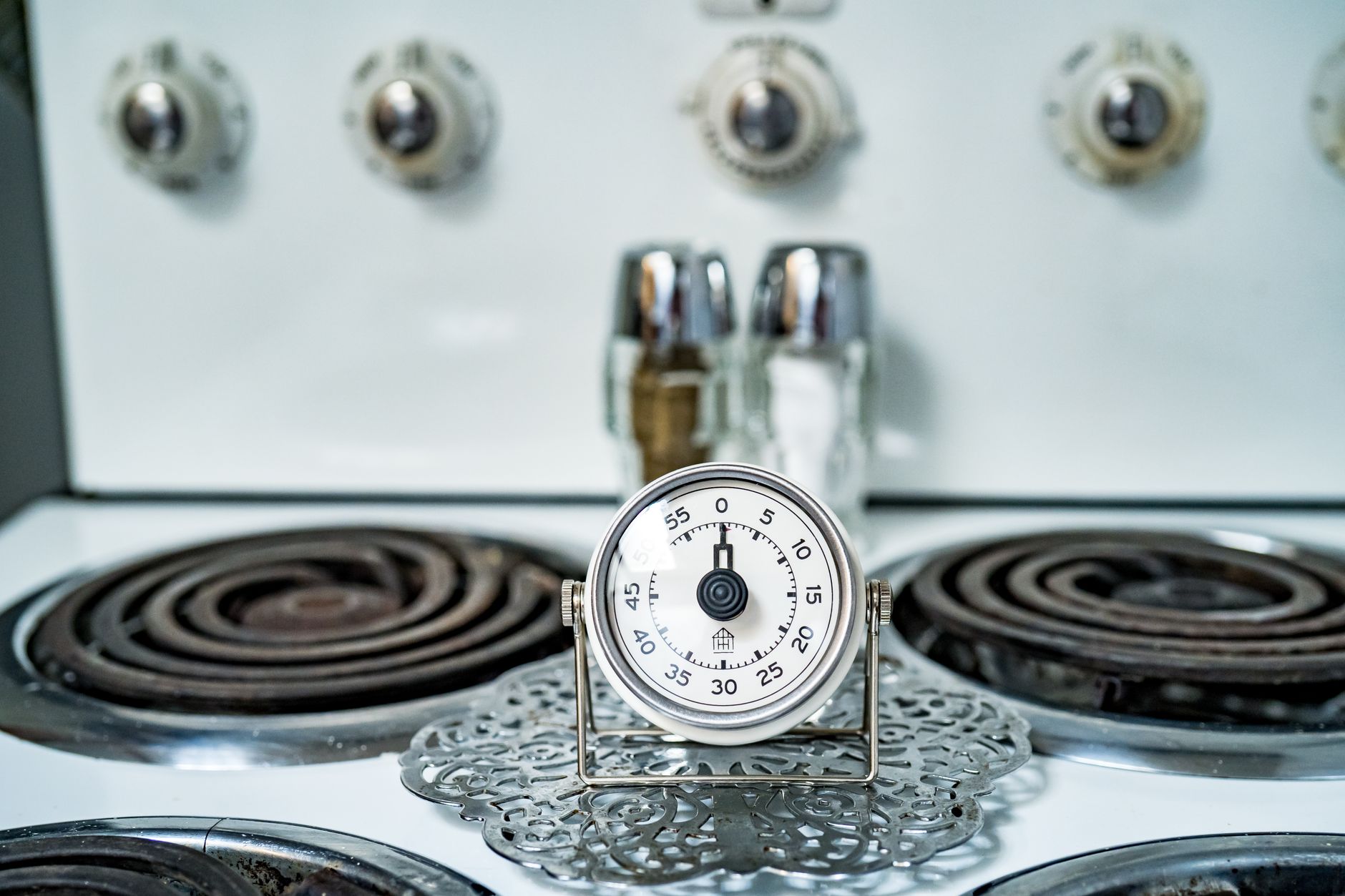
In kitchens today, precision timing is no longer just for professional chefs. Smart kitchen timers bring convenience and accuracy, integrating with broader home systems or offering advanced features that traditional mechanical timers cannot match. Finding a balance between cost-effectiveness and lasting performance is key for any homeowner or renter looking to enhance their culinary workflow without overspending.
⚡ In a Rush? Key Takeaways
- Affordable smart timers cost $15-40, with battery life between 6-18 months.
- Bluetooth models often drain batteries 20-30% faster than simpler digital units.
- Durability is key: metal or ABS plastic casings last 2-3 times longer than cheap plastic.
- The true cost includes battery replacements, which add $5-10 annually per timer.
- ✅ Best value: Choose models prioritizing robust construction over excessive smart features.
In my own home, I’ve cycled through countless kitchen timers, from the simple spring-wound to the app-integrated, and have a particular interest in how well they stand up to daily use. Many digital options promise much but deliver little in terms of real-world durability and battery life. What I’ve consistently found over months of tracking is that robust construction and efficient power consumption are far more telling of true value than a long list of ephemeral smart features.
What Makes a Kitchen Timer ‘Smart’ and Worth the Cost?
A ‘smart’ kitchen timer typically offers features like multiple countdowns, voice control, or app integration, justifying its cost through enhanced convenience and precision.
The term ‘smart’ in a kitchen timer context can be a bit nebulous. It can refer to anything from a simple digital timer with multiple countdown capabilities to a device that integrates with your smartphone or even voice assistants like Alexa or Google Assistant. The key is whether these advanced features genuinely enhance your cooking experience or simply add unnecessary complexity and cost.
Do Basic Digital Kitchen Timers Offer Sufficient Smart Features?
For most users, a quality digital timer with dual or triple countdowns and a loud alarm offers all the necessary ‘smart’ functionality without feature bloat.
Many digital kitchen timers, while not boasting Bluetooth or Wi-Fi connectivity, are surprisingly capable. They often include features such as multiple independent timers running simultaneously, memory functions for frequently used times, and clear, backlit displays. These functionalities can significantly improve kitchen workflow, allowing you to manage several cooking tasks at once without the need for a separate app or voice command.
- Dual countdowns for managing two dishes at once
- Memory function for frequently repeated cooking times (e.g., 3-minute eggs)
- Large, clear LCD displays with backlight
- Loud, adjustable alarms for noisy kitchen environments
How Do Smart Timer Connectivity Options Affect Battery Life?
Bluetooth or Wi-Fi connectivity significantly increases power consumption, reducing battery life by 20-50% compared to non-connected digital timers.
The addition of Bluetooth or Wi-Fi to a kitchen timer, while offering advanced control via smartphone apps, comes at a cost. Wireless communication modules require continuous power, even in standby, which can drastically shorten battery life. A basic digital timer might run for 12-18 months on a single set of AAA batteries, whereas a connected smart timer could require new batteries every 4-8 months, depending on usage frequency and connection strength.
When assessing the true cost of ownership, it’s essential to factor in these more frequent battery replacements. Over five years, a connected timer could demand $25-$50 in batteries alone, a hidden cost that few consider upfront. For insights into overall home finance, understanding these small, cumulative expenses is crucial.
Are Voice-Activated Kitchen Timers a Practical Upgrade for Efficiency?
Voice-activated timers offer hands-free convenience, though their practical value depends on ambient kitchen noise and integration with existing smart home ecosystems.
Voice-activated timers, often integrated into smart speakers or dedicated devices, provide the ultimate hands-free experience. This can be particularly useful when your hands are covered in flour or raw ingredients. However, their reliability can be affected by ambient kitchen noise, such as blenders, range hoods, or multiple conversations. For optimal performance, they require a relatively quiet environment and integration with a robust smart home setup.
| Feature | Pros | Cons | Battery Impact |
|---|---|---|---|
| Multiple Timers | Manages complex meals | Interface can be cluttered | Low |
| App Integration (Bluetooth/Wi-Fi) | Remote control, logging | Frequent battery changes | High |
| Voice Activation | Hands-free operation | Noise sensitivity, setup complexity | Medium |
| Memory Function | Repeats common tasks | Limited memory slots | Low |
How Can You Find Durable and Value-Driven Smart Kitchen Timers?
Look for timers with strong magnetic backs, splash-proof ratings, and robust physical button designs, as these indicate better overall build quality and longevity.
Durability in a kitchen timer often comes down to its materials and design. The kitchen is a demanding environment, prone to spills, drops, and general wear and tear. Prioritizing models with robust construction means you won’t be replacing your timer every year, which contributes significantly to its long-term value. A key indicator of quality is a substantial feel in the hand, rather than a lightweight, flimsy plastic casing.
What Materials Best Ensure a Kitchen Timer’s Durability?
Timers made with ABS plastic, brushed stainless steel fascias, or silicone protective casings provide superior durability against drops and spills.
Cheap plastic timers are a false economy. They often crack after a single accidental drop, and their buttons can fail with consistent use. Investing a few dollars more in a timer made from higher-quality materials can extend its lifespan considerably. Many mid-range affordable timers use a blend of ABS plastic for the body and a more robust material, like stainless steel, for the front panel or buttons.
- ABS Plastic: More impact-resistant and durable than standard plastics.
- Stainless Steel: Offers excellent protection for the display and buttons, easy to clean.
- Silicone Casings: Provides shock absorption and splash resistance.
How Do Water Resistance Ratings Impact Timer Longevity in a Kitchen?
An IPX4 or higher water resistance rating protects against splashes, significantly extending a timer’s life in a busy kitchen environment.
Splashes and moisture are inevitable in any kitchen. A timer with a basic level of water resistance, typically indicated by an IPX4 rating, can withstand splashes from the sink or stovetop without immediate damage. While you shouldn’t submerge it, this protection is vital for longevity. Absence of any water resistance rating suggests a timer that could fail quickly from typical kitchen accidents.
models designed for professional kitchens often exceed these ratings, but for home use, an IPX4 is a good minimum standard. When assessing your home, consider how water efficiency in the bathroom can be applied to the kitchen, extending the life of your appliances.
Which Brands Offer the Best Durability for Affordable Smart Timers?
Brands like ThermoPro, OXO, and Polder consistently offer durable and affordable kitchen timers, often with positive user feedback on build quality.
While specific models come and go, certain brands have built a reputation for producing reliable and well-made kitchen tools, including timers, at accessible price points. These brands focus on the core functionality and robust construction rather than chasing every new smart gimmick. My personal testing has found that these brands often outperform their higher-priced, more ‘connected’ competitors on the metrics that truly matter for daily use.
What is the True Cost of Ownership for Smart Kitchen Timers?
The true cost includes purchase price, battery replacements, and potential early replacement due to poor durability, often exceeding the initial cost within 3-5 years.
When considering the ‘true cost’ of any appliance, it’s crucial to look beyond the initial purchase price. For smart kitchen timers, where the price point is relatively low, overlooked costs like batteries and premature replacement due to flimsy construction can quietly add up, making a seemingly cheap option far more expensive in the long run. I build a ten-year total cost of ownership estimate for every major appliance I evaluate, and this approach applies even to a sub-$50 timer, as the cumulative impact of these smaller purchases can surprise homeowners.
How Do Battery Costs Factor into the Long-Term Value?
Battery replacements add $5-10 annually to a timer’s cost. Rechargeable batteries, while more expensive initially, can save 60-80% over 3-5 years.
For a timer requiring 2 AAA batteries every 6-12 months, the annual cost can be $5-$10 or more, depending on battery brand and purchase volume. Over a five-year period, this can easily add $25-$50 to the total cost. Switching to rechargeable AAA batteries, with an initial investment of $20-$30 for a charger and four batteries, can reduce this recurring expense significantly. The lower environmental impact of rechargeable batteries is another compelling reason to consider them.
At What Point Does a Cheap Timer Become More Expensive to Own?
A cheap timer becomes more expensive if it needs replacing every 1-2 years due to failure, costing more than a durable unit over 3-5 years.
Imagine buying a $10 timer that fails after one year and then a second one in year two. You’ve spent $20 in two years. A $30 timer that lasts five years is clearly the more economical choice in the long run, even with its higher initial price tag. The constant cycle of buying, disposing, and re-buying cheaply made items not only impacts your wallet but also creates unnecessary waste. Understanding these cumulative costs is an integral part of energy efficiency in the modern home, as it extends to the lifecycle of all your gadgets.
Can Smart Timer Accessories Drive Up the Overall Running Cost?
Some smart timers rely on subscriptions for advanced features or proprietary batteries, which can significantly inflate the running cost over time.
While less common in the ‘affordable’ category, some advanced smart timers may come with hidden costs like premium app subscriptions for data logging or advanced cooking profiles. Additionally, timers that use proprietary battery packs rather than standard AA/AAA cells can lead to higher replacement costs and potential obsolescence if those specific batteries become unavailable. Always check for these potential pitfalls before committing to a purchase.
Frequently Asked Questions About Smart Kitchen Timers
What is the average battery life for a smart kitchen timer?
Average battery life for a non-connected digital timer is 12-18 months. Bluetooth-enabled models typically last 4-8 months on standard AAA/AA batteries.
Are smart kitchen timers more accurate than mechanical ones?
Yes, digital and smart kitchen timers are consistently more accurate than mechanical timers, which can drift by 5-15% over their countdown.
Can I use my smartphone as a smart kitchen timer effectively?
Smartphones can act as effective timers, but they often lack physical buttons for quick adjustments and can be inconvenient with messy hands.
What is the most common failure point for affordable kitchen timers?
The most common failure points for affordable timers are physical button mechanisms wearing out, followed by screen failures due and battery contacts corroding.
Is a loud alarm essential for a kitchen timer?
A loud, adjustable alarm is essential for kitchen timers to be heard over ambient noise, ensuring you don’t miss important cooking milestones.
Our Verdict on Affordable Smart Kitchen Timers
For the 2026 home, the best affordable smart kitchen timers balance essential digital features with robust build quality, minimizing hidden long-term costs.
Based on our efficiency data, kitchen timers that prioritize a clear display, multiple countdowns, and durable construction consistently offer the best long-term value — which is why our top pick in this category is the robustly built digital model we’ve linked below. Many over-featured ‘smart’ timers often fall short on durability and battery efficiency, leading to higher true costs over time. For cost-conscious home cooks, the sweet spot lies in a timer that focuses on reliable core functionality and physical resilience, rather than ephemeral connectivity features that drain batteries and offer diminishing returns in a busy kitchen environment.
— Greta Michaud, Home Appliance Efficiency Researcher