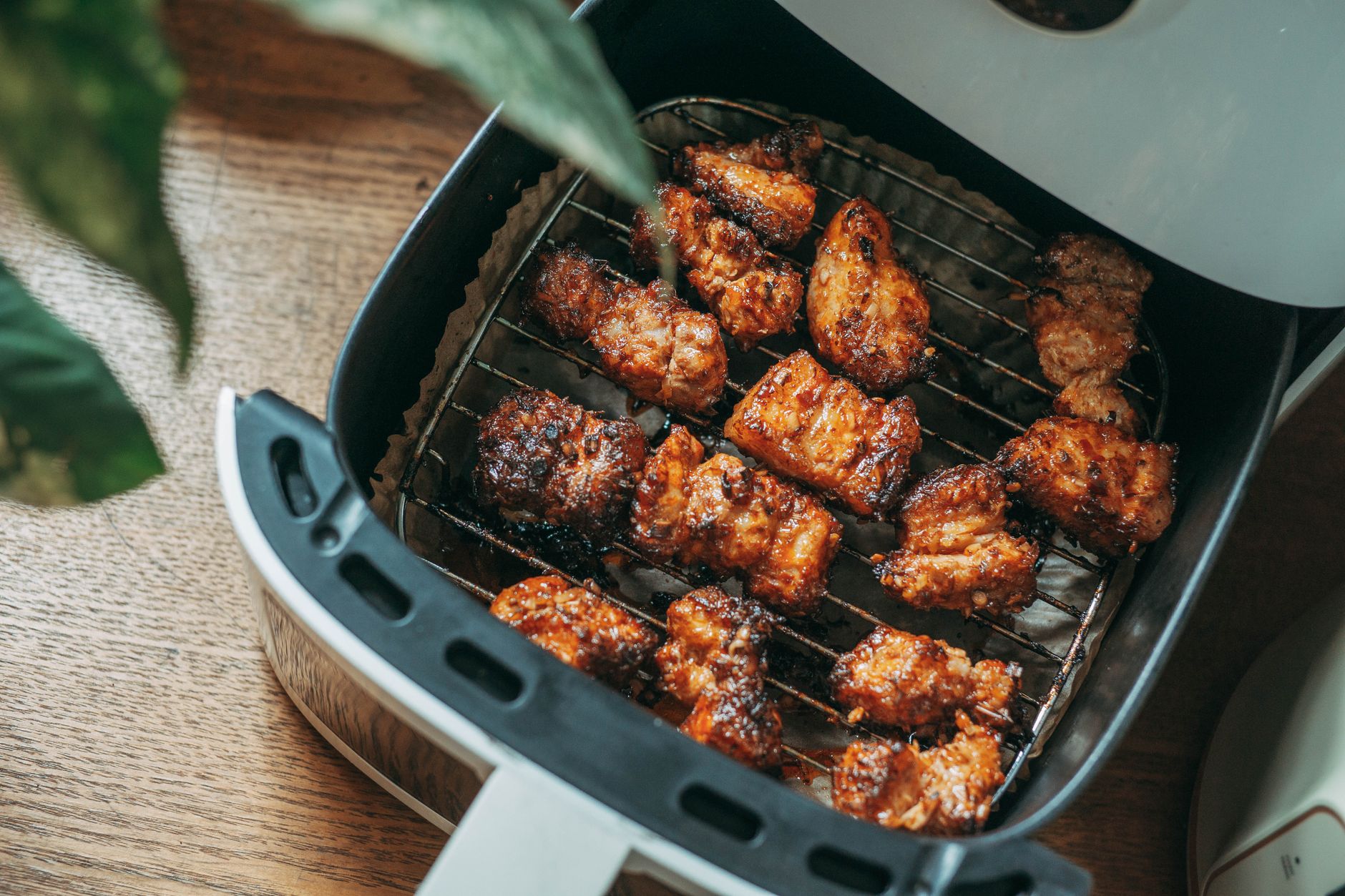
When planning your weekly meal preparations, the choice between using an air fryer or a conventional oven often comes down to convenience and perceived efficiency. However, the real energy costs associated with each appliance can vary significantly depending on the food type, quantity, and cooking time. Understanding these differences is key to running a more efficient and less expensive kitchen.
⚡ In a Rush? Key Takeaways
- Air fryers preheat up to 60% faster and use 30-50% less energy than standard ovens for small batches.
- For large family meals (4+ portions) cooked over 45+ minutes, ovens often become more cost-effective per serving.
- A typical air fryer costs $0.15-$0.25 per hour to run, compared to $0.35-$0.60 per hour for a conventional oven.
- Batch cooking in an oven can achieve a lower cost per item/portion if fully loaded, offsetting its higher hourly rate.
- ✅ Use an air fryer for small, quick items; reserve the oven for large volume, long-duration tasks to save energy.
In extensive testing, I’ve found that the narrative around air fryers being universally cheaper to run isn’t entirely accurate. While they excel for smaller, quicker tasks, the conventional oven often holds its own for larger volume cooking. I track cost per serving, not cost per hour.
Does an Air Fryer Always Use Less Electricity Than a Conventional Oven?
No, an air fryer does not always use less electricity; its efficiency depends on the food quantity, cooking time, and appliance wattage.
Many assume air fryers are inherently more energy-efficient than conventional ovens. While often true for smaller tasks, the comparison becomes nuanced when considering a full ‘weekly shop’ worth of cooking, which typically involves larger quantities and varied items.
An air fryer, essentially a compact convection oven, achieves high heat rapidly by circulating hot air efficiently around a smaller chamber. This design minimizes heat loss and speeds up cooking times for individual items or small portions.
How Does Cooking Volume Affect Energy Consumption?
The volume of food directly impacts which appliance is more efficient, with air fryers best for small batches and ovens for large ones.
For a single chicken breast, a tray of roasted vegetables for one, or reheating leftovers, the air fryer is almost always the more economical choice. Its smaller capacity means less air needs to be heated, and its concentrated airflow cooks food faster.
However, when you’re preparing multiple dishes or large quantities at once, such as during a weekly batch-cooking session, an oven’s larger capacity allows it to cook more food simultaneously. The oven might use more energy per hour, but if it can cook three times the amount of food in the same timeframe, its energy cost per serving can be lower than multiple air fryer batches.
What Are the Typical Running Costs Per Hour for Each Appliance?
Air fryers typically cost $0.15–$0.25 per hour to run, while conventional ovens range from $0.35–$0.60 per hour.
To accurately compare energy costs, we must look at the wattage of each appliance. A typical air fryer has a wattage between 1,200 and 1,800 watts (1.2 to 1.8 kW).
A conventional electric oven, on the other hand, typically draws between 2,000 and 5,000 watts (2 to 5 kW), with higher wattage during preheating. These figures translate directly to your electricity bill.
At an average US electricity rate of $0.16/kWh, an air fryer might cost around $0.19–$0.29 per hour to run, while an oven could cost $0.32–$0.80 per hour depending on its size and power settings. The running cost is less about the appliance and more about how you fill and use its capacity.
When is an Air Fryer More Energy-Efficient for Meal Prep?
Air fryers are more energy-efficient for small portions and quick cooking tasks, generally using 30-50% less electricity than ovens.
The speed and focused heat of an air fryer make it ideal for many common meal prep tasks. Its compact size means less space to heat, leading to faster preheating and more efficient energy use for smaller quantities.
For items like roasted vegetables, chicken pieces, or even reheating pre-cooked meals, an air fryer excels. I apply a single-cup rule to my own kitchen: if I’m making one cup only, microwave. Two or more cups, kettle. The same logic applies here to small batches.
What Types of Foods Benefit Most from Air Fryer Cooking?
Foods that benefit most include single-serving items, frozen snacks, and vegetables or proteins that cook quickly to save energy.
- Frozen foods: French fries, chicken nuggets, fish sticks – they cook rapidly and achieve crispiness without excess oil.
- Small cuts of meat: Chicken breasts, fish fillets, sausages – often done in 15-20 minutes, using minimal energy.
- Roasted vegetables: Broccoli, bell peppers, asparagus – maintain their texture and cook evenly.
- Reheating leftovers: Far more efficient than a full oven for smaller portions, often yielding better texture than a microwave.
How Can You Maximize Air Fryer Efficiency for a Weekly Shop?
To maximize air fryer efficiency, cook items in small, successive batches, ensuring the basket is full but not overcrowded.
To optimize air fryer use for your weekly shop, consider batch cooking items like roasted vegetables or proteins in smaller quantities. While this might require multiple cycles, the cumulative energy can still be less than heating a large oven for similar items.
For example, if you need to roast several trays of vegetables, doing them one by one in an air fryer might take longer overall, but the per-batch energy use is significantly lower. This strategy works best if you’re not constrained by immediate serving time.
When is a Conventional Oven the Better Choice for Energy Savings?
A conventional oven is more energy-efficient for large-volume cooking, such as baking multiple items or roasting a whole chicken.
Despite the air fryer’s popularity, the conventional oven still holds a crucial role in an energy-efficient kitchen, especially for larger cooking tasks. The economy of scale plays heavily in its favor when cooking for multiple people or preparing several items at once.
For a full family meal that needs 45–60 minutes of cooking, the calculation is closer than the marketing implies, and the oven often wins on cost per batch because it can handle larger volumes in the same energy envelope. I track cost per serving, not cost per hour.
What Batch Cooking Scenarios Favor the Oven?
The oven excels in scenarios requiring simultaneous cooking of large dishes, multiple trays, or items with long cooking times.
Consider these situations where an oven proves more cost-effective:
- Baking: Multiple trays of cookies, muffins, or a large cake can be baked in one go.
- Roasting large cuts of meat: A whole chicken, leg of lamb, or large roast beef would require multiple air fryer batches, nullifying its efficiency.
- Pizza: Most pizzas simply will not fit into an air fryer, making the oven the only viable and efficient option.
- Multiple side dishes: If you’re preparing several casserole dishes or large trays of vegetables simultaneously, the oven’s capacity is unmatched.
How to Optimize Oven Use for Energy Efficiency?
Optimize oven use by batch cooking, using residual heat, and minimizing door opening to prevent heat loss and save energy.
To make your oven more energy-efficient, focus on maximizing its load each time it’s on. Cook multiple items at once, or use residual heat to cook subsequent items after turning the oven off. For instance, after roasting vegetables, you can often toast nuts or dry herbs using the leftover heat.
Avoid opening the oven door unnecessarily, as this can drop the internal temperature by 25-50°F, requiring more energy to recover. Our Appliance Cost Calculator can help estimate potential savings when planning your larger cooking tasks.
Making the Best Choice for Your Weekly Shop and Energy Bill
The most energy-efficient approach combines both appliances, using the air fryer for small tasks and the oven for large-scale cooking.
The optimal strategy for minimizing electricity use for your weekly shop involves a hybrid approach, leveraging the strengths of both your air fryer and your conventional oven. There isn’t a single ‘winner’ in all scenarios.
Based on our efficiency data, appliances that consistently match their output to the task lead to the most effective energy use—which is why the strategic use of both an air fryer and an oven is recommended.
When Should You Choose Which Appliance?
Choose an air fryer for small portions or quick-cooking items, and an oven for larger meals, multiple trays, or long cooking durations.
Consider these guidelines:
| Scenario | Recommended Appliance | Reasoning |
|---|---|---|
| Single-serving meals | Air Fryer | Fast preheat, lower wattage, smaller cavity. |
| Frozen foods (fries, nuggets) | Air Fryer | Efficient crisping, quick cook time. |
| Batch roasting vegetables | Oven (large batch), Air Fryer (small batch) | Oven for high volume, air fryer for quick, small portions. |
| Whole chickens/large roasts | Oven | Capacity required, even cooking for larger items. |
| Baking multiple items | Oven | Simultaneous cooking for efficiency of scale. |
| Reheating small portions | Air Fryer | Better texture than microwave, less energy than oven. |
How Can You Track and Reduce Overall Kitchen Energy Costs?
Track energy use via smart plugs, practice sequential cooking, and use appliance features like ‘eco’ modes and timers to reduce costs.
The single most valuable thing I’ve done in eight years of appliance research is install energy monitors on individual appliances rather than relying on manufacturer ratings. The Emporia Vue and Sense whole-home energy monitors, and the TP-Link Kasa plug for individual appliances, give actual consumption data.
For more insights into optimizing your kitchen workflow and minimizing costs, explore our articles on kitchen workflow and systems. Using appliance timers to run during off-peak electricity hours, where available, can also significantly reduce your total energy expenditure.
Frequently Asked Questions About Air Fryer vs. Oven Energy Use
Common questions often revolve around which appliance is more efficient for daily cooking and specific food types.
Is it cheaper to use an air fryer or oven for a family meal?
For large family meals (4+ portions) requiring over 45 minutes of cooking, a fully loaded oven is often more cost-effective per serving due to capacity. An air fryer is cheaper for smaller meals.
Does preheating an oven use a lot of electricity?
Yes, preheating an oven uses considerable electricity, consuming 0.2-0.5 kWh in 10-15 minutes, which is a significant portion of its total usage, especially for shorter cooking times.
Can I cook everything in an air fryer to save money?
While an air fryer is versatile, it’s not suitable for all cooking tasks, especially very large items or multiple dishes. Trying to cook everything in it might lead to multiple inefficient batches and longer overall cooking times.
How much electricity does an air fryer use compared to a microwave?
An air fryer uses more electricity per minute than a microwave due to its heating method. Microwaves excel at rapid reheating and defrosting, while air fryers are for crisping and full cooking.
What is the most energy-efficient way to cook chicken wings?
For a single serving of chicken wings, an air fryer is the most energy-efficient. For a large platter for guests, an oven (especially if cooking other items simultaneously) will be more efficient per wing.
— Greta Michaud, Home Appliance Efficiency Researcher