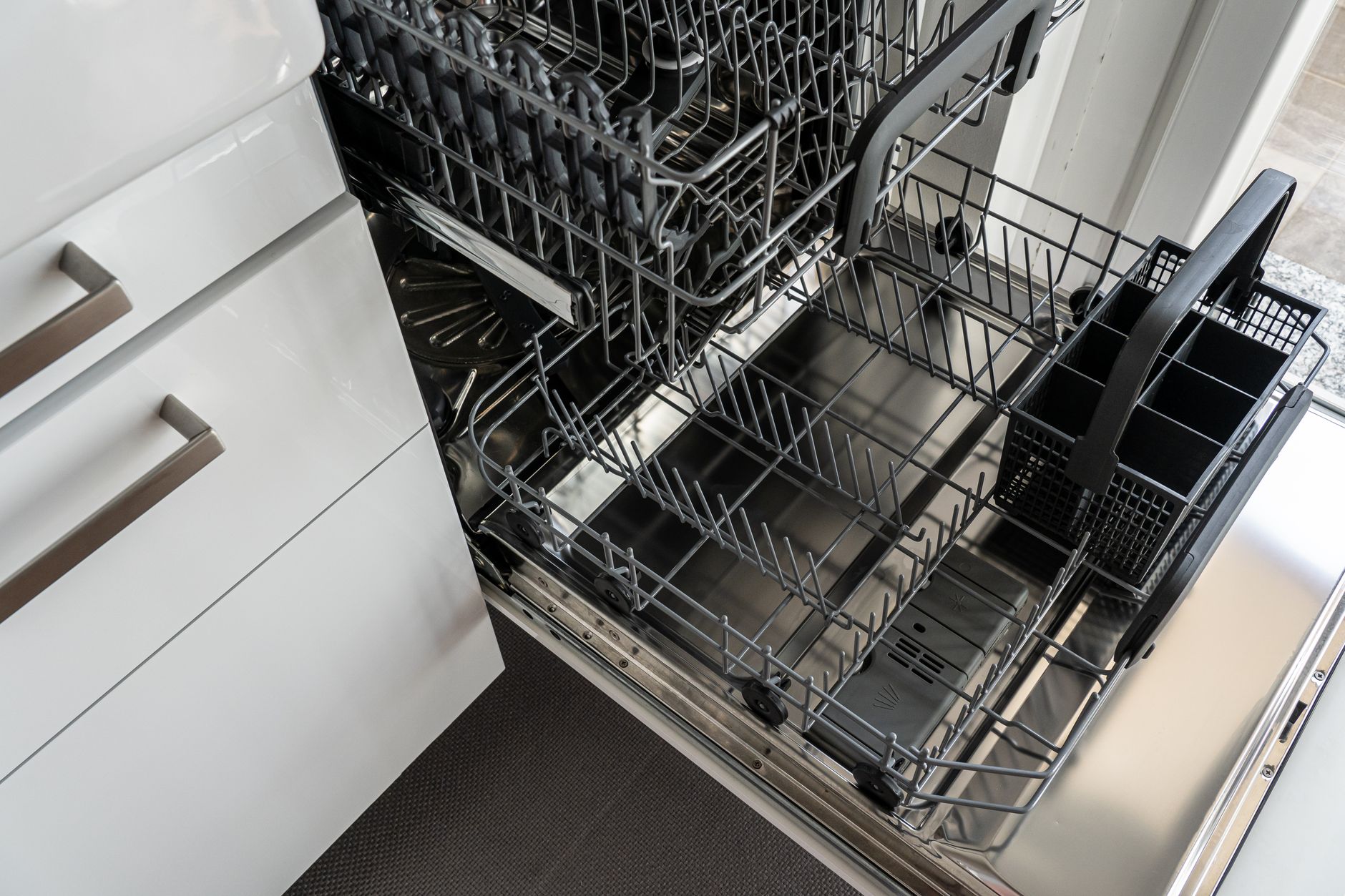
A modern, energy-efficient dishwasher is significantly cheaper to operate and uses less water than washing dishes by hand. While a standard cycle costs roughly $0.15–$0.25 in electricity and water, the volume of water required for manual washing often exceeds 20 gallons per load, making the machine the more efficient choice for households of two or more people.
⚡ In a Rush? Key Takeaways
- A modern Energy Star dishwasher uses as little as 3 gallons of water per cycle.
- Hand-washing the same load typically consumes 15 to 27 gallons of hot water.
- Skipping the heated dry cycle saves approximately 0.5 to 1 kWh per wash.
- Regular use of dishwasher salt prevents element scale, saving ~$150 in repairs.
- ✅ Use a full-load eco-cycle to achieve the lowest possible cost per plate.
How Does a Dishwasher Compare to Hand-Washing Costs?
Dishwashers use 3–5 gallons of water per full load, while hand-washing the same volume of dishes requires 15–27 gallons of water.
Why is the dishwasher more water-efficient?
Dishwashers recirculate a small volume of water through pressurized spray arms to clean, whereas hand-washing relies on a constant flow.
The mechanical efficiency of a dishwasher comes from its ability to reuse water throughout the wash and rinse phases. By filtering the water during the cycle, it removes debris without needing a continuous flow from the tap.
For most households, the water savings alone justify the purchase of an appliance. Reducing your daily hot water demand also lowers the load on your water heating system, which is often the second largest energy expense in a home.
How much electricity does a single cycle consume?
Modern dishwashers consume between 0.8 and 1.5 kWh per standard cycle, depending on the intensity of the wash and drying options.
- Eco mode: 0.8 kWh
- Standard wash: 1.2 kWh
- Intensive/Pot scrub: 1.5 kWh
- Air-dry enabled: 0.0 kWh (heating element off)
What Factors Influence the Total Cost of Ownership?
Ownership costs include purchase price, electricity, water, detergent, salt, and potential maintenance over a 10-year lifespan.
Is the initial purchase price justified by savings?
A quality dishwasher costs $500–$1,200, typically paying for itself in 3–5 years through water and time savings in a busy household.
When I evaluate appliance performance, I look at the 10-year total cost. A cheap unit with poor energy ratings may have a lower sticker price but will cost you significantly more in utility bills over a decade.
Why is regular maintenance essential for running costs?
Cleaning filters and adding salt prevents mineral buildup that forces the heating element to work longer, increasing energy consumption.
- Monthly filter cleaning prevents drain clogs.
- Refilling rinse aid ensures spot-free drying without extra heat.
- Using dishwasher ensures spot-free drying without extra heat.
- Using dishwasher salt in hard water prevents element failure.
- Checking spray arm nozzles ensures even water distribution.
How Can You Lower Your Dishwasher Running Costs?
Operating your dishwasher only when fully loaded and using the eco-setting provides the lowest cost per cycle for every household.
Does skipping the heated dry cycle save money?
Disabling heated drying cuts energy usage by 30–50% per cycle, as the drying phase is the most energy-intensive part of the process.
Most modern dishwashers include an air-dry option. By opening the door slightly at the end of the final rinse, you allow steam to escape and dishes to air-dry naturally.
Should you pre-rinse dishes before loading?
Modern sensors detect soil levels, so pre-rinsing is unnecessary and wastes up to 10 gallons of water per cycle, increasing your bills.
If you find that your dishes aren’t coming out clean, it is usually a sign of a clogged filter or a maintenance issue rather than a need for manual pre-rinsing. Modern detergents are designed to latch onto food particles, so a little residue actually helps the enzyme action.
How noisy are dishwashers and does it affect cost?
Most modern dishwashers operate between 40 and 50 decibels (dB), comparable to a quiet library or light rainfall.
Noise level is primarily determined by the motor, pump, and insulation; quieter models often feature advanced brushless motors and extra sound-dampening panels. While noise does not directly affect energy or water consumption, a quieter unit can be run at night or in open‑plan living spaces without disturbing household members, adding convenience value.
If you prioritize a silent kitchen, look for models advertised at ≤42 dB and check for features like insulated tubs, anti‑vibration mounts, and a “silent” or “night” cycle.
- Standard cycle: 45–50 dB
- Eco cycle: 40–45 dB
- Quiet/night cycle: ≤42 dB
Frequently Asked Questions
How many years should a dishwasher last?
A well-maintained dishwasher typically lasts 10 to 12 years before requiring major repairs or full replacement for efficiency.
Is eco mode always the best choice?
Eco mode is the most efficient setting as it uses lower temperatures and longer cycles to break down stains, saving significant energy.
Do tablets save money compared to liquid detergent?
Liquid detergent is generally more cost-effective as it allows you to adjust the dose based on the specific load size and soil level.
Can I run my dishwasher during off-peak hours?
Running the dishwasher during off-peak electricity hours can reduce your costs by 10–20% if your utility provider uses time-of-use rates.
Choosing the right appliance is only half the battle. By adjusting your habits—specifically skipping the pre-rinse and using the air-dry feature—you turn a convenient appliance into an efficiency powerhouse. — Greta Michaud, Home Appliance Efficiency Researcher