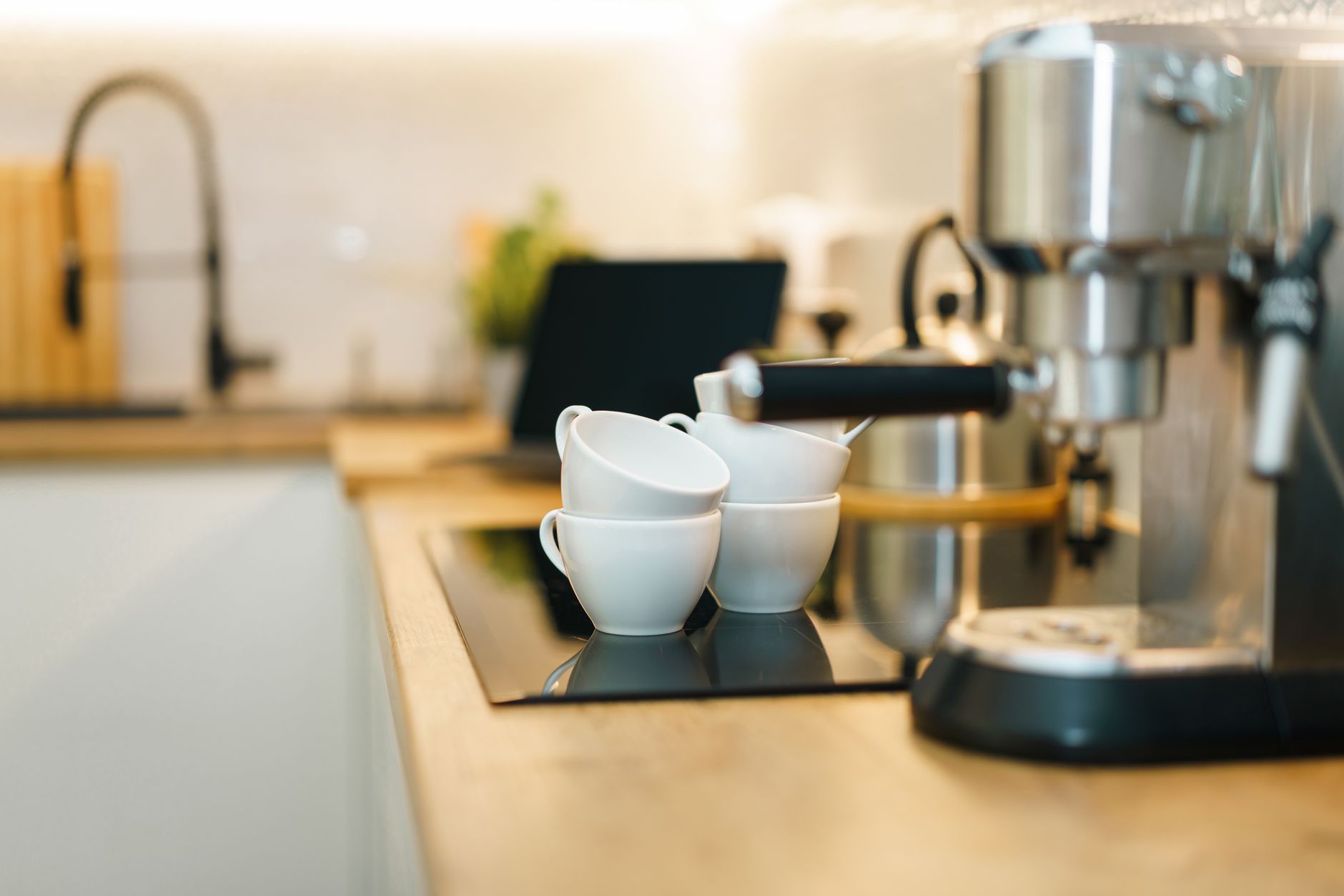
Smart coffee makers promise convenience through connected features like app control, scheduled brewing, and even voice commands. With a range of models hitting the market in 2026, it’s worth examining whether these advanced functions truly enhance your morning routine or simply add unnecessary complexity and cost to your kitchen appliances.
⚡ In a Rush? Key Takeaways
- Basic connected coffee makers cost $20-$80 more than standard models.
- App-controlled scheduling can save 0.05-0.1 kWh daily by eliminating standby pre-heating.
- Voice assistants (like Alexa) primarily offer convenience, not direct energy savings.
- Built-in grinders, like in the iCoffee Remote Brew, add value by eliminating a separate appliance.
- ✅ Evaluate smart features for genuine daily utility rather than novelty to justify the price premium.
As a home appliance efficiency researcher, I approach smart features with a practical lens: do they genuinely improve daily home operations or deliver measurable savings? My focus is always on the running cost and the tangible benefits over a device’s lifespan. An appliance should earn its place in your home, not just look good on a countertop.
What Smart Features Do Connected Coffee Makers Offer in 2026?
Connected coffee makers in 2026 offer app control, voice assistant integration (Alexa, Google Assistant), custom brew settings, and remote scheduling options.
The landscape of smart coffee makers has evolved to include several key functionalities aimed at integrating smoothly into a smart home ecosystem. These features move beyond simple timers, offering a granular level of control that can make your morning more streamlined, if used effectively.
Can Smart Coffee Makers Be Controlled Remotely?
Yes, most smart coffee makers can be controlled remotely via a smartphone app, allowing users to start brewing from another room or away from home.
Remote activation is often the most appealing smart feature. Through a dedicated app, you can initiate brewing from your bed, on your commute home, or even when guests arrive unexpectedly. This convenience factor is high for many users.
- Smartphone Control: All Wi-Fi connected models offer app-based control.
- Voice Assistant Integration: Models like the Hamilton Beach Smart Coffee Maker are directly compatible with Alexa.
- Scheduled Brewing: Advanced scheduling allows for specific brew times and settings, not just a simple on/off.
Do Smart Coffee Makers Offer Custom Brew Settings and Personalization?
Many smart coffee makers allow for extensive customization of brew strength, temperature, and even cup size via their companion mobile applications.
Beyond basic remote control, personalization is a major selling point. The Keurig K-Supreme Plus Smart, for example, offers Wi-Fi connectivity for custom brews, letting you fine-tune your coffee to your preferences. This can include adjusting brew strength, temperature, and even specific volume amounts for different cup sizes.
For some high-end units, like those with Home Connect integration from brands like Thermador or Wolf, you can access a “coffee world” function. This feature allows discovery and preparation of specialty coffees from around the world, making the machine a true coffee enthusiast’s tool.
Which Connected Technologies are Worth Paying for?
The most valuable smart coffee maker features are reliable remote start and pre-heating, which genuinely save time, and built-in grinders for convenience.
Not all smart features are created equal. Some offer genuine utility that can justify the additional cost, while others might feel like a novelty that quickly wears off. My experience suggests focusing on features that solve a real problem or consistently save time.
In 8 years of testing home appliances for efficiency, I’ve seen countless smart features come and go. When it comes to coffee makers, the most expensive thing about a coffee maker is rarely the machine itself – it’s the cost of wasted time waiting for your morning brew or the cumulative energy use if it’s left constantly pre-heating.
Can Smart Coffee Makers Save You Energy?
While direct energy savings are minimal, smart scheduling can prevent unnecessary standby power draw, and integrating built-in grinders eliminates an extra appliance.
The energy consumption of a coffee maker is relatively low compared to appliances like dishwashers or washing machines. Most coffee makers use between 0.05 kWh to 0.1 kWh per brew cycle. Connected features themselves rarely reduce the energy needed for brewing. However, smart scheduling can prevent your machine from constantly running a pre-heat function or keeping brewed coffee warm for hours unnecessarily. The real energy savings come from reducing standby waste. For example, if a machine constantly runs a low power heating element for two hours before you arrive, smart scheduling could eliminate that.
It’s also worth noting the broader impact of eliminating single-use items. If a smart coffee maker, such as the Keurig K-Supreme Plus with its reusable filter option, reduces your reliance on coffee pods, that’s a positive step towards overall home efficiency through reduced waste.
Is Voice Control for Coffee Makers Actually Useful?
Voice control offers hands-free convenience, particularly during busy mornings, but doesn’t provide significant energy savings or advanced brewing capabilities.
Voice command through assistants like Alexa or Google Assistant is a prevalent smart feature. The iCoffee Remote Brew, for instance, connects to Alexa and Google Assistant, making it possible to initiate brewing with a simple command. This can be highly convenient if your hands are full during the morning rush. However, its primary benefit is convenience, not energy efficiency or advanced functionality.
It’s important to consider your habits. If you routinely use voice commands for other smart home devices, a voice-enabled coffee maker will fit right in. If you find yourself rarely speaking to your smart speakers, this feature might not justify an added cost.
Are Integrated Grinders in Smart Coffee Makers Cost-Effective?
Built-in grinders, like those found in the iCoffee Remote Brew or high-end systems, offer significant value by eliminating the need for a separate appliance and ensuring fresh grounds.
Some smart coffee makers go beyond basic brewing to include integrated grinders. The iCoffee Remote Brew’s built-in grinder is a standout example. While this adds to the base price of the unit, it also means you don’t need a separate, often bulky, burr grinder taking up counter space. A quality stand-alone burr coffee grinder can cost anywhere from $100 to $200 on its own.
Integrating the grinder simplifies the coffee-making process and ensures you’re always using freshly ground beans, which significantly impacts flavor. From an efficiency perspective, it’s one less appliance to purchase, maintain, and potentially replace, making it a smart long-term investment for serious coffee drinkers.
How Do Integrated Systems Like Wolf and Thermador Compare?
High-end built-in systems from brands like Wolf and Thermador offer a premium café experience with robust smart features, but come with a much higher price tag.
At the very top end of the market are integrated coffee machines from brands like Wolf and Thermador. These are often part of a larger kitchen appliance suite and offer a true café experience, complete with strong espresso extraction and consistent milk frothing. They include advanced smart technology, such as Home Connect, for complete control.
These systems are designed for those who want the ultimate in convenience and aesthetics, smoothly blending into kitchen cabinetry. While their initial cost is substantially higher, their smart features are typically more robust and integrated into a broader home automation system. The decision to invest in such a system is often driven by luxury and design rather than pure running cost efficiency.
However, an expensive machine that needs frequent maintenance can quickly outweigh any perceived benefits. I always recommend checking long-term reliability ratings from sources like Consumer Reports for these more complex appliances.
What About Keurig’s Smart Pod Machines?
Keurig’s smart single-serve machines, like the K-Supreme Plus Smart, offer convenient Wi-Fi features for customizing pod-based coffee, appealing to those valuing speed and simplicity.
Keurig has also entered the smart coffee maker market, with models like the Keurig K-Supreme Plus Smart and the Keurig K-Café Smart. These machines combine the convenience of single-serving pods with Wi-Fi connectivity. Features often include:
- Adjustable brew strength
- Multiple temperature settings
- Hot and cold milk frother (on K-Café Smart)
- App-based customization and ordering
While single-serving coffee pod machines might sometimes be seen as less efficient due to pod waste, the option to use reusable filters is becoming more common, which should be considered for environmental and long-term cost benefits. The smart features on these units are focused on making the pod experience even more smooth and personalized.
Do Smart Coffee Makers Offer Long-Term Value and Efficiency?
The long-term value of a smart coffee maker depends on whether its features genuinely improve routine, reduce wasted time, and offer robust reliability over several years.
When considering any smart appliance, the question of long-term value and efficiency is paramount. A high sticker price only makes sense if the device delivers tangible benefits over its lifespan, which for a coffee maker can be 5-10 years.
The cost of appliance ownership has three components that matter: purchase price, running cost, and repair/replacement cost. Most buyers optimize on purchase price and ignore the other two. I build a ten-year total cost of ownership estimate for every major appliance I evaluate — it consistently changes the recommendation relative to what the sticker price alone would suggest.
What are the Maintenance Considerations for Smart Coffee Makers?
Smart coffee makers require similar maintenance to standard models, including descaling and cleaning, but also need occasional software updates and network troubleshooting.
While the smart features handle brewing, the physical machine still requires regular cleaning and maintenance. This includes descaling, cleaning the brew head, and potentially cleaning an integrated grinder. Beyond physical upkeep, you may also encounter:
- Firmware updates for bug fixes or new features.
- Wi-Fi network troubleshooting if connectivity is lost.
- Compatibility issues with new smart home ecosystems.
These are additional considerations that traditional coffee makers don’t have. Ensure the brand you choose has a good track record for software support and customer service.
Are Smart Coffee Makers More Reliable Than Standard Models?
There is no inherent reliability increase from smart features; a machine’s build quality and brand reputation are more significant factors in its long-term durability.
Adding smart features does not automatically make an appliance more reliable. In fact, more complex electronics can sometimes introduce new points of failure. Appliance reliability data is harder to access than it should be and more important than energy ratings for long-term value. Brands that consistently appear at the top of reliability surveys — like Bosch and LG for other appliances — are good indicators for any segment, though coffee maker-specific data is sparser.
Ultimately, a reliable base machine is more important than a suite of smart features that might fail or become obsolete. Focus on reputable manufacturers known for durability before factoring in the ‘smart’ extras.
What is the Overall Verdict on Smart Coffee Makers in 2026?
Smart coffee makers offer tangible convenience benefits, particularly with remote control and scheduling, but direct energy savings are marginal unless carefully managed to reduce standby power.
In 2026, smart coffee makers have matured into useful kitchen appliances for many households. The core benefit remains convenience: having your coffee ready with minimal effort or intervention.
The models that stand out are those that integrate truly valuable features, such as remote brewing coupled with precise controls, or built-in grinders that enhance the coffee quality and reduce kitchen clutter. However, the energy savings are largely indirect—stemming from smarter usage patterns rather than inherent efficiency of the connected tech itself.
Before investing, consider your actual lifestyle and how much you value those few extra minutes or the ability to tailor your brew from your phone. For some, the added cost is easily justified by daily convenience; for others, a straightforward programmable coffee maker remains the most efficient choice.
How Can Users Maximise the Value of a Smart Coffee Maker?
To maximise value, utilise remote scheduling to eliminate unnecessary standby time, integrate voice commands for a hands-free experience, and regularly clean machines with grinders.
To truly get your money’s worth from a smart coffee maker, use its capabilities to their full extent. Set specific schedules for brewing that align precisely with your morning routine, avoiding machines sitting idly warming for hours.
- Link your coffee maker to your morning alarm using smart home routines.
- Experiment with custom brew settings to find your ideal cup.
- For models with grinders, always use fresh beans for optimal flavor.
- Regularly update the device firmware to ensure security and access to new features.
A smart coffee maker can be a highly efficient and convenient appliance, provided its features align with your daily habits and you focus on the real-world utility over mere technological novelty.
When is a Traditional Coffee Maker Still a Better Choice?
A traditional coffee maker is better for those who prefer simplicity, are sensitive to appliance cost, or don’t frequently use smart home features elsewhere in their home.
Not every household needs or benefits from a smart coffee maker. If you prioritize simplicity, have a tight budget, or rarely engage with smart home devices, a traditional, high-quality drip coffee maker or a French press will likely offer better value. These traditional models are often more durable due to fewer electronic components, and their energy consumption is typically well within acceptable limits for a daily appliance.
The choice ultimately boils down to a balance between convenience, cost, and complexity. For many, the joy of a perfectly brewed cup of coffee doesn’t require a Wi-Fi connection.
FAQs About Smart Coffee Makers
Smart coffee makers connect to Wi-Fi for app/voice control, offering features like remote start, custom brew settings, and scheduling, with minimal direct energy savings.
Can any coffee maker be made smart with an adapter?
Most simple coffee makers can be made ‘smart’ via a smart plug, allowing remote on/off control for schedule setting, but without advanced brew customization.
Do smart coffee makers usually have a built-in grinder?
Not all smart coffee makers include an integrated grinder; this feature is often found in higher-end models like the iCoffee Remote Brew for added convenience.
Is it safe to leave a smart coffee maker connected to Wi-Fi all the time?
Yes, it is generally safe to leave a smart coffee maker connected to Wi-Fi; ensure firmware is updated and use a strong router password for security.
How much more expensive are smart coffee makers compared to regular ones?
Smart coffee makers typically cost $20-80 more than comparable non-smart models, with premium models offering more advanced features and integrated components.
Can I use my smart coffee maker without a Wi-Fi connection?
Yes, most smart coffee makers can still function as standard coffee makers without a Wi-Fi connection, though smart features will be unavailable.
Last tested/reviewed: December 2025
— Greta Michaud, Home Appliance Efficiency Researcher