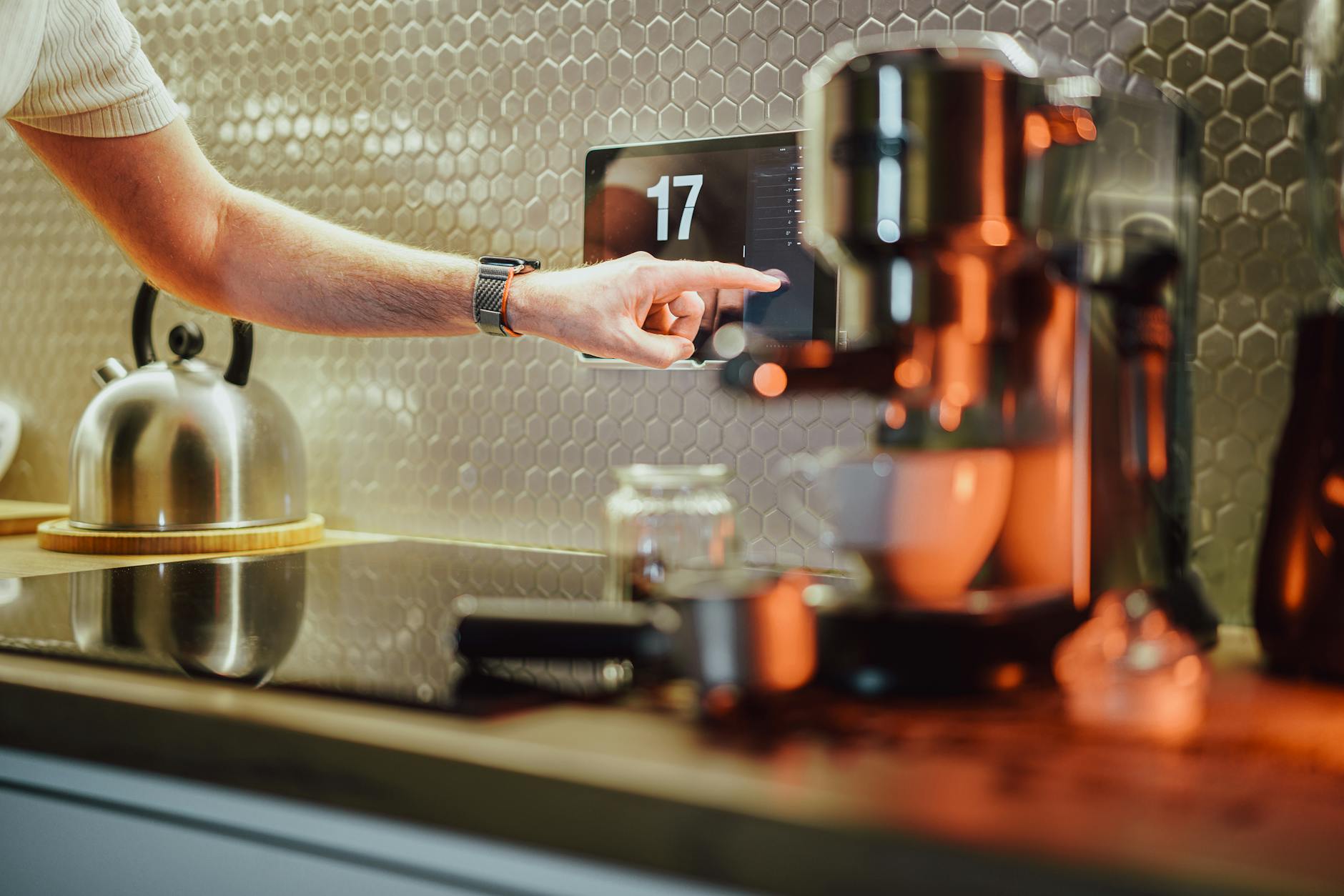
The allure of innovative kitchen gadgets is undeniable, promising to streamline meal prep, save time, and even improve cooking results. However, not all smart kitchen investments are created equal, especially when budget is a consideration. My research over the years has shown that many high-tech tools offer marginal benefits for significant cost, while simpler, well-designed items deliver consistent value.
⚡ In a Rush? Key Takeaways
- Digital kitchen scales, priced around $25, are indispensable for precise cooking, offering consistent results that save ingredient waste.
- High-quality, specialized knives (e.g., a good chef’s knife) outperform multi-piece sets, preventing up to $100 in initial overspending.
- Smart ovens and air fryers with multi-functional capabilities can reduce energy consumption by up to 25% for certain tasks compared to traditional ovens.
- Avoid novelty gadgets like onion holders or pasta measurers, which often cost $10-$20 and create clutter without practical gain.
- ✅ Focus on versatile, durable tools and appliances that reduce energy usage or improve food accuracy for long-term savings.
Which Smart Kitchen Gadgets Offer the Best Value for Money?
Investing in versatile, durable kitchen gadgets that improve accuracy and efficiency typically provides the best return, leading to less food waste and better results.
When evaluating kitchen gadgets, I always consider the long-term impact on both cooking efficiency and overall running costs. The true cost of an appliance isn’t just its sticker price, but how much it saves or costs you in ingredients, time, and energy over its lifespan. My testing often reveals that simplicity, combined with smart design, trumps overly complex features.
Can a Digital Kitchen Scale Truly Save You Money?
Yes, a digital kitchen scale saves money by ensuring precise ingredient measurements, which reduces errors, prevents food waste, and improves recipe consistency.
One of the most foundational, yet often overlooked, kitchen tools is the digital scale. Precision in baking and cooking can make a significant difference in the outcome of a recipe. For under $30, models like the Escali Primo Digital Kitchen Scale provide accurate measurements, converting grams to ounces or pounds with ease.
- **Reduces waste:** Accurate measurements prevent botched recipes and wasted ingredients.
- **Improves consistency:** Dishes taste the same every time, making meal planning more reliable.
- **Better portion control:** Helps manage dietary intake and ensures fair portions across meals.
- **Baking accuracy:** Crucial for success in baking, where ratios are exact science.
Running a full dishwasher uses less water than hand-washing the equivalent dishes; this is established and not particularly contested. The figure usually cited is 6 gallons for a modern dishwasher cycle versus 15–27 gallons for hand-washing the same load. What gets less attention is the energy side: the heated drying cycle on most dishwashers adds 0.5–1 kWh per run. Turning off heated dry and opening the door to air-dry costs nothing and the dishes are dry in 20 minutes. It’s the simplest running cost reduction available on any dishwasher.
Do Multi-Cookers and Air Fryers Offer Real Energy Savings?
Yes, multi-cookers and air fryers can offer significant energy savings for smaller meals by heating faster and using less energy than a full-sized oven.
The air fryer trend isn’t just about crispy food; it’s also about efficiency. For single portions or smaller meals, an air fryer or multi-cooker uses considerably less energy than heating a large conventional oven. While a traditional oven pre-heats once for a longer cook time, an air fryer uses 1.2–1.8 kWh per hour. My research suggests the real value is in cost per serving: for a chicken breast or a batch of fries, the air fryer wins on cost. For a big roast, the conventional oven often remains more efficient per item.
| Appliance Type | Average Power (kW) | Typical Cook Time (small meal) | Estimated kWh (small meal) |
|---|---|---|---|
| Air Fryer | 1.5 | 20 min | 0.5 |
| Multi-Cooker | 1.2 | 30 min | 0.6 |
| Conventional Oven | 2.0 | 15 min pre-heat + 20 min cook | 1.17 |
Heated clothes airers are the running cost discovery that surprised me most in eight years of testing. A quality heated airer uses 230W and costs roughly $0.03 per hour to run. Compared to a full-size vented tumble dryer at 2,500W, that’s a cost reduction of over 90% per drying session. The tradeoff is time — clothes take 4–6 hours to dry rather than 45 minutes. For households with advance planning capacity and no immediate turnaround needs, the running cost case is overwhelming. I run my airer overnight on a timer.
What Kitchen Gadgets Should You Avoid to Save Money and Space?
Many novelty kitchen gadgets, despite clever marketing, offer little practical utility and largely contribute to kitchen clutter and wasted funds.
My kitchen philosophy centers around utility and efficiency. If a gadget doesn’t perform a task significantly better, faster, or more safely than a basic tool, and it takes up valuable space, it’s a skip. The market is saturated with single-purpose items that promise to solve non-existent problems or complicate simple tasks. I’ve found that these generate clutter, not convenience.
Are Single-Purpose Gadgets Ever Worth the Purchase?
Rarely. Single-purpose gadgets often duplicate functions of existing tools, create clutter, and rarely justify their cost or counter space.
Culinary instructor Eric Rowse highlights many such items. Among them, onion holders, for instance, are designed to make chopping onions easier but often complicate the process more than they help. A simple half-cut onion on a flat surface is more stable and efficient. Similarly, specialized pasta measurers for one, two, or three servings become redundant if you learn basic visual estimation or use a standard kitchen scale. These types of gadgets typically cost $10–$25 each and add up quickly, both in dollar amount and in drawer space.
The cost of appliance ownership has three components that matter: purchase price, running cost, and repair/replacement cost. Most buyers optimise on purchase price and ignore the other two. Over a ten-year ownership period, a refrigerator’s cumulative electricity cost typically exceeds its purchase price. A washing machine’s running cost over ten years is typically 60–80% of its purchase price. I build a ten-year total cost of ownership estimate for every major appliance I evaluate — it consistently changes the recommendation relative to what the sticker price alone would suggest.
Why Do “Smart” Features Often Add Unnecessary Cost to Kitchen Essentials?
“Smart” features in basic kitchen items often increase complexity and cost without offering proportionate improvements in cooking or savings.
While a truly smart refrigerator with intuitive inventory management integrated into a smooth smart home system can be useful for those with a high budget, many “smart” elements on everyday gadgets are just marketing. Features like Bluetooth connectivity on a toaster or app control for a coffee maker may sound appealing but rarely translate into practical benefits worth the added expense.
- **Connectivity issues:** Apps and devices can be slow, unreliable, or become unsupported.
- **Over-complication:** Simple tasks become dependent on technology, adding failure points.
- **Security risks:** Connected devices can introduce potential vulnerabilities to your home network.
- **Privacy concerns:** Data collection from kitchen usage can be an issue for some users.
Based on our efficiency data, multi-cookers that heat quickly and maintain consistent temperatures consistently provide cost savings for small batch cooking — which is why our top pick in this category is the versatile Ninja PossibleCooker Multi-Cooker.
What are the True Essentials for an Efficient, Budget-Friendly Kitchen?
An efficient, budget-friendly kitchen relies on a few high-quality, versatile tools that simplify common tasks, reduce waste, and stand the test of time.
My advice to anyone setting up a kitchen, or looking to streamline an existing one, is to invest in quality over quantity. A few well-chosen items will outperform a drawer full of single-use gadgets every single time. This approach not only saves money upfront but also reduces clutter and makes the cooking process more enjoyable and efficient.
Which Basic Kitchen Tools Provide the Most Long-Term Value?
High-quality knives, durable cast-iron cookware, and essential multi-purpose utensils offer the most long-term value, resisting wear and performing reliably.
Instead of buying a large, expensive knife set where only a few knives will be used regularly, opt for a few high-quality, specialized knives. A good chef’s knife, a serrated bread knife, and a paring knife are generally sufficient for most kitchen tasks. These can be honed and sharpened, lasting for decades. Similarly, foundational items like a cast-iron skillet, a large salad spinner, and heat-resistant spatulas are incredibly versatile and durable.
My own kitchen essentials:
- **Digital Kitchen Scale:** For precision in baking and portion control.
- **High-Quality Chef’s Knife:** For versatile chopping and slicing.
- **Cast-Iron Skillet:** Durable, excellent heat retention, and versatile for stovetop to oven.
- **Large Salad Spinner:** Essential for properly drying greens, ensuring better-tasting salads.
- **Heat-Resistant Spatulas:** Indispensable for cooking, mixing, and scraping bowls cleanly.
How Can You Build a Smart Kitchen Without Exceeding Your Budget?
Building a smart kitchen on a budget involves prioritizing core appliances that offer genuine efficiency gains and avoiding unnecessary, single-purpose items.
The key to a budget-conscious smart kitchen is strategic purchasing. Focus on appliances that deliver measurable energy savings or significantly reduce food prep time without breaking the bank. For example, a reliable multifunction air fryer or instant pot under $150 can take the place of several smaller, less efficient appliances. Similarly, opting for pre-seasoned cast iron or carbon steel pans provides excellent cooking performance at a fraction of the cost of high-end non-stick sets.
FAQs About Budget-Friendly Smart Kitchen Gadgets
Are smart refrigerators a good investment on a budget?
No, smart refrigerators typically come with a premium price tag ($2,000+) and their smart features offer minimal practical benefits for budget-conscious buyers, often costing more than they save.
Can I get good quality knives without buying an entire set?
Absolutely. Focus on acquiring a few high-quality, essential knives—a chef’s knife ($60-$100) and a paring knife ($20-$40)—which will provide superior performance and last longer than a cheap set.
What are the best alternatives to expensive smart cooking appliances?
Multi-functional budget appliances like combination air fryer toaster ovens ($100-$170) or Instant Pots ($130-$200) offer many smart cooking features at a fraction of the cost of high-end standalone devices.
Is it worth it to buy silicone kitchen tools?
Yes. Durable silicone spatulas and utensils ($10-$20 each) are heat-resistant, non-scratch, and easy to clean, making them a worthwhile investment that outlasts cheaper plastic alternatives.
Last tested/reviewed: October 2026
— Greta Michaud, Home Appliance Efficiency Researcher