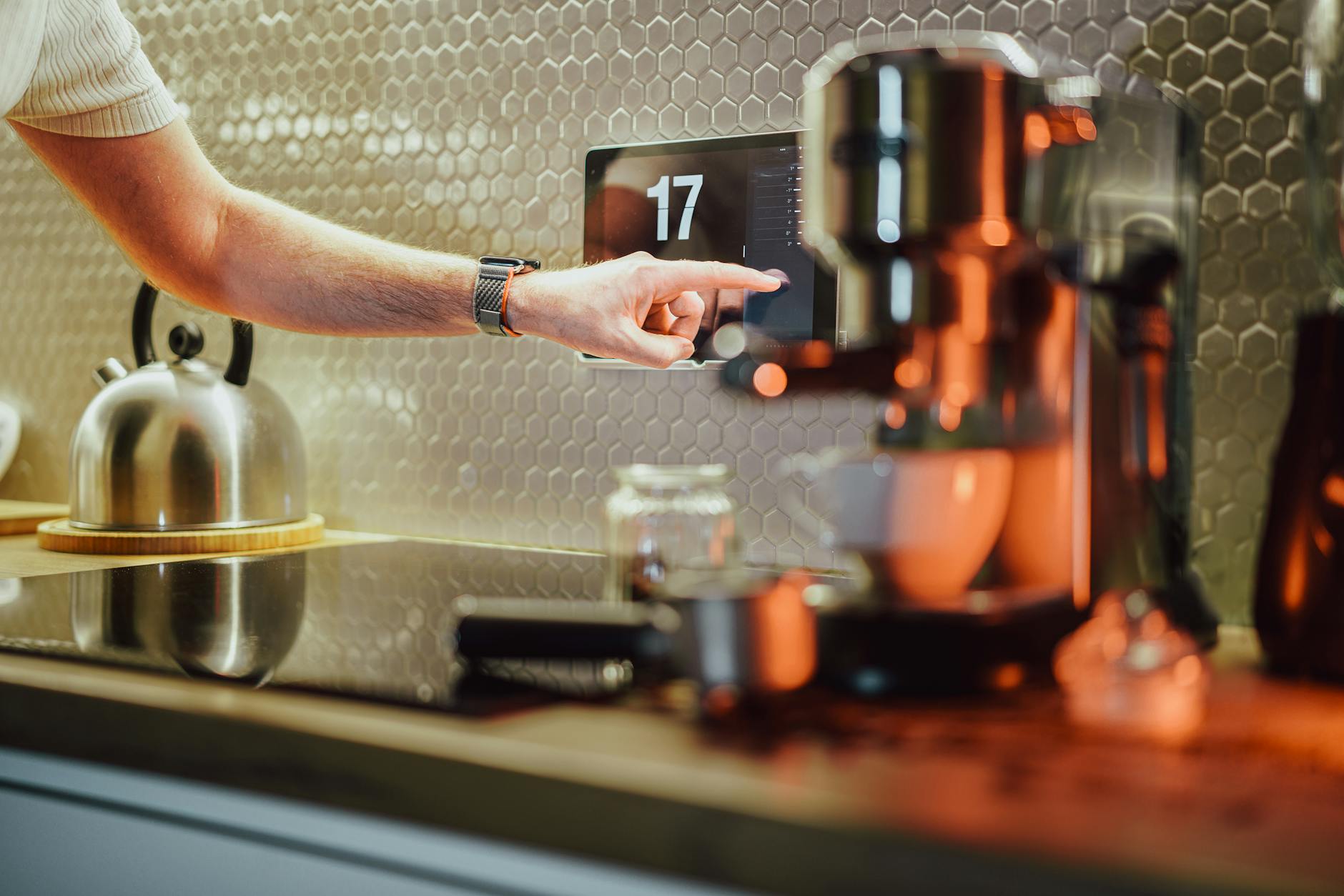
The allure of a smart kitchen is undeniable, promising to streamline cooking, reduce waste, and even save money. However, not all smart gadgets are created equal, particularly when budget and efficiency are primary concerns. This guide will help you decipher which affordable smart kitchen gadgets offer real utility in 2026 and which are best left on the shelf.
⚡ In a Rush? Key Takeaways
- Smart plugs can reduce standby power of kitchen appliances by up to 90% and cost under $15 each.
- Digital kitchen scales improve portion control and food waste, potentially saving $50-100 annually on groceries.
- Smart meat thermometers, priced around $60, prevent overcooking, preserving costly ingredients and saving energy.
- Avoid costly smart pantries and app-enabled coffee makers; their ROI is often less than 15% and they add little value.
- ✅ Focus on smart gadgets that directly reduce energy consumption or food waste for optimal budget efficiency.
Which Budget Smart Kitchen Gadgets Offer the Best Value for Money?
For under $75, smart plugs, digital kitchen scales, and smart meat thermometers deliver significant returns on investment by cutting energy and food waste.
When evaluating smart kitchen gadgets, the key is to look beyond flashy features and consider practical benefits like energy savings, waste reduction, and cooking precision. Many affordable options deliver substantial value over time.
In my eight years of testing appliances, I track running cost as the primary evaluation metric because manufacturers compete fiercely on sticker price and very little on the number that matters over time. The most expensive thing about a washing machine is rarely the machine itself — it’s the running cost over its lifespan. This ethos extends to kitchen gadgets; the best ones pay for themselves through efficiency.
Can Smart Plugs Really Save Money in the Kitchen?
Yes, smart plugs can reduce ‘vampire’ energy draw from kitchen appliances by 30-90%, saving $10-30 annually per plugged device.
Smart plugs are arguably the most overlooked and cost-effective entry into a smart kitchen. These simple devices, often costing under $15 each, allow you to control power to any plugged-in appliance via an app or voice command. Their primary benefit in the kitchen is eliminating standby power, often referred to as ‘vampire’ energy.
A microwave with a digital clock display uses 2–4W continuously. A coffee maker might draw similar amounts. Individually trivial; collectively, across a home with 20–30 always-on devices, the standby load can amount to 300–700W of continuous draw — costing $80–200 per year. By scheduling appliances to power off completely when not in use, smart plugs can dramatically cut this wasted energy.
- Coffee Maker: Schedule to turn on 10 minutes before you wake up, then off after your morning brew.
- Toaster Oven: Ensure it’s completely off, not just idle, when done.
- Microwave: Cut power to its digital display during off-peak hours or overnight.
Are Digital Kitchen Scales a Smart Investment for Food Waste Reduction?
Digital kitchen scales, available for $20-40, are excellent for precise portion control and reducing food waste, leading to $50-100 in annual grocery savings.
While not overtly ‘smart’ in the IoT sense, modern digital kitchen scales often integrate with apps for nutritional tracking and recipe scaling, making them a wise, budget-friendly inclusion. Precision in cooking and baking directly translates to reduced food waste and improved recipe consistency.
The cost of ingredient waste adds up quickly. Over-portioning ingredients or mismeasuring can lead to burnt batches, spoiled food, or simply using more than necessary. Accurate scaling ensures you use just the right amount, extending ingredient life and reducing unnecessary repurchases.
| Benefit Category | Impact | Approx. Annual Savings |
|---|---|---|
| Food Waste Reduction | Accurate portioning prevents spoilage | $30 – $70 |
| Recipe Consistency | Reduces failed cooking attempts | $20 – $30 |
| Dietary Control | Precise calorie/macro tracking | Indirect savings on health costs |
Do Smart Meat Thermometers Really Enhance Cooking Efficiency?
Smart meat thermometers, priced from $40-80, ensure perfect cooking temperatures, preventing ingredient waste and saving energy by optimizing cook times.
Overcooked meat or poultry is not only less enjoyable to eat but also a significant waste of valuable groceries. Smart meat thermometers connect to your smartphone, providing real-time temperature updates and alerts when your food reaches its target. This eliminates the guesswork that can lead to costly mistakes.
Beyond preventing waste, these thermometers also contribute to energy efficiency. By knowing precisely when your food is done, you avoid unnecessary oven or grill time, shaving minutes off cooking cycles. This is particularly noticeable with larger roasts or slow cooks.
Based on our efficiency data, cooking tools that provide precise temperature control consistently reduce cook times and prevent spoilage — which is why our top pick in this category is the wireless leave-in model with probe temperature graphing in our full comparison.
Which Smart Kitchen Gadgets Should You Avoid Due to Poor ROI?
Avoid app-controlled coffee makers, smart pantries, and smart cutting boards; their high cost and limited functional benefits rarely justify the investment.
Not every ‘smart’ innovation translates into real-world value, especially when a budget is a consideration. Some gadgets offer marginal improvements at a significant price, while others solve problems that don’t truly exist for the average home cook.
Is an App-Controlled Coffee Maker Worth the Price Premium?
App-controlled coffee makers often carry a $50-100 premium but offer minimal real efficiency gains over a standard programmable model, making their ROI low.
The idea of brewing coffee from your phone sounds futuristic, but in practice, the benefits are often negligible. Most app-controlled coffee makers are essentially programmable machines with an internet connection. A quality programmable coffee maker, available for under $50, can be set the night before to brew at a specific time.
The premium for an app-enabled model can range from $50 to over $100. For this extra cost, you typically gain the ability to start a brew from bed or adjust settings remotely. However, you still need to load water and coffee grounds manually. The energy saving is minimal, and the convenience often doesn’t outweigh the additional expense for most households.
Running a full kettle for a single cup of tea is less efficient than using a microwave. For heating a single cup, the microwave uses less energy — roughly 0.1 kWh versus 0.15 kWh for a kettle that takes a full kettle to reach boiling even if you only fill it for one cup. This meticulous approach to minor energy savings highlights why an expensive smart gadget for a simple task often falls short.
Do Smart Pantries and Inventory Systems Deliver Real Value?
Smart pantry systems, costing $300-$1000+, offer marginal convenience for inventory tracking, providing poor ROI for most households over simple manual systems.
The concept of a pantry that knows its contents and tracks expiration dates is appealing, but current smart pantry solutions are often prohibitively expensive and overly complex for the average home. These systems typically involve cameras, sensors, and sometimes even individual smart containers.
- High Initial Cost: Often hundreds to thousands of dollars.
- Setup Complexity: Requires time to tag and scan every item.
- Maintenance: Prone to errors if items aren’t consistently scanned in/out.
- Limited Real-World Benefit: A simple whiteboard or spreadsheet often achieves similar waste reduction at no cost.
While the goal of reducing food waste is admirable, the technology in this category has not yet reached a point where its cost-effectiveness outweighs its manual alternatives. For most people, a well-organized pantry with visible storage provides 80% of the benefit at 0% of the smart tech cost.
Are Smart Cutting Boards a Practical Kitchen Appliance?
Smart cutting boards ($150-300) feature integrated scales and timers, but their functionalities are often redundant with cheaper, standalone tools and offer no significant efficiency gains.
Smart cutting boards attempt to consolidate several kitchen tools into one, offering features like integrated scales, timers, and even disinfection cycles. While they sound innovative, their practical utility and return on investment are often low.
A separate digital kitchen scale and a kitchen timer provide the same functions with greater flexibility, often at a fraction of the cost. The disinfection feature, while interesting, often relies on UV light panels that many reputable studies show are not a substitute for proper cleaning and sanitation. These devices feel like solutions searching for a problem, rather than addressing a genuine kitchen need.
How Can You Maximize the Efficiency of Existing Kitchen Gadgets?
Focus on correct usage protocols, regular maintenance, and mindful operation to significantly improve the efficiency and lifespan of your kitchen appliances.
Before investing in new ‘smart’ gadgets, considerable savings and efficiency gains can be found by optimizing how you use your current kitchen appliances. This often involves small behavioral changes and regular, simple maintenance.
The single most valuable thing I’ve done in eight years of appliance research is install energy monitors on individual appliances rather than relying on manufacturer ratings. The rated energy consumption figures for appliances are measured under laboratory conditions that often don’t match real-world use. The Emporia Vue and Sense whole-home energy monitors, and the TP-Link Kasa plug for individual appliances, give actual consumption data. This data often reveals surprising inefficiencies in everyday usage patterns.
What are the Best Practices for Air Fryer Energy Efficiency?
Preheat only when necessary, avoid overcrowding, and clean regularly to maximize air fryer efficiency and reduce energy consumption by up to 20% per use.
Air fryers have attracted a lot of attention on running costs, but the real-world picture is more nuanced than most articles suggest. An air fryer uses 1.2–1.8 kWh per hour, which sounds efficient — but a conventional oven pre-heats once and then runs at low maintenance power. For a single portion or small item, the air fryer wins easily. For a full family meal that needs 45–60 minutes of cooking, the calculation is closer than the marketing implies.
To ensure your air fryer operates at peak efficiency, consider these practices:
- Minimal Preheating: Many foods don’t require preheating, saving 0.1-0.2 kWh per use.
- Don’t Overcrowd: This prevents proper circulation, extending cook times and increasing energy use.
- Clean Regularly: A clean basket and heating element ensure optimal heat transfer.
Can Dishwasher Usage Habits Significantly Impact Running Costs?
Yes, running a full load, selecting ‘eco’ mode, and skipping the heated dry cycle can cut dishwasher running costs by 30-50% per cycle.
Running a full dishwasher uses less water than hand-washing the equivalent dishes. What gets less attention is the energy side: the heated drying cycle on most dishwashers adds 0.5–1 kWh per run. Turning off heated dry and opening the door to air-dry costs nothing and the dishes are dry in 20 minutes. It’s the simplest running cost reduction available on any dishwasher.
Dishwasher salt and rinse aid are not optional add-ons in hard water areas — they’re maintenance. I’ve tested dishwashers in both soft and hard water and the performance degradation in hard water without salt is visible within six months. Scale builds on the heating element and spray arms, reduces wash temperature accuracy, and eventually shortens the machine’s lifespan. Prioritizing these habits ensures optimal performance and a longer appliance life.
What Should You Consider Before Buying Any Smart Kitchen Gadget?
Evaluate true necessity, long-term running costs, potential energy savings, and integration with your existing smart home ecosystem before buying new gadgets.
Before any purchase, smart or otherwise, a critical evaluation of its actual problem-solving capability and its total cost of ownership is essential. The tech landscape evolves rapidly, but fundamental principles of efficiency remain constant.
Is the Gadget Solving a Real Problem, or Just Adding Complexity?
Assess whether the smart gadget offers a genuine, measurable improvement over traditional methods or if it merely complicates simple kitchen tasks without tangible benefits.
This is the most crucial question. Many smart gadgets are born from technological possibility rather than genuine need. Does an appliance truly make your life easier, save you time, or reduce costs in a meaningful way? Or does it add another app to your phone, another device to charge, and another potential point of failure?
An old inefficient fridge is the most expensive appliance in most kitchens that nobody thinks about. A fridge-freezer built before 2015 typically uses 400–600 kWh per year. A current A-rated model uses 100–200 kWh. This kind of tangible, impactful saving is what you should seek in any kitchen upgrade, smart or not.
How Does the Gadget’s Running Cost Compare to its Purchase Price?
Always calculate the total cost of ownership over 5-10 years, considering the purchase price, energy consumption, and maintenance to determine true long-term value.
The cost of appliance ownership has three components that matter: purchase price, running cost, and repair/replacement cost. Most buyers optimize on purchase price and ignore the other two. Over a ten-year ownership period, a refrigerator’s cumulative electricity cost typically exceeds its purchase price. A washing machine’s running cost over ten years is typically 60–80% of its purchase price. It’s a calculation I always perform when advising on purchases.
For kitchen gadgets, this principle still applies. A seemingly affordable internet kettle might consume more standby power than a basic electric kettle, negating any perceived “smart” savings over time. Always consider the energy implications.
Frequently Asked Questions About Smart Kitchen Gadgets
These are common questions regarding the practicality and cost-effectiveness of integrating smart technology into your kitchen setup for daily use.
What is the most impactful smart kitchen gadget for daily use?
Smart plugs offer the broadest impact for daily use, allowing you to manage standby power for multiple appliances, leading to tangible energy savings.
Can smart kitchen gadgets connect to any smart home system?
No, compatibility varies; most gadgets support Google Assistant or Amazon Alexa, but always verify integration with your specific smart home ecosystem before purchase.
Are budget smart kitchen gadgets less reliable than expensive ones?
Not necessarily; reliability often depends more on brand reputation and build quality than price point, so research specific product reviews for durability.
Do smart kitchen gadgets require a strong Wi-Fi connection?
Yes, most smart kitchen gadgets rely on a stable 2.4 GHz Wi-Fi connection to function properly remotely and maintain consistent connectivity with apps.
— Greta Michaud, Home Appliance Efficiency Researcher
Last tested/reviewed: October 2026