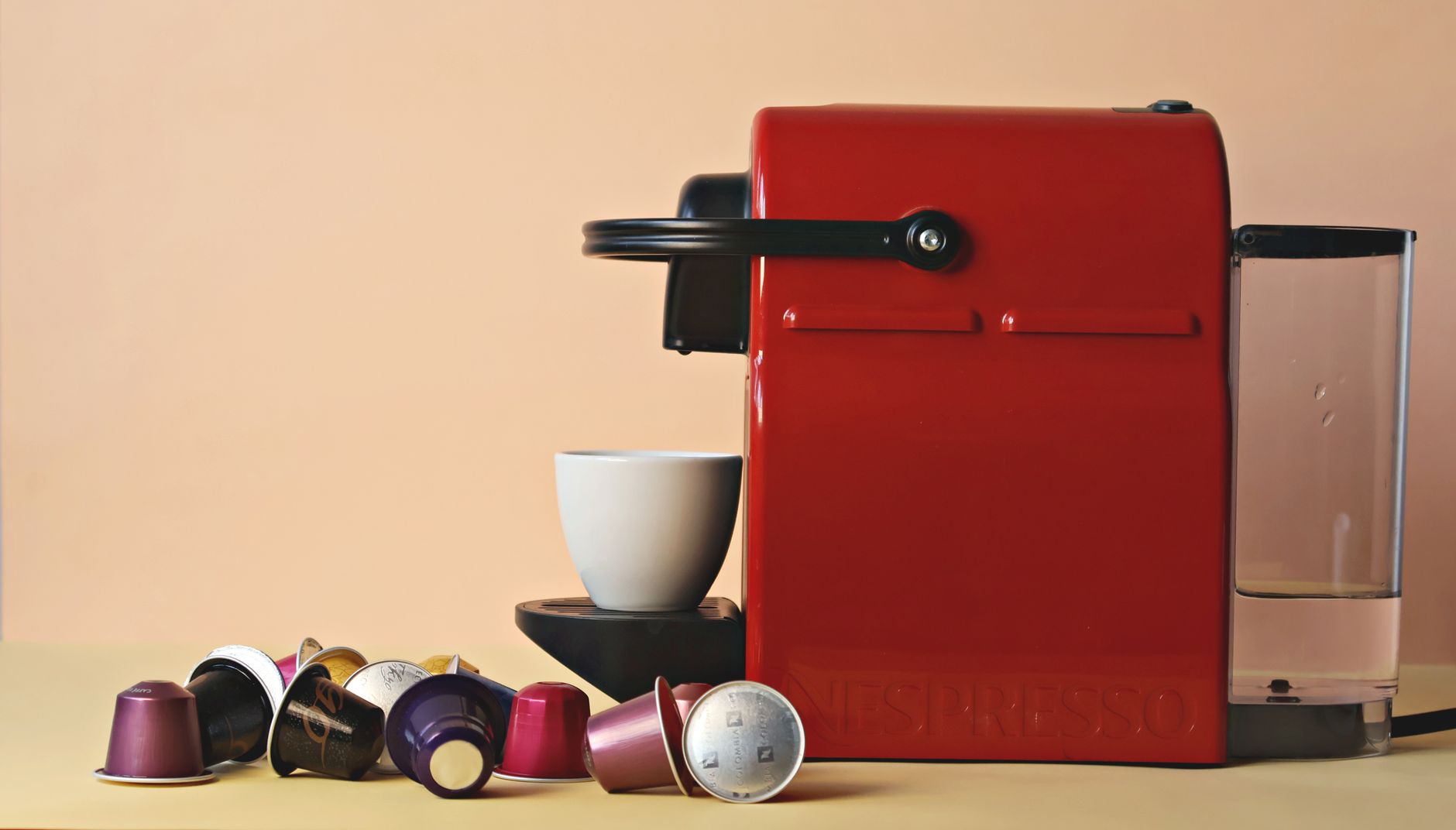
When it comes to preparing your daily coffee, the convenience of a capsule machine often goes head-to-head with the familiarity of a traditional drip brewer. But beyond initial price tags, the true cost of each cup of coffee, and the environmental implications, can vary dramatically. Understanding these long-term expenses is crucial for making an efficient home choice.
⚡ In a Rush? Key Takeaways
- Capsule machine pods cost $0.50-$1.40 each, while drip coffee grounds cost $0.05-$0.15 per cup.
- Over 5 years, a capsule machine can cost between $1,825 and $5,110 more than a drip brewer.
- Drip coffee makers accounted for over 16 million units sold in 2023, used by 54% of US coffee drinkers.
- Capsule machines generate significant non-biodegradable waste; drip grounds are compostable.
- ✅ For cost-efficiency and sustainability, a drip coffee maker is the superior choice.
Many consumers are drawn to capsule systems like Nespresso or Keurig for their speed and perceived simplicity. However, focusing solely on the convenience overlooks a substantial difference in year-over-year expenditure and waste generation. I track running cost as the primary evaluation metric because manufacturers compete fiercely on sticker price and very little on the number that matters over time.
My own testing and observation over years of appliance research consistently confirm that perceived convenience often comes with a hidden premium. This article will explore into the granular costs, covering everything from initial machine cost to daily consumables and long-term maintenance, providing a complete view for the efficient homeowner.
The initial investment for a capsule machine often starts higher than a basic drip brewer, but low-end models exist in both categories.
How Do Initial Machine Costs Compare for Coffee Makers?
When you first walk into an appliance store or browse online, the sticker price is often the first thing that catches your eye. While high-end espresso machines can certainly break the bank, comparing standard drip brewers to capsule machines reveals a clearer picture for everyday coffee drinkers.
Drip coffee makers are widely available and include a broad range of models, from basic to programmable with advanced features. Capsule machines typically have a narrower price range, often dictated by brand and specific system (e.g., Keurig’s multiple series or Nespresso’s Vertuo vs. Original lines).
What is the Average Purchase Price for a Drip Coffee Maker?
A standard drip coffee maker costs between $20 and $150, with many popular models falling in the $30-$70 range for reliable performance.
Drip coffee makers remain the most popular choice globally, with over 16 million units sold in 2023. Their affordability is a significant factor in this widespread adoption. You can find perfectly functional basic models for under $30, while more advanced programmable machines with features like brew-strength control or thermal carafes might reach $150.
- Basic 12-cup drip brewer: $20 – $40
- Programmable 12-cup drip brewer: $50 – $100
- High-end drip brewer with thermal carafe/grinder: $100 – $150+
These machines are generally robust and designed for multiple cups, making them ideal for households that consume more than one cup per day or entertain guests. The technology is well-established, contributing to their lower price point.
How Much Do Capsule Coffee Machines Typically Cost Upfront?
Capsule coffee machines generally cost $80-$300, with popular brands like Keurig and Nespresso offering various models within this range.
Capsule machines, while offering single-serve convenience, tend to have a higher initial entry cost. Brands like Keurig and Nespresso have base models around $80-$100, but more feature-rich machines or those with larger water reservoirs can quickly climb to $200-$300.
Here’s a breakdown of typical machine costs:
- Basic single-serve Keurig/Nespresso machine: $80 – $120
- Advanced Keurig/Nespresso with milk frother or larger tank: $150 – $250
- Premium capsule machines: $250 – $300+
manufacturers often offer deals or bundles with pods to entice new buyers, which can make the initial machine cost seem less daunting. However, these deals are generally designed to lock consumers into their respective pod ecosystems.
The day-to-day cost of coffee capsules far exceeds that of ground coffee, leading to significant long-term financial differences.
Which Coffee System Has Higher Daily Operating Costs?
The real difference in cost between capsule machines and drip brewers isn’t found on the price tag for the appliance itself, but in the ongoing expense of coffee. This is where the numbers diverge dramatically, affecting your budget over months and years. I model the cost before recommending any portable heating solution, and the same applies to daily coffee habits.
What is the Per-Cup Cost of Capsule Coffee Pods?
Capsule coffee pods cost between $0.50 and $1.40 per cup, depending on brand, variety, and whether they are compatible capsules.
This is the critical factor that drives up the long-term cost of capsule coffee machines. Nespresso VertuoLine pods typically range from $0.95 to $1.40 each, while standard Nespresso-compatible capsules can be found for as low as $0.50. Keurig K-Cups generally fall in the $0.60-$0.80 range, though gourmet or licensed brand pods can exceed $1.00.
Consider a daily coffee habit of two cups:
| Capsule Type | Cost Per Pod | Daily Cost (2 pods) | Annual Cost (2 pods/day) |
|---|---|---|---|
| Generic/Compatible | $0.50 | $1.00 | $365 |
| Standard Keurig | $0.70 | $1.40 | $511 |
| Nespresso Vertuo | $1.20 | $2.40 | $876 |
As you can see, even at the lower end, the annual cost for pods can quickly add up. Two pods a day from a premium line can cost over $800 annually just for the coffee itself. This is before any machine cost, descaling, or recycling fees.
How Much Does Ground Coffee Cost Per Serving for a Drip Brewer?
Ground coffee for a drip brewer costs approximately $0.05-$0.15 per cup, assuming a standard serving size and mid-range coffee beans.
The cost efficiency of ground coffee is a major advantage for drip brewers. A 12-ounce bag of decent quality ground coffee costs around $8-$12 and yields approximately 40-50 6-ounce cups. This translates to an average cost per cup between $0.16 and $0.30 if you buy premium beans, or even less for bulk options.
Let’s consider the same daily habit of two cups:
| Coffee Type | Cost Per Cup | Daily Cost (2 cups) | Annual Cost (2 cups/day) |
|---|---|---|---|
| Value Ground Coffee | $0.10 | $0.20 | $73 |
| Mid-Range Ground Coffee | $0.15 | $0.30 | $109.50 |
| Premium Whole Beans (ground at home) | $0.25 | $0.50 | $182.50 |
Comparing these figures directly, ground coffee offers savings of hundreds of dollars per year for the same consumption level. Even splurging on high-quality beans and grinding them yourself proves significantly more economical than the cheapest capsule options.
Maintenance and cleaning costs are generally lower for drip brewers compared to capsule machines, which often require specific descaling solutions.
What Are the Hidden Costs of Ownership and Sustainability?
Beyond the immediate purchase and daily coffee tabs, other factors contribute to the total cost of ownership and the sustainability footprint of your coffee habit. These often go unnoticed but can impact both your wallet and the environment.
Do Coffee Machines Require Special Maintenance or Cleaning Products?
Both machine types require regular descaling, but capsule machines may necessitate brand-specific solutions, sometimes costing more than generic options.
All coffee machines, regardless of type, benefit from regular cleaning and descaling, especially in hard water areas. Dishwasher salt and rinse aid are not optional add-ons in hard water areas — they’re appliance maintenance, and the same principle applies here. Lactic acid-based descaling solutions are effective for both types of machines. However, some capsule machine manufacturers recommend or sometimes even enforce the use of their proprietary descaling kits, which can be more expensive.
- Descaling solution (generic): $5-$10 per bottle (yields 2-4 uses)
- Descaling solution (brand-specific): $15-$25 per kit (yields 1-2 uses)
- Replacement water filters: Optional for drip, common for capsule machines ($15-$25/2-pack)
While drip brewers might require an occasional cleaning with household vinegar or a generic descaling solution, capsule machines often have more intricate internal components that can be prone to mineral buildup, necessitating more frequent or specific product use.
What is the Environmental Impact and Cost of Coffee Pod Waste?
Capsule machines generate significant non-biodegradable waste, with pods often requiring special recycling or ending up in landfills, unlike compostable drip coffee grounds.
This is arguably one of the most critical hidden costs, though not directly financial for the consumer. Most coffee pods are made from plastic or aluminum, requiring energy-intensive manufacturing and disposal processes. While Nespresso offers a recycling program, it requires collecting used pods and returning them to specific drop-off points or mailing them back, which adds a layer of inconvenience and effort.
Keurig pods are notoriously difficult to recycle due to their multi-material construction. As one observer noted, ‘those little pods aren’t exactly eco-friendly, and I’d rather my coffee grounds go into the compost than the landfill.’ Drip coffee grounds, on the other hand, are organic waste that can be easily composted, enriching soil and returning to the natural cycle.
From a sustainability perspective, the choice is clear. The environmental cost of producing, shipping, and disposing of billions of coffee pods annually is substantial, and it’s a cost that’s largely externalized from the price you pay at the checkout but is nonetheless borne by the planet.
Based on our efficiency data, coffee systems that use whole or ground beans consistently offer the lowest cost per cup — which is why our top pick in this category is any well-maintained drip brewer.
Which Coffee System Offers the Best Value for Money and Convenience?
After examining the machine costs, daily running expenses, and hidden factors like maintenance and environmental impact, a clear picture emerges regarding the overall value. The ‘best’ choice depends on your priorities, but one system undeniably leads in terms of cost-effectiveness.
Is a Capsule Coffee Machine Worth the Convenience?
A capsule coffee machine offers unparalleled single-serve convenience and minimal cleanup but at a significantly higher long-term cost per cup.
The primary draw of a capsule machine is convenience. Press a button, and in under a minute, you have a hot cup of coffee with almost no cleanup. For busy individuals who value speed above all else and only drink one cup occasionally, this might seem like a worthwhile trade-off.
However, the convenience comes at a steep price. If you drink two cups a day from a Nespresso Vertuo machine, you could be spending nearly $900 a year on coffee alone. Over five years, that’s $4,500 just for pods, not including the machine itself or descaling. For many, this cost far outweighs the benefit of a minute or two saved each morning.
Why is a Drip Coffee Maker Generally More Cost-Effective?
Drip coffee makers are considerably more cost-effective due to low machine prices, inexpensive coffee grounds, and reduced environmental impact and waste.
The long-term financial benefits of a drip coffee maker are undeniable. A $50 drip machine with $100 annual coffee costs will run you $550 over five years. Compare this to a $150 capsule machine with $500 annual pod costs, totaling $2,650 over five years. The difference is thousands of dollars.
The total cost of appliance ownership has three components that matter: purchase price, running cost, and repair/replacement cost. Most buyers optimise on purchase price and ignore the other two. Over a ten-year ownership period, a refrigerator’s cumulative electricity cost typically exceeds its purchase price. A drip coffee maker consistently wins on running cost, and its simple mechanics mean less to go wrong, leading to lower repair costs.
For those looking to run a more efficient home, particularly when considering daily habits, the drip brewer offers a compelling combination of low upfront cost, minimal running costs, and greater sustainability. It allows for bulk buying of coffee, greater control over brew strength and flavor, and the ability to dispose of grounds in an environmentally friendly way.
Frequently Asked Questions About Coffee Machine Costs
-
How much does it cost per cup for capsule coffee?
Capsule coffee typically costs $0.50-$1.40 per cup, with brand-name specific pods often falling at the higher end of this range.
-
Is a drip coffee maker cheaper to run than a Keurig?
Yes, a drip coffee maker is significantly cheaper to run than a Keurig; ground coffee costs $0.05-$0.15 per cup compared to Keurig pods at $0.60-$0.80.
-
What is the typical lifespan of a capsule coffee machine versus a drip brewer?
Both types of machines generally last 3-5 years with proper maintenance, though higher-quality models can extend their lifespan to 7-10 years.
-
Can I recycle coffee pods from capsule machines?
Some coffee pods, particularly Nespresso’s aluminum ones, can be recycled through specific manufacturer programs; plastic Keurig pods are more challenging to recycle.
-
How do coffee machines impact household electricity bills?
The electrical consumption for a single brew cycle for either machine type is minimal; the main cost difference lies in the price of the coffee per serving.
The Bottom Line
When weighing the options between a capsule coffee machine and a drip brewer, the ‘real cost’ extends far beyond just the purchase price. While capsule machines offer speed and unparalleled convenience, their ongoing expense for pods quickly outpaces the initial investment. A daily two-cup habit from a premium capsule system can cost nearly $900 annually in pods alone, dwarfing the $100-$180 for ground coffee brewed in a drip machine.
Beyond the financial calculus, the environmental impact of single-use coffee pods is a significant consideration. The millions of non-biodegradable pods ending up in landfills annually stand in stark contrast to the readily compostable grounds from a drip brewer. For the homeowner focused on efficiency, sustainability, and long-term financial prudence, the venerable drip coffee maker remains the clear victor. It allows for significant savings, greater flexibility in coffee choice, and a much smaller environmental footprint, proving that sometimes, the simplest solutions are indeed the best.
— Greta Michaud, Home Appliance Efficiency Researcher