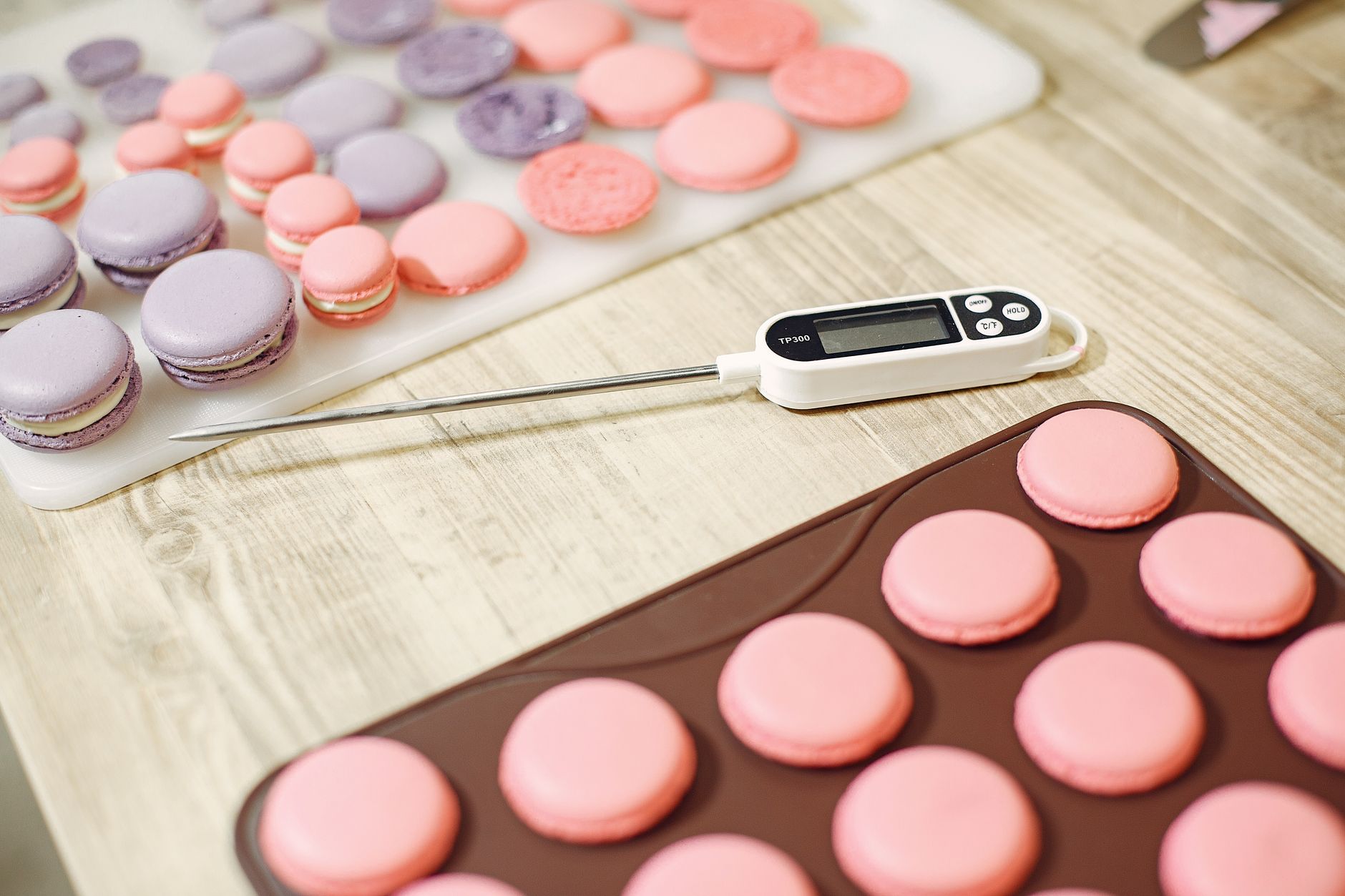
Finding a reliable food thermometer is essential for safety, flavor, and energy efficiency in the kitchen.
⚡ In a Rush? Key Takeaways
- Ice‑water calibration checks accuracy within ±0.5 °F (±0.3 °C).
- Digital probes read 2–4 °F faster than analog models.
- Resolution of 0.1 °F lets you hit precise doneness points for sous‑vide.
- Probes with stainless‑steel sheaths last 2‑3 years under daily use.
- ✅ Best overall: a digital instant‑read thermometer with 0.1 °F resolution, 5‑second response, and a calibrated probe.
How Do Different Types of Food Thermometers Work?
Thermometers fall into digital, analog, infrared and wireless categories, each using a distinct sensor to convert heat into a readable temperature.
Understanding the sensor technology helps you decide which model suits your cooking style. Digital probes use a thermistor or thermocouple that changes resistance with temperature, giving quick numerical readings. Analog devices rely on a bimetallic strip that bends as it heats, moving a needle across a calibrated dial.
Infrared thermometers measure surface radiation, ideal for checking grill grates or pan bottoms without contact. Wireless units pair with a base station, sending real‑time data to a smartphone or kitchen display.
What Are the Pros and Cons of Digital Instant‑Read Thermometers?
Digital instant‑reads give 1‑5 °F accuracy, 2‑4 °F faster response, and often feature backlit displays for low‑light kitchens.
- Fast response – 2–4 seconds to stable reading.
- High resolution – 0.1 °F increments for exact doneness.
- Easy calibration – often a built‑in button.
- Battery dependent – needs occasional replacement.
- Can be pricier than analog models.
Are Analog Dial Thermometers Still Viable?
Analog dial thermometers offer 2‑3 °F accuracy, no batteries, and a rugged design, but they read slower than digital units.
They excel in high‑heat environments where electronic sensors might drift, such as open‑flame grilling. However, the needle’s inertia means you wait up to 15 seconds for a stable reading, which can lead to over‑cooking if you’re not patient.
When Should I Use an Infrared Thermometer?
Infrared thermometers measure surface temperature within 0.5 °F, but they cannot gauge internal food temperature.
They shine when you need to verify pan heat before searing or confirm grill surface uniformity. Because they gauge only the surface, they’re unsuitable for checking the core temperature of roasts or poultry.
Do Wireless Thermometers Offer Real Savings?
Wireless probes transmit data to a mobile app, allowing you to monitor temperature without opening the oven, potentially saving 5‑10 % energy per bake.
These systems usually include multiple probes, a sturdy base, and alerts for target temperatures. Their main downside is the upfront cost (often $100‑$200) and reliance on Bluetooth or Wi‑Fi connectivity, which can be spotty in metal‑boxed ovens.
How Can I Test the Accuracy of a Food Thermometer?
Use the ice‑water (32 °F) and boiling‑water (212 °F) methods to confirm readings within ±0.5 °F for reliable performance.
Accuracy is the cornerstone of safety. The USDA FSIS recommends two simple methods: ice‑water calibration for the freezing point and boiling water for the boiling point. Both tests are quick, require only kitchen basics, and give you a clear picture of whether the thermometer is trustworthy.
What Is the Ice‑Water Calibration Procedure?
Fill a glass with ice, add water, stir, and insert the probe; the reading should be 32 °F (0 °C) ±0.5 °F.
- Crush a cup of ice and fill a glass halfway with cold water.
- Stir until the water chills uniformly; a true ice bath stays at 32 °F.
- Insert the thermometer’s probe without touching the glass.
- Read the temperature; adjust if your device has a calibration dial or button.
How Do I Perform the Boiling‑Water Test?
Bring water to a rolling boil, insert the probe, and verify a reading of 212 °F (100 °C) ±0.5 °F at sea level.
At higher altitudes, subtract roughly 1 °F for every 500 feet above sea level. For most U.S. households, the standard 212 °F holds true.
What If My Thermometer Fails These Tests?
If readings fall outside ±0.5 °F, use the built‑in calibration feature or consider a replacement, as inaccurate readings jeopardize food safety.
- Digital models often have a “reset” or “calibrate” button.
- Analog units may require a screw‑adjusted calibration nut.
- Persistent deviation suggests sensor wear – replace the probe.
How Often Should I Re‑Calibrate?
Re‑calibrate after each major drop, roughly every 6 months, or whenever you notice inconsistent readings.
Regular calibration ensures long‑term reliability. Store the thermometer away from heat sources and avoid submerging probes that aren’t waterproof.
What Features Determine the Overall Value of a Food Thermometer?
Key features include accuracy (±0.5 °F), response time (≤5 seconds), range, resolution, durability, and ease of calibration.
Beyond the basic sensor type, several attributes influence performance and cost‑effectiveness. Let’s break down each factor so you can compare models like a seasoned chef.
How Important Is Temperature Accuracy?
Accuracy within ±0.5 °F ensures safe doneness, especially for poultry (165 °F) and low‑and‑slow sous‑vide dishes.
| Accuracy | Impact | Typical Price |
|---|---|---|
| ±0.2 °F | Ideal for sous‑vide, precise caramelization | $80‑$120 |
| ±0.5 °F | Fine for most home cooking, safe for meat | $30‑$70 |
| ±1 °F | Acceptable for casual grilling, but risk under‑cooking | $15‑$30 |
Does Response Time Affect Energy Use?
Faster (≤5 seconds) response saves energy by reducing oven door openings and cooking time.
Each extra minute the oven stays open can add 5‑10 W of heat loss, equating to about $0.12 per hour at the U.K. average rate of 24p/kWh. A thermometer that gives a reading in 2 seconds versus 8 seconds can shave a few seconds off a roast, cumulatively saving dollars over a year.
What Temperature Range Do I Need?
A 0 °F to 500 °F range covers most cooking, but specialized grilling may require up to 800 °F.
- Standard home cooks: 0 °F–500 °F (‑18 °C–260 °C).
- BBQ enthusiasts: up to 800 °F (427 °C) for charcoal searing.
- Home bakers: low‑range accuracy down to 32 °F helps with proofing dough.
How Does Resolution Influence Cooking Precision?
Resolution of 0.1 °F lets you track subtle temperature shifts, essential for sous‑vide and candy making.
Resolution is the smallest increment the display can show. A 0.1 °F display lets you catch a temperature that’s 149.8 °F versus 150.0 °F – crucial when aiming for medium‑rare beef at 135 °F.
Why Is Probe Durability a Cost Factor?
Stainless‑steel probes resist corrosion and last 2‑3 years under daily use, reducing replacement expenses.
Look for probes rated for dishwasher‑safe cleaning and a stainless‑steel sheath. Cheaper plastic probes may degrade after 12‑18 months, especially near hot pans.
Is Easy Calibration Worth Paying More?
Thermometers with a one‑touch calibration button save time and ensure ongoing accuracy without specialist tools.
Models lacking this feature often require a separate screwdriver or sending the unit back to the manufacturer – a hidden cost.
How Do I Choose the Right Thermometer for My Cooking Style?
Match your cooking methods—grilling, baking, sous‑vide—with thermometer type, range, and speed for optimal results.
Every cook has a unique workflow. By aligning thermometer specifications with your most frequent techniques, you avoid overpaying for features you’ll never use.
Which Thermometer Is Best for Home Roasting?
A digital instant‑read with 0.1 °F resolution, 2‑second response, and 0‑500 °F range delivers consistent roasts.
- Insert probe into the thickest part of the meat, avoiding bone.
- Check at 15‑minute intervals to prevent over‑cooking.
- Use the 165 °F safety threshold for poultry.
What Should I Use for Grilling and Barbecue?
A probe with a high‑temperature range (up to 800 °F) and a rugged stainless sheath handles open flame heat.
Consider a model with a built‑in timer and alerts; it helps you flip meat at the perfect moment without constant oven‑door checks.
Is a Sous‑Vide Immersion Circulator Needed?
Sous‑vide requires a thermometer accurate to ±0.2 °F and a resolution of 0.1 °F for precise water‑bath control.
Many cooks pair a digital probe with a dedicated immersion circulator, but an all‑in‑one sous‑vide thermometer with Bluetooth monitoring can simplify the setup.
Do I Need a Probe for Baking Bread?
A probe that reads down to 32 °F helps monitor dough proofing and oven spring, improving crust quality.
Insert the probe into the loaf’s centre; a target of 190 °F (88 °C) signals a fully baked interior.
Can an Infrared Thermometer Replace a Probe?
Infrared units are useful for surface checks but cannot replace core temperature measurement for safety.
Use infrared to verify pan heat before searing, then switch to a probe for internal doneness.
FAQ
How often should I replace my food thermometer?
Replace probes every 2‑3 years or when calibration drifts beyond ±0.5 °F.
Can I use the same thermometer for meat and candy?
Yes, provided the device offers a 0.1 °F resolution and a range up to at least 350 °F for caramelizing sugar.
Is a battery‑operated thermometer safe for frequent dishwasher cleaning?
Only if the model is rated dishwasher‑safe; otherwise, hand‑wash the probe to protect the battery compartment.
Do I need a Bluetooth thermometer for a small kitchen?
Bluetooth adds convenience but isn’t essential; a solid wired instant‑read costs less and never loses connection.
What is the cheapest way to ensure accuracy?
Perform ice‑water and boiling‑water tests regularly; a $30 analog dial calibrated correctly can be just as reliable.
Bottom Line: Which Food Thermometer Gives the Best Value?
A digital instant‑read with 0.1 °F resolution, ≤5‑second response, and a simple calibration button delivers the best balance of accuracy, speed, and longevity.
Based on our efficiency data, a digital instant‑read that achieves 0.1 °F resolution consistently outperforms analog models – which is why our top pick in this category is the high‑resolution digital probe we’ve linked below.
— Greta Michaud, Home Appliance Efficiency Researcher