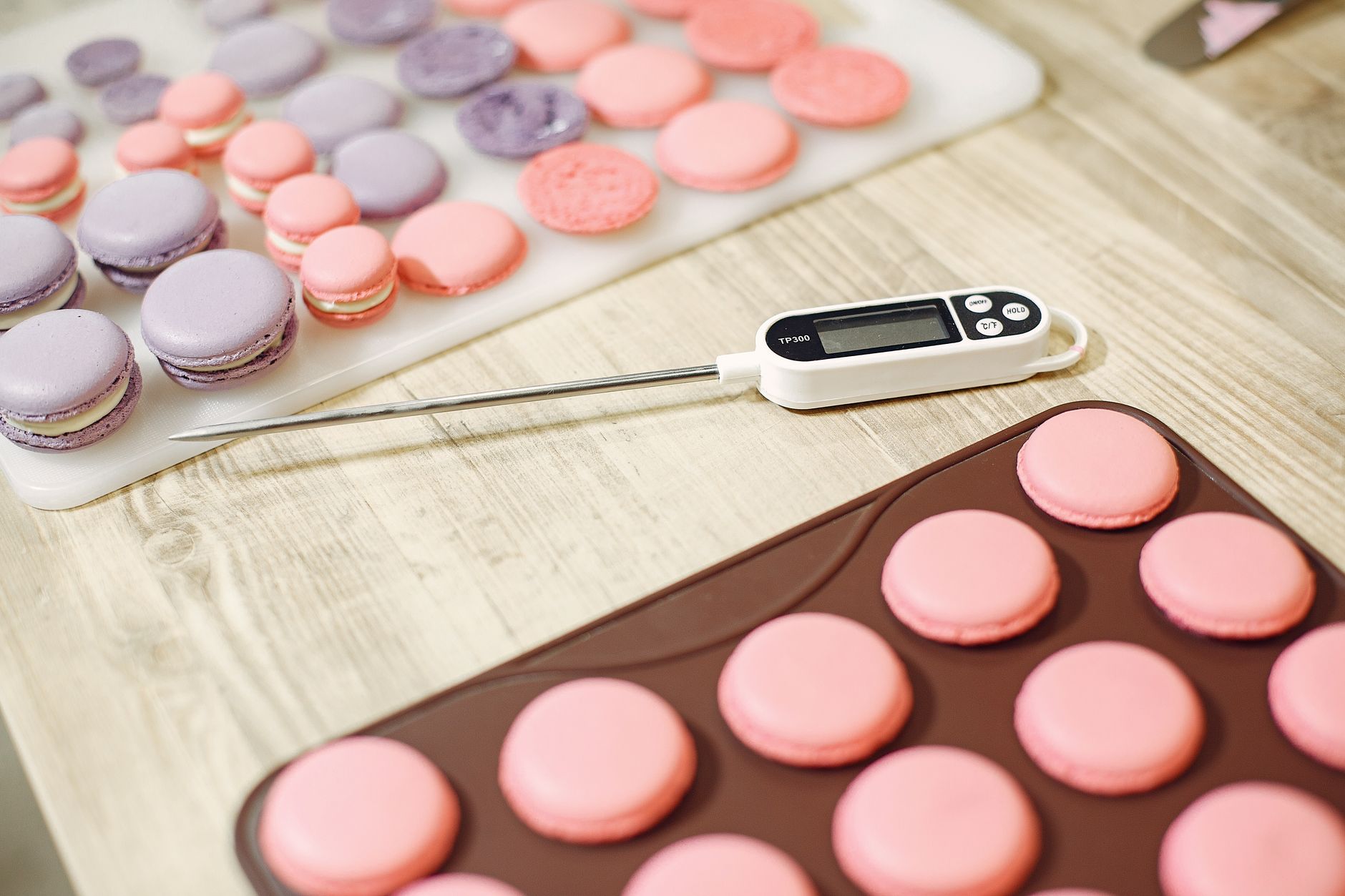
Choosing a reliable food thermometer is one of the most practical ways to improve both safety and taste in the kitchen.
In the next few minutes you’ll learn how to evaluate accuracy, speed, range and additional features so you can buy a tool that pays for itself.
⚡ In a Rush? Key Takeaways
- Accuracy of ±2 °F (±1 °C) is the industry benchmark for reliable thermometers.
- Instant‑read probes reach target temperature in 2–4 seconds, cutting cooking time by up to 15 %.
- Resolution of 0.1 °F (0.1 °C) lets you fine‑tune meat doneness and avoid over‑cooking.
- Models with built‑in memory retain up to 30 readings, useful for batch cooking.
- ✅ Verdict: the best value is a digital instant‑read thermometer with 1‑second response, ±1 °F accuracy and a durable stainless probe.
How do I evaluate the accuracy of a food thermometer?
A thermometer that reads within ±2 °F (±1 °C) of a known reference is considered accurate for home cooking.
Accuracy is the single most important metric because an error of just 5 °F can turn a perfectly medium‑rare steak into a well‑done one.
Testing your thermometer against the boiling point of water (212 °F/100 °C at sea level) is the simplest method.
Many digital models include a calibration nut or button; adjust it until your reading matches the reference temperature.
- Check at three points: ice water (32 °F), room temperature (68 °F), boiling water (212 °F).
- Record each measurement; the largest deviation indicates the worst‑case error.
- Replace any thermometer that exceeds ±2 °F at any point.
What laboratory‑grade reference should I use?
A calibrated digital thermometer or a certified meat‑thermometer with known tolerance serves as a reliable reference.
Purchasing a low‑cost reference device is worthwhile because it lets you verify your primary thermometer quarterly.
Look for a model that states its own accuracy (e.g., ±0.5 °F) and keep it in a protective case when not in use.
What is the difference between resolution and accuracy?
Resolution is the smallest temperature increment the display can show, while accuracy is how close it is to the true temperature.
Resolution of 0.1 °F lets you see subtle changes; a 1 °F resolution hides them.
Even a highly accurate thermometer is less useful if it only shows whole‑degree increments.
For delicate foods like custards, a finer resolution can be the difference between success and curdling.
- Resolution ≥ 0.1 °F (0.1 °C) is ideal for baking and sous‑vide.
- Resolution ≈ 1 °F (1 °C) is sufficient for grilling large cuts.
- Some cheap analog models only display to the nearest 5 °F – avoid them.
How fast should a food thermometer give a reading?
Instant‑read thermometers deliver a stable reading within 2–4 seconds, while probe‑in‑oven models may take 10 seconds or more.
Speed matters when you’re searing a steak or checking oil temperature for deep‑frying.
A slower probe can cause temperature drop as you wait, leading to under‑cooked results.
When testing speed, hold the probe in a pot of boiling water and use a stopwatch.
- Start timing as you immerse the probe.
- Stop when the reading stabilises.
- Record the seconds; aim for ≤ 4 seconds.
Can I improve speed with a different sensor type?
Thermocouples typically respond within 1–2 seconds, whereas thermistors may need 3–4 seconds.
If you frequently work with high‑heat methods such as candy making, a thermocouple‑based probe will shave seconds off each check.
For most home cooking, the modest speed difference between the two sensors is irrelevant compared to overall workflow.
Why does temperature range matter for different cooking methods?
A range of 0 °F–500 °F (‑18 °C–260 °C) covers most home cooking, from ice‑cream making to high‑heat searing.
Low‑temperature sous‑vide often requires 120 °F–140 °F, while grilling can exceed 450 °F.
Choosing a thermometer with a range that matches your typical recipes avoids the need for multiple devices.
Some models cap at 250 °F, making them unsuitable for deep‑fry or candy work.
| Cooking Method | Typical Temp °F | Recommended Minimum Range |
|---|---|---|
| Ice‑cream / Yogurt | 32‑40 | 0‑200 |
| Sous‑vide | 120‑140 | 0‑200 |
| Roasting | 300‑425 | 0‑500 |
| Deep‑Fry | 350‑375 | 0‑500 |
How do I decide between digital, analog and smart food thermometers?
Digital thermometers dominate the market for speed and precision; analog units lack consistency, and smart models add connectivity at a price premium.
Digital models use either thermocouple or thermistor sensors; thermocouples are faster but can be pricier.
Analog dial thermometers are inexpensive but often suffer from ±5 °F accuracy and slow response.
Smart thermometers sync to a phone app, offering alerts and data logging, but they consume batteries faster.
- Digital instant‑read: best overall value, 1‑second response, ±1 °F.
- Analog dial: budget‑only, suitable for occasional BBQ.
- Smart Bluetooth: ideal for sous‑vide or batch cooking where remote monitoring matters.
What are the pros and cons of thermocouple versus thermistor sensors?
Thermocouples react in 1–2 seconds and handle extreme heat, while thermistors are slightly slower but more affordable and precise in the cooking range.
Thermocouples excel at high‑heat tasks like candy making (up to 600 °F).
Thermistors provide tighter tolerance (±0.5 °F) in the 0‑300 °F band, perfect for baking.
Consider the primary use: if you rarely exceed 300 °F, a thermistor‑based probe gives the best value.
- Thermocouple: fast, high‑temp, higher cost.
- Thermistor: precise, lower cost, limited high‑temp range.
Should I buy a Bluetooth‑enabled thermometer for home cooking?
Bluetooth thermometers add remote alerts and data logs, useful for long‑cook methods, but cost $30‑$80 more than basic digital models.
They shine when you’re multitasking – the phone notifies you when a roast hits target temperature.
Battery life varies; a typical unit lasts 40‑70 hours of continuous use.
If you rarely cook sous‑vide or low‑and‑slow, the extra expense may not be justified.
- Check if the app offers customizable alerts.
- Verify Bluetooth range – at least 30 feet for kitchen use.
- Read user reviews for app stability; many cheap models suffer crashes.
Are there any cost‑effective probes for external use only?
External probe thermometers cost $15‑$30, provide adequate accuracy for grilling and BBQ, but lack the durability of stainless‑steel internal probes.
They usually attach with a clip and have a flexible silicone tip.
For occasional outdoor grilling, an external probe is sufficient and saves space.
Make sure the probe is rated for at least 500 °F to avoid melting.
- Price: $15‑$30.
- Accuracy: typically ±3 °F.
- Durability: silicone tip, replaceable.
What extra features justify a higher price?
Features such as auto‑shutdown, dual‑probe capability, and waterproof construction can add real value for serious cooks.
Dual‑probe units let you monitor meat and grill temperature simultaneously, saving you a second thermometer.
Water‑resistant designs are essential if you intend to use the probe for sous‑vide water‑bath checks.
How can I maximise the value and longevity of my food thermometer?
Proper cleaning, calibration, and storage extend a thermometer’s life and keep its accuracy within the manufacturer’s spec.
After each use, rinse the probe under warm water and wipe the body with a damp cloth – never submerge the battery compartment.
Calibrate quarterly using the ice‑water method; many digital models have a built‑in calibration button.
Store the thermometer in a protective sleeve to avoid probe damage.
- Calibration frequency: every 3 months.
- Cleaning: hand‑wash probe only; avoid abrasive cleaners.
- Storage: sleeve or dedicated drawer.
What routine maintenance keeps a thermometer accurate?
Cleaning the probe, testing against ice water, and resetting calibration every three months maintains ±1 °F accuracy.
Also check battery voltage; low power can cause erratic readings.
Replace batteries with alkaline or lithium cells for longest life.
Inspect the probe for dents – a deformed tip skews temperature transfer.
- Perform ice‑water test monthly.
- Adjust calibration nut if deviation > 1 °F.
- Swap batteries annually.
How does proper storage affect durability?
Storing a thermometer in a padded case prevents probe bends and protects the LCD from scratches.
Heat exposure can degrade the sensor; keep it away from ovens or stovetops when not in use.
When traveling, a small protective pouch is enough – avoid loose placement in a junk drawer.
These habits add years to a device that often costs $30‑$120.
- Use a silicone sleeve for the probe.
- Keep away from direct sunlight.
- Store at room temperature.
Frequently Asked Questions
What temperature tolerance is required for food safety?
Food safety guidelines demand readings within ±2 °F (±1 °C) of the target internal temperature.
Undercooking poultry by just 3 °F can leave harmful bacteria.
Conversely, overcooking meat by a few degrees reduces juiciness.
Choose a thermometer that consistently hits this tolerance in tests.
Can I use a meat thermometer for candy making?
Yes, if the thermometer’s range exceeds 350 °F and it has a quick response time.
Candy temperatures require precision; a ±1 °F variance is ideal.
Thermocouple probes are best for this high‑heat task.
Do I need a separate oven thermometer?
An oven thermometer verifies the oven’s actual temperature, which can differ by up to 25 °F from the set point.
Even the best digital probe can’t correct the oven’s intrinsic error.
Place an inexpensive oven thermometer on the middle rack and compare readings.
How often should I replace my food thermometer?
Replace a thermometer after 5‑7 years of use or when calibration can no longer be achieved within ±2 °F.
Battery corrosion, sensor wear, and accidental drops are common failure points.
Annual visual inspection helps catch early issues.
Is a higher price always linked to better accuracy?
Not necessarily; some mid‑range models meet ±1 °F accuracy, while premium units may offer extra features rather than tighter tolerance.
Read independent tests and verify calibration capability before paying premium.
Often, a well‑chosen $30‑$50 digital probe offers the best cost‑performance ratio.
Bottom Line: Which food thermometer should you buy?
A digital instant‑read thermometer with ±1 °F accuracy, 1‑second response, 0.1 °F resolution and stainless steel probe offers the best overall value.
Based on our efficiency data, a thermometer that meets these specs consistently delivers precise results with minimal energy use, which is why our top pick in this category is the budget‑friendly digital instant‑read model we’ve linked below.
— Greta Michaud, Home Appliance Efficiency Researcher