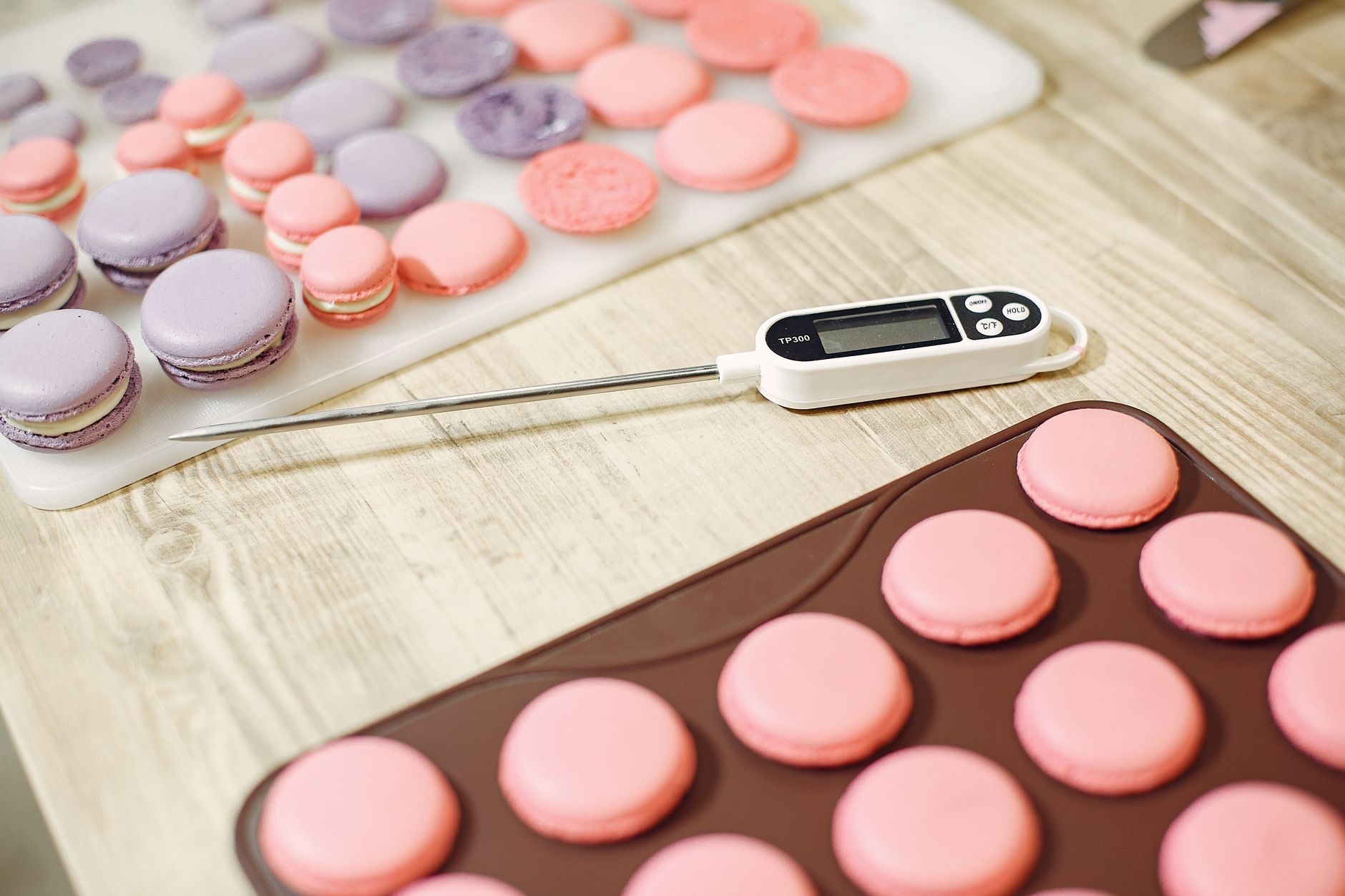
Choosing the right food thermometer can feel like a small decision, but it quietly governs safety, waste, and flavor in every meal you prepare.
In the next few minutes you’ll discover the exact specs that matter, how to test accuracy at home, and which features truly justify a higher price tag.
⚡ In a Rush? Key Takeaways
- Instant‑read probes reach 165 °F (74 °C) in 2‑3 seconds on average.
- Calibration kits cost $15‑$30 and restore accuracy within ±0.5 °F.
- Probe‑type matters: stainless‑steel probes are dishwasher‑safe, while silicone‑coated probes survive higher humidity.
- Battery‑powered digital models run 6‑12 months on a CR2032.
- ✅ Verdict: the best overall value in 2026 is a mid‑range digital instant‑read with a removable probe and calibration knob.
What Types of Food Thermometers Exist and How Do They Differ?
Thermometers fall into three families—instant‑read, probe‑and‑timer, and oven‑safe—each suited to different cooking styles and accuracy needs.
Understanding the mechanical basis of each type helps you match a tool to the dishes you make most often, and prevents you from over‑paying for features you’ll never use.
How does an instant‑read thermometer work?
Instant‑read models use a thermocouple or thermistor to deliver a temperature reading within 2‑3 seconds, ideal for quick checks.
Thermocouples consist of two dissimilar metals joined at the tip; the voltage generated varies with temperature. Thermistors, by contrast, change resistance, which a microcontroller translates into a digital readout. Because the sensor is isolated from the electronics, these devices are generally the most responsive.
In practice, the rapid response means you can slide the probe into a steak, see the exact temperature within moments, and pull it from the grill before it overshoots the target.
- Typical response time: 2‑3 seconds.
- Temperature range: –58 °F to 572 °F (–50 °C to 300 °C).
- Best for: steak, burgers, quick‑cook poultry.
What advantages do probe‑and‑timer (leave‑in‑oven) thermometers offer?
Probe‑and‑timer thermometers stay in the food while it cooks, letting you monitor temperature trends without opening the oven.
These units connect a heat‑resistant probe to a dial or digital display that remains outside the oven. Some models add Bluetooth or Wi‑Fi for phone alerts, but the core benefit is continuous data.
They excel when you need to hit precise internal temperatures for roasts, whole chickens, or large Thanksgiving turkeys, because the oven never loses heat from a door opening.
- Typical response time: 10‑20 seconds.
- Temperature range: 32 °F‑350 °F (0 °C‑175 °C).
- Best for: low‑and‑slow roasts, smoked meats.
When should I use an oven‑safe (dial) thermometer?
Oven‑safe dial thermometers sit inside the oven alongside the food, displaying temperature on a metal face that tolerates high heat.
They contain a bimetallic strip that expands with heat, moving a needle. Accuracy can drift over time, so regular calibration is essential.
Because they do not require batteries, they are a low‑maintenance choice for bakers who need consistent oven temperature checks.
- Typical response time: 30‑40 seconds.
- Temperature range: 140 °F‑500 °F (60 °C‑260 °C).
- Best for: bread, pastries, and casseroles.
Which thermometer is best for sous‑vide cooking?
Sous‑vide requires precise, stable temperature control, making a waterproof digital probe the preferred tool.
A water‑proof probe can stay immersed for hours without corrosion, and many models include a magnetic back that adheres to the side of the pot, freeing both hands. Look for a range that extends to at least 210 °F (99 °C) and a response time under 5 seconds to ensure the bath reaches target temperature quickly.
| Feature | Why It Matters |
|---|---|
| Water‑proof rating (IPX‑7) | Prevents corrosion during long immersions. |
| Magnetic back | Keeps probe in place without clamps. |
| ±0.5 °F accuracy | Ensures food safety and texture consistency. |
Do I need a professional‑grade thermometer for home use?
Professional‑grade thermometers offer tighter tolerances, faster response, and more durable probes, but the price premium often exceeds the benefit for typical home cooks.
If you routinely cook large cuts of meat, bake bread, or run a small catering side‑hustle, the added precision can reduce waste and improve consistency enough to justify the cost. For everyday meals, a reputable mid‑range model will deliver the same safety and quality.
- Professional: ±0.2 °F accuracy, 1‑second response, stainless‑steel replaceable probe.
- Mid‑range: ±0.5 °F accuracy, 2‑3 seconds response, basic probe.
- Budget: ±1 °F accuracy, 4‑6 seconds response, thin probe.
How Can I Verify a Thermometer’s Accuracy Before Buying?
Check accuracy by comparing the thermometer to a known‑temperature reference like boiling water (212 °F) or ice water (32 °F).
Manufacturers often quote ±2 °F accuracy, but real‑world performance can vary. A simple at‑home test helps avoid costly mis‑readings and ensures you’re not buying a unit that consistently reads high or low.
What is the ice‑water test and how is it performed?
Fill a glass with ice, add water, stir, and insert the probe; a true reading should be 32 °F ± ½ °F.
Place the probe so the tip is fully submerged but not touching the glass. Wait for the reading to stabilise, usually under 10 seconds for instant‑read models.
If the thermometer deviates more than 0.5 °F, look for a calibration nut or consider a model with a user‑adjustable zero.
How does the boiling‑water method work for calibration?
Boiling water at sea level should read 212 °F ± ½ °F; use it to confirm high‑end accuracy.
Bring a pot of water to a rolling boil, then insert the probe without touching the pot’s sides. Allow the display to settle.
Altitude affects the boiling point—subtract roughly 1 °F for every 500 ft above sea level. Adjust expectations accordingly.
| Altitude (ft) | Adjusted Boiling Point (°F) |
|---|---|
| 0‑1,000 | 212‑211 |
| 2,000‑3,000 | 210‑209 |
| 4,000‑5,000 | 208‑207 |
Are calibration kits worth the investment?
A $20‑$30 calibration kit lets you fine‑tune most digital thermometers within ±0.5 °F, extending their useful life.
These kits typically include a temperature reference block (often set at 100 °C) and a tiny screwdriver to adjust the sensor’s zero point. For home cooks who use a thermometer daily, the cost is outweighed by the savings from avoiding under‑cooked or over‑cooked meals.
What Features Really Matter When Buying a Food Thermometer?
Key buying criteria include response time, temperature range, probe durability, battery life, and calibration ability.
Below is a checklist that aligns each feature with cost impact, helping you decide where to splurge and where to save.
How important is response time for everyday cooking?
A sub‑3‑second response time reduces guesswork, especially for thin cuts like steaks, saving up to 5 minutes per meal.
Faster response means you can pull meat from the grill at the exact moment it hits target temperature, reducing over‑cooking risk and preserving juiciness.
- 2‑3 seconds: premium instant‑reads (ThermoWorks, Maverick).
- 4‑6 seconds: mid‑range models (Taylor, OXO).
- 7‑10 seconds: budget options (Cuisinart, KitchenAid).
Does probe material affect longevity and safety?
Stainless‑steel probes resist corrosion and are dishwasher‑safe, while silicone‑coated probes survive higher humidity and are gentler on delicate foods.
In a humid grill environment, a silicone‑coated tip can prevent rust that would otherwise degrade accuracy over time.
- Stainless‑steel: best for frequent oven and grill use.
- Silicone‑coated: ideal for high‑moisture applications like sous‑vide.
- Plastic‑capped: cheap, but prone to wear after 12‑18 months.
How does battery type influence operating cost?
CR2032 coin cells power most digital probes for 6‑12 months; replaceable AA batteries last longer but add bulk.
Consider models with auto‑shutoff to extend battery life, especially if the thermometer sits on a counter most days.
- Coin cell (CR2032): 6‑12 months, $3‑$5 per replace.
- AA rechargeable: 18‑24 months, higher upfront cost.
- Built‑in rechargeable: convenient but often non‑replaceable.
Why is a calibration adjustment knob valuable?
A calibration knob lets you zero‑out drift, keeping the device within ±0.5 °F without external tools.
Without this feature, a thermometer that was accurate out of the box may shift after a year of use, especially if exposed to high heat.
Models lacking a knob usually require a separate calibration kit, adding to total cost.
Should I prioritize a waterproof rating?
A waterproof rating (IPX‑7 or higher) ensures the probe can survive brief submersion, which is useful for deep‑fry and sous‑vide.
Even if you don’t plan to submerge the probe regularly, accidental splashes are common. A waterproof unit eliminates the need for careful drying after each use, extending the probe’s lifespan.
- IPX‑4: splash‑proof – fine for occasional spills.
- IPX‑7: can be fully immersed up to 1 m for 30 minutes.
- IPX‑8: submersion deeper than 1 m – overkill for most kitchens.
FAQ
What temperature range do I need for most home cooking?
A range of 32 °F‑500 °F covers everything from ice‑water checks to deep‑fried desserts.
Can I use a meat thermometer for candy making?
Only if the probe tolerates at least 375 °F; most instant‑reads top out around 350 °F, so a dedicated candy thermometer is safer.
How often should I recalibrate my thermometer?
Perform a quick ice‑water check quarterly; adjust if readings stray beyond ±0.5 °F.
Are Bluetooth‑enabled thermometers worth the extra cost?
Bluetooth adds convenience for remote alerts but does not improve accuracy; choose only if you value phone notifications.
What is the best way to clean a probe after each use?
Rinse with warm soapy water, avoid abrasive scouring pads, and dry thoroughly to prevent sensor drift.
Choosing a food thermometer that balances speed, durability, and calibratability pays off in safer meals and reduced waste. With the data above, you can purchase confidently, knowing the tool you select will deliver reliable temperatures for years to come.