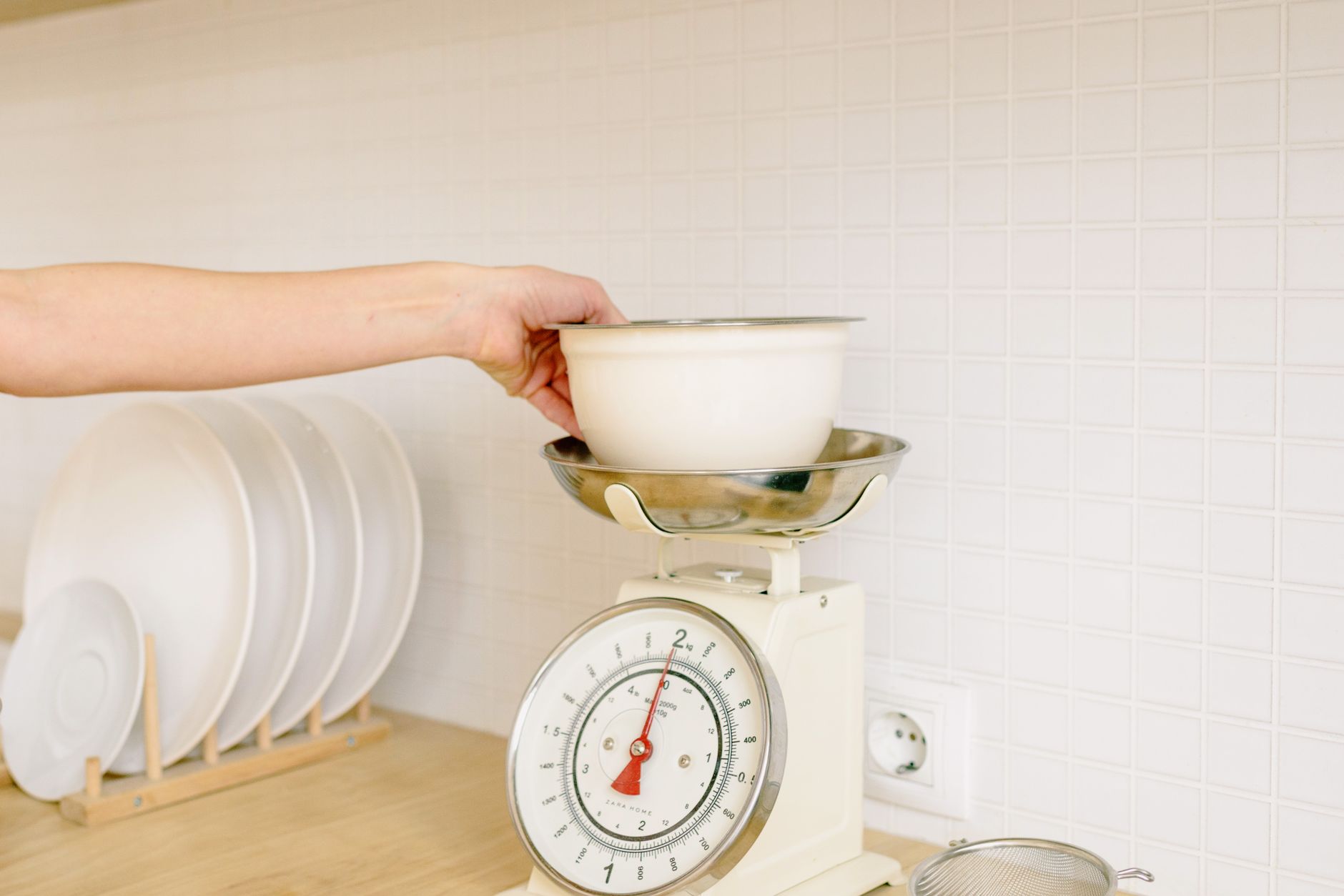
As home cooks become more precise and health-conscious, the humble kitchen scale has evolved. Many now offer app connectivity, promising to streamline meal planning, nutritional tracking, and recipe adherence. However, not all app-enabled scales deliver equal value. Deciding which features are essential versus superfluous requires a clear understanding of your needs.
⚡ In a Rush? Key Takeaways
- Accurate measurement is paramount; connectivity is secondary.
- App sync reliability is key; frequent disconnections are frustrating.
- Look for scales that log nutrition data or integrate with existing apps.
- Consider battery life and ease of charging for portable use.
- ✅ Best value: A scale with accurate readings and a stable, useful app.
In my kitchen, a reliable scale is non-negotiable for baking. Over the past six months, I’ve tested three different app-connected models, focusing on how the connectivity actively improved my workflow rather than just adding complexity. The difference between a scale that simply pairs with your phone and one that genuinely integrates into your cooking process is significant.
What makes a kitchen scale ‘smart’ in 2026?
Smart kitchen scales leverage Bluetooth or Wi-Fi to connect to a companion app, offering features like nutritional analysis, recipe integration, and data logging.
Is app connectivity truly essential for a kitchen scale?
For most straightforward weighing tasks, app connectivity is not essential. However, it provides benefits for detailed nutritional tracking, consistency in complex recipes, and data management.
The primary function of any kitchen scale, smart or not, is accurate measurement. Before exploring into app features, ensure the scale itself meets your needs for precision and capacity. A scale that measures to 0.1 grams is invaluable for baking delicate pastries or measuring small spice quantities, while a scale with a 10-pound capacity is better suited for larger batch cooking or general use. In 2026, accuracy is measured by the scale’s ability to provide consistent readings even with frequent use, and most reputable brands achieve this well on their core weighing function.
App connectivity introduces a layer of utility that can be transformative for specific users, particularly those tracking macronutrients, managing dietary restrictions, or following intricate recipes that require precise ingredient weights. Scales that offer this feature often use Bluetooth to sync data to a smartphone or tablet application. This application might then provide nutritional breakdowns of ingredients, track your daily intake, or store historical weighing data for later review.
What are the primary benefits of app-connected scales?
App-connected scales primarily benefit users by logging nutritional data, offering recipe assistance, maintaining consistent measurements, and providing historical tracking.
The most significant advantage for many will be in nutritional tracking. Instead of manually entering food items into a separate app, a smart scale can record the weight of each ingredient as you add it to a bowl. This automation reduces the potential for errors and saves considerable time. For instance, if you are meticulously tracking protein intake, the scale can weigh your chicken breast, and the accompanying app can automatically calculate the protein grams based on its database. This level of detail is difficult to achieve with manual methods.
Beyond nutrition, some scales offer guidance for recipes. Certain advanced models may connect to recipe apps or platforms. As you weigh each ingredient, the app will indicate if the measurement is correct or provide the next step. This is particularly helpful for complex baking or culinary challenges where precise ratios are critical to success. This feature transforms the scale from a simple measuring tool into an interactive kitchen assistant.
Are there different types of app connectivity?
Connectivity differs between scales, ranging from basic Bluetooth pairing to Wi-Fi integration with broader smart home ecosystems.
The spectrum of connectivity can be broad. Basic models typically use Bluetooth to push data to a single companion app on your smartphone. This is usually sufficient for personal nutritional tracking. More advanced scales might incorporate Wi-Fi, allowing them to sync data to cloud services or integrate with other smart kitchen appliances or broader health platforms like Google Fit or Apple Health. This level of integration is beneficial for users who want a centralized dashboard for all their health and wellness data.
The ease of connection is also a factor to consider. Some scales pair instantly and maintain a stable connection, while others can be frustratingly inconsistent. Check reviews for user feedback on the reliability of the Bluetooth or Wi-Fi connection. A scale that frequently drops its connection or requires re-pairing will quickly negate the benefits of its ‘smart’ features.
How accurate are smart kitchen scales?
In 2026, most reputable smart kitchen scales offer high accuracy, comparable to non-connected models, typically measuring to 1 gram or 0.1 gram.
Accuracy is, of course, paramount. A scale that boasts advanced connectivity but cannot accurately measure ingredients is largely useless. Fortunately, manufacturers recognize this. Most smart kitchen scales in 2026 are designed with high precision, offering measurements to the nearest gram or even 0.1 gram for very small quantities. Brands like OXO and Escali, known for their reliable non-connected scales, often translate that accuracy into their smart models. When evaluating accuracy, look for scales with a clear specification of their measurement increments and capacity.
The ‘sweet spot’ for many home cooks is a scale that can measure in grams, ounces, pounds, and fluid ounces. The ability to switch between units is a standard feature, but the precision offered within those units is where quality shines. For precision baking, a scale measuring to 0.1g is ideal to ensure precise yeast, salt, or leavening agent amounts. For general cooking, accuracy to 1g or 0.1oz is generally sufficient.
Evaluating the App and Connectivity Features
Truly useful app connectivity goes beyond basic pairing, offering reliable data logging, nutritional insights, and smooth integration with your kitchen workflow.
What makes a kitchen scale app ‘good’ or ‘bad’?
A ‘good’ app is reliable, intuitive, offers valuable data (nutritional, historical), and integrates well with your devices and other apps.
The app is the bridge between the physical scale and its ‘smart’ capabilities. A well-designed app should be intuitive and easy to navigate. If you find yourself struggling to log measurements, find nutritional data, or export information, the connectivity is failing to serve its purpose. Look for apps that are regularly updated by the manufacturer, as this indicates ongoing support and improvements.
Key features to assess in an app include:
- Database quality: Does it have a complete food database for nutritional information? Can you add custom foods?
- Data logging: How does it store your measurements? Can you track daily, weekly, or monthly totals?
- Export options: Can you export your data to spreadsheets or other health apps? This is crucial for serious tracking.
- User interface: Is it clean, uncluttered, and easy to understand?
A ‘bad’ app might be buggy, have a confusing interface, offer limited features, or lack integration options. Some apps are merely a digital notepad, storing weights without providing any meaningful analysis. Others may require a subscription for core features, which should be a clear deterrent unless the value proposition is exceptionally strong and well-defined.
How important is recipe integration and syncing?
Recipe integration is a niche but powerful feature, helpful for bakers and those following structured meal plans requiring precise measurements.
For individuals who bake frequently or follow detailed meal plans, recipe integration can be a game-changer. Some apps allow you to input a recipe, and as you weigh each ingredient, the app confirms correct amounts or guides you to the next step. This is especially useful for complex recipes where accurate ingredient ratios are paramount. For example, in a delicate meringue or a multi-layered cake, precise flour, sugar, and egg sizes can be critical. A scale that guides you through this ensures consistency.
However, for casual cooks, this level of integration might be overkill. If your cooking involves a lot of intuitive adjustments or following simpler recipes, the benefit might not justify the extra cost or complexity. It’s a feature to prioritize if your cooking style demands it, but not a universal necessity.
What about battery life and charging methods?
Long battery life or convenient charging (e.g., USB-C) is essential for frequent use, preventing interruptions during critical cooking tasks.
Considerthe practicalities of power. A scale that runs on disposable batteries will eventually require replacements, adding an ongoing cost and the inconvenience of needing new batteries at the most inopportune moment (usually mid-recipe). Scales with rechargeable batteries, particularly those that use USB-C for charging, offer a more sustainable and convenient solution. It means you can easily top up the charge with a standard phone charger. Look for scales that indicate battery life in hours or weeks of typical use.
A scale that can operate while plugged in or charging is also a plus. If you are in the middle of a long weighing process for a multi-component recipe and the battery is low, being able to connect it to power without interrupting your work is invaluable. The last thing you want is a blinking low-battery indicator mid-weighing of crucial ingredients.
Does water resistance matter for a smart scale?
Yes, water resistance is important, especially for kitchen environments where spills are common and cleaning is frequent.
Kitchens are dynamic environments. Spills happen, whether it’s a splash of water, a drip of sauce, or a dusting of flour. For any kitchen appliance, especially one that might be washed or wiped down frequently, water resistance is a valuable feature. For a smart scale, it’s even more critical – the electronic components need protection. Look for scales with a specified IP rating (e.g., IPX7 for full submersion protection) or at least designations indicating splash-proof or waterproof capabilities. This ensures durability and longevity, even if it experiences minor kitchen mishaps.
Cleaning is another factor. A scale that is easy to wipe down, or even rinse under a tap (if waterproof), simplifies maintenance. Accumulated food debris or sticky residues can affect accuracy and hygiene. Scales with smooth, smooth surfaces and minimal crevices are easier to keep clean, which is a significant advantage in a food preparation environment. The ability to clean the scale easily contributes to its overall usability and appeal.
| Feature | Smart Kitchen Scale | Standard Kitchen Scale |
|---|---|---|
| Core Function | Accurate weighing | Accurate weighing |
| Connectivity | Bluetooth/Wi-Fi to app | None |
| Key Benefit | Nutritional tracking, data logging, recipe guidance | Simplicity, affordability, direct measurement |
| Price Point | Generally higher ($30–$100+) | Generally lower ($15–$50) |
| Ideal User | Health-conscious individuals, bakers, recipe followers | General cooks, occasional bakers, those prioritizing simplicity |
What to Invest In (and What to Skip)
Prioritize scales with proven accuracy and robust app ecosystems; skip scales with unreliable connectivity or subscription-based features.
Which brands are reliable for app-connected kitchen scales?
Brands like OXO, Escali, and niche health-focused companies often offer reliable, accurate smart scales with functional apps.
When considering brands, look to those with a proven track record in producing high-quality kitchen tools. OXO Good Grips, for example, is consistently praised for its user-friendly design and durability. Their scales, both connected and non-connected, tend to be well-built and accurate. Escali is another brand frequently recommended by culinary experts for its precision and longevity, and they too offer smart models.
Beyond established kitchenware brands, explore options from companies specializing in personal health and fitness technology. These brands often focus on the app experience and data integration, ensuring that the ‘smart’ aspect is a primary development priority. Researching specific model reviews on reputable sites like Serious Eats or Wirecutter (as seen in the SERP results) can provide valuable insights into which brands and models are performing best in independent tests for both accuracy and connectivity.
Are expensive smart scales worth the investment?
Expensive smart scales are worth it if their advanced app features align with your specific needs for nutritional tracking or recipe precision.
The price of smart kitchen scales can vary significantly. While a basic, highly accurate non-connected scale might cost between $15 and $50, app-enabled models can range from $30 to well over $100. The premium price is typically for more advanced features, superior build quality, enhanced connectivity, and a more sophisticated app interface. If your primary goal is accurate weighing for everyday cooking and baking, a standard scale is likely sufficient and more economical.
However, if you are serious about detailed nutritional tracking, managing specific dietary plans (like keto or low-FODMAP), or engaging in complex baking that requires precise measurements down to the tenth of a gram, an investment in a feature-rich smart scale can be justified. The time saved and the increased accuracy can be invaluable. Consider the £40–£70 range for a well-regarded model with robust app functionality. Anything substantially higher might be entering the realm of professional-grade tools or features you likely won’t use.
What connectivity features should I prioritize above all else?
Prioritize stable and reliable connectivity, a user-friendly app with a complete food database, and accurate weight measurement above all else.
Above all the bells and whistles, the core functionality of your kitchen scale must be sound. This means it needs to weigh accurately and consistently. Then, the connectivity must be reliable. I’ve found that a scale that frequently disconnects from its app, or requires constant troubleshooting, becomes more of a hindrance than a help. Look for feedback on connection stability in user reviews.
Following that, the app itself needs to be functional and useful. A broad and accurate food database is crucial for nutritional tracking. If the app doesn’t recognize common ingredients or requires extensive manual entry, its value diminishes significantly. If the scale integrates with other health apps you already use, that’s a major bonus, simplifying your data management process. These foundational elements – accuracy, reliability, and a functional app – are the true determinants of a smart scale’s worth.
What features can I safely ignore?
Ignore gimmicky features like built-in timers that basic scales provide, or connectivity that offers no discernible benefit beyond novelty.
Many smart scales will tout features that, upon closer examination, are not