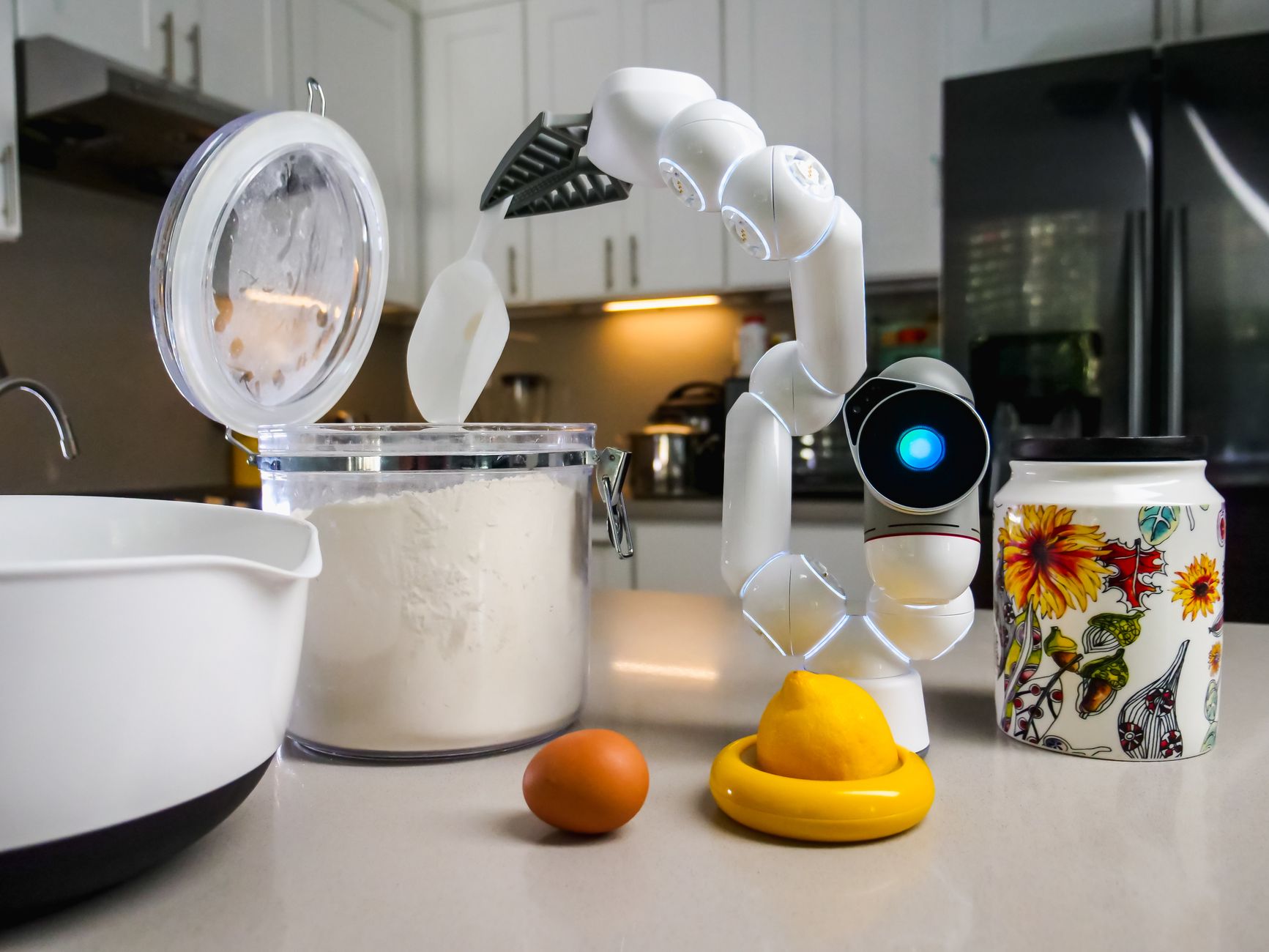
As technology weaves itself more deeply into our daily routines, the kitchen is no exception. The promise of ‘smart’ appliances — those with Wi-Fi connectivity, app control, or advanced automation — can be alluring, particularly for cooking. Yet, the reality is that ‘smart’ doesn’t always equate to ‘useful’ or ‘worth the investment.’ For the home cook focused on efficiency and budget, discerning which affordable smart cooking appliances genuinely earn their keep is crucial.
⚡ In a Rush? Key Takeaways
- Smart slow cookers (connected via Wi-Fi) offer remote monitoring and recipe integration for $50-$100.
- Budget-friendly electric pressure cookers with app control can consolidate functions for under $150.
- Wi-Fi enabled ovens often cost an extra $300-$800 with limited tangible benefits for everyday cooking.
- Voice-controlled toasters and smart spatulas are novelties with questionable practicality for most kitchens.
- ✅ Verdict: Prioritize smart slow cookers and multi-function pressure cookers; skip premium Wi-Fi ovens and niche gadgets.
Should I Invest in a Smart Slow Cooker in 2026?
Smart slow cookers offer remote monitoring and recipe integration, typically costing $50-$100, making them a worthwhile investment for convenience.
The humble slow cooker has been a kitchen workhorse for decades, offering unparalleled convenience for hands-off meal preparation. Introducing ‘smart’ capabilities into this familiar appliance has, for the most part, enhanced its usability without dramatically increasing the cost. A smart slow cooker, typically featuring Wi-Fi connectivity, allows you to monitor and adjust cooking times and temperatures remotely via a smartphone app. This means you can be at the office and adjust the cooker if your meeting runs late, or ensure dinner is ready precisely when you arrive home.
The practical advantages here are significant. Unlike traditional slow cookers where you’re tethered to the kitchen, a smart model offers peace of mind. If your schedule shifts unexpectedly, you can make adjustments. Many also come with integrated recipe libraries or can be programmed with custom cooking profiles, which can be a boon for those experimenting with new dishes or preparing complex meals.
What Benefits Does a Smart Slow Cooker Actually Provide?
Remote monitoring, temperature adjustments, and recipe integration are key benefits, enhancing convenience without significant added cost.
The primary benefit of a smart slow cooker is its remote access. Imagine starting a pot roast in the morning and being able to check its progress or adjust the temperature from your phone during your lunch break. This capability is particularly useful for busy households where dinner prep needs to be flexible. Furthermore, many smart slow cookers connect to apps that offer curated recipes, often with pre-programmed settings. This can simplify the cooking process, guiding even novice cooks through complex recipes with a few smartphone taps.
Beyond convenience, some smart slow cookers offer enhanced precision. They might feature more accurate temperature control than their non-connected counterparts, leading to more consistent results. This increased reliability in cooking outcomes can reduce the chances of overcooked or undercooked meals, saving both time and the cost of potentially wasted ingredients.
Are Smart Slow Cookers Worth the Extra Cost?
Yes, the price premium for smart slow cookers ($20-$50 more) is justified by the convenience and control they offer for busy individuals.
Affordable smart slow cookers generally add between $20 to $50 to the price of a standard model. Considering the convenience, peace of mind, and advanced features, this premium is often well worth it. For individuals or families with demanding schedules, the ability to manage dinner remotely can be a genuine lifesaver. It removes the stress of rushing home to start cooking or worrying about meals overcooking.
When evaluating the ‘worth,’ consider your own lifestyle. If you rarely deviate from a strict home schedule, a basic slow cooker might suffice. However, if your days are unpredictable, the added connectivity of a smart model provides a level of flexibility that a standard appliance cannot match. I’ve found that the ability to adjust a recipe on the fly, perhaps adding more liquid or reducing heat remotely, has saved ingredients from becoming dry or burnt on multiple occasions.
What Features Should I Look For in a Smart Slow Cooker?
Prioritize stable Wi-Fi connectivity, an intuitive app with remote temp/time control, and safety features like auto-shutoff.
When selecting a smart slow cooker, look for established brands known for appliance reliability, such as Crock-Pot, Hamilton Beach, or Instant Pot. Ensure the connectivity is robust; some cheaper models can struggle with consistent Wi-Fi signals, defeating the purpose.
- App Intuition: The accompanying app should be user-friendly and responsive, clearly displaying current temperature, remaining time, and allowing simple adjustments.
- Temperature Precision: Check reviews for consistency in temperature holding. Some offer specific presets (low, high, warm) while others allow more granular control.
- Capacity: As with any slow cooker, choose a size appropriate for your household. 4-quart models are good for 3-4 people, while 6-quart models serve 5-6.
- Safety Features: Look for auto-shutoff functions and cool-touch exteriors, standard on most good models.
Is an Electric Pressure Cooker with Smart Features a Good Buy?
Yes, multi-function smart electric pressure cookers under $150 are excellent buys, consolidating several appliances into one efficient unit.
Electric pressure cookers have revolutionized stovetop cooking, dramatically reducing cooking times. The ‘smart’ iteration typically integrates app control and advanced preset programs, often consolidating the functions of a slow cooker, rice cooker, steamer, and pressure cooker into a single unit. These appliances can be incredibly versatile and, when chosen wisely, represent excellent value for money.
The primary appeal of a smart electric pressure cooker lies in its multifunctionality. Instead of cluttering your countertop with several single-purpose gadgets, one appliance can handle a wide array of cooking tasks. This consolidation is particularly beneficial in smaller kitchens or for those seeking a more streamlined cooking experience. The pre-programmed settings often take the guesswork out of common dishes, from tough cuts of meat to delicate risottos.
How Does a Smart Pressure Cooker Save Time and Money?
They cut cooking times by up to 70% and consolidate appliances, reducing kitchen clutter and appliance costs.
The time savings are dramatic. For instance, a tough cut of meat that might take 3-4 hours in a conventional oven or slow cooker can be tender and ready in 45-60 minutes under pressure. This speed is invaluable on busy weeknights. The energy savings are also notable; because cooking times are shorter, less energy is consumed overall compared to longer cooking methods. By acting as multiple appliances, a single smart pressure cooker can negate the need to purchase and power several other devices.
Furthermore, the efficient cooking environment created by pressure cooker seals in moisture and nutrients, often resulting in more flavorful and tender food. This can encourage home cooking over takeout, leading to significant long-term savings on food bills. As reported by many users, the consistent results from these machines also mean fewer cooking mishaps and less wasted food.
What Are the Downsides of Smart Pressure Cookers?
Potential downsides include a learning curve, the need for specific cooking techniques, and reliance on app connectivity.
While highly efficient, smart pressure cookers do come with a learning curve. Understanding the difference between natural pressure release and quick release, for example, is crucial for achieving the best results with different types of food. Over-reliance on pre-programmed settings without understanding the underlying principles of pressure cooking can sometimes lead to suboptimal outcomes.
- Learning Curve: Different foods require different pressure levels and cooking times. Beginners may need to consult recipes or online guides frequently.
- App Dependence: While many models have manual controls, the ‘smart’ features rely on a stable internet connection and a functional app.
- Design Clutter: Although it consolidates appliances, a pressure cooker can still be a bulky item on the counter.
- Cleaning: While the inner pot is typically dishwasher-safe, the lid and sealing ring require manual cleaning and can trap odors if not properly maintained.
When Should You Skip the Smart Features?
Skip ‘smart’ features if you rarely use pressure cooking, are on a very tight budget, or prefer fully manual controls for simplicity.
If your cooking habits are simple and you rarely venture beyond basic stovetop methods or a standard slow cooker, the added complexity and cost of a smart pressure cooker might not be justified. Many excellent, non-smart electric pressure cookers perform admirably and can be found for under $100. These still offer tremendous time-saving benefits and program versatility without the need for app connectivity.
Choosing a model without smart features can sometimes mean a more robust build quality or a lower price point, allowing you to invest in a higher-capacity unit or superior materials for the same budget. For cooks who value simplicity and prefer the tactile feedback of physical buttons and knobs, a traditional electric pressure cooker is often the more satisfying choice.
Should You Buy a Wi-Fi Enabled Oven?
Generally, skip Wi-Fi enabled ovens; the extra $300-$800 cost yields minimal cooking benefits for most home cooks in 2026.
Ovens are the heart of many kitchens, and the idea of a ‘smart’ oven that can be controlled remotely or accessed via a smartphone app sounds futuristic. However, for the vast majority of home cooks, the practical benefits of Wi-Fi connectivity in a conventional oven are marginal at best, and the premium price tag is substantial. Most smart oven features revolve around preheating remotely, adjusting temperatures, or receiving notifications when cooking is complete.
While remote preheating sounds convenient, the reality is that ovens need to preheat anyway, and the time saved by initiating it remotely is often negated by the fact that you still need to be home to place the food inside. Furthermore, many modern ‘dumb’ ovens come with rapid preheat functions that are nearly as fast. The core cooking performance — how evenly it bakes, roasts, or broils — is determined by the oven’s insulation, heating elements, and convection fan, not its connectivity.
What Enhanced Features Do Wi-Fi Ovens Offer?
Features include remote preheating, cooking notifications, guided cooking, and sometimes diagnostic capabilities.
Smart ovens often boast features designed to simplify the cooking process and enhance user experience. These can include:
- Remote Preheat: Start preheating the oven from your smartphone before you get home, theoretically saving time.
- Cooking Notifications: Receive alerts on your phone when the oven has preheated, when cooking is complete, or when timers are about to expire.
- Guided Cooking: Some models offer integrated recipe apps that can walk you through cooking steps and automatically adjust oven settings.
- Diagnostic Tools: Certain smart ovens can self-diagnose issues and alert you or a service technician to potential problems.
- Voice Control Integration: Some models can be linked with smart home assistants like Google Assistant or Alexa.
While these features can sound appealing, their everyday utility is often less than advertised. For many, the novelty wears off quickly, and they revert to traditional manual controls. The actual cooking performance is rarely superior to a similarly priced non-connected model.
Is the Price Premium for Smart Ovens Justified?
No, the typical $300-$800 premium for Wi-Fi enabled ovens is rarely justified by the functional benefits for most home users.
The cost difference between a standard oven and a comparable smart model can be stark. This premium often extends into the $300 to $800 range, depending on the brand and specific features. When considering the core function of an oven – to cook food reliably and evenly – this added expense offers very little tangible improvement for the average home cook. The technology used for connectivity is also subject to obsolescence, potentially impacting long-term usability.
Instead of investing in connectivity, consider allocating that budget towards an oven with superior build quality, better insulation, a more effective convection system, or even a higher-quality 10-year total cost of ownership appliance from a reliable brand like Consumer Reports’ most reliable brands. These features directly impact cooking performance and longevity, offering a far greater return on investment than app control.
What are Alternatives to Smart Oven Connectivity?
A good quality oven timer, a reliable thermometer, and smart plugs for non-connected appliances are cost-effective alternatives.
You can achieve many of the functional benefits of a smart oven with far less investment. Reliable mechanical or digital timers are inexpensive and serve the same purpose as oven timers. For precise cooking temperatures, an internal oven thermometer (which costs around $10-$15) provides far more accurate readings than relying solely on the oven’s internal thermostat, which can be off by 25°F or more. Many older, high-quality ovens are known for their superior temperature stability and even cooking, proving that smart features are not essential for great results.
If you have other appliances you’d like to monitor or control remotely, consider affordable smart plugs. These can turn almost any appliance with a simple on/off switch into a remotely controllable device, often adding a layer of smart functionality for under $20. For example, a smart plug could technically turn off an oven if an extended timer is reached, though this is a safety feature best left to dedicated oven controls.
Are Voice-Controlled Toasters and Gadgets Worth It?
Skip voice-controlled toasters and similar niche smart gadgets; they are novelties with little practical benefit and high cost.
The market is flooded with niche ‘smart’ kitchen gadgets, from voice-controlled toasters to Wi-Fi-enabled spatulas. While these items might seem innovative or fun, they generally represent a poor investment for the average home cook. The convenience they promise is often minimal, and the price point is significantly higher than their non-connected counterparts. Such devices often represent an attempt to capitalize on the ‘smart home’ trend without providing genuine, everyday value.
Consider a voice-controlled toaster. Its primary function is to toast bread. While you can ask it to start toasting, this offers negligible time savings over pressing a button. The novelty of speaking to your toaster will likely wear off within weeks, leaving you with an expensive appliance that does the same job as a $20 model. Similarly, smart spatulas or thermometers that connect to apps for specific cooking tasks often provide data that is either easily obtainable manually or not critical for achieving good results.
What’s the Appeal of Niche Smart Kitchen Gadgets?
The appeal lies in novelty and the futuristic ‘smart home’ aesthetic, rather than genuine functional improvements.
The primary appeal of these gadgets is often tied to their novelty factor and the futuristic allure of a fully integrated smart kitchen. They can be conversation starters and offer a sense of embracing cutting-edge technology. For early adopters or those seeking to build a complete smart home ecosystem, these items might seem enticing.
However, from a practical standpoint, most homeowners find that these devices offer little improvement over traditional methods. They can also introduce complexities, such as requiring specific app updates, unstable Bluetooth or Wi-Fi connections, and battery replacements, that outweigh their perceived benefits. The cost of these specialized gadgets often means they detract from a budget that could