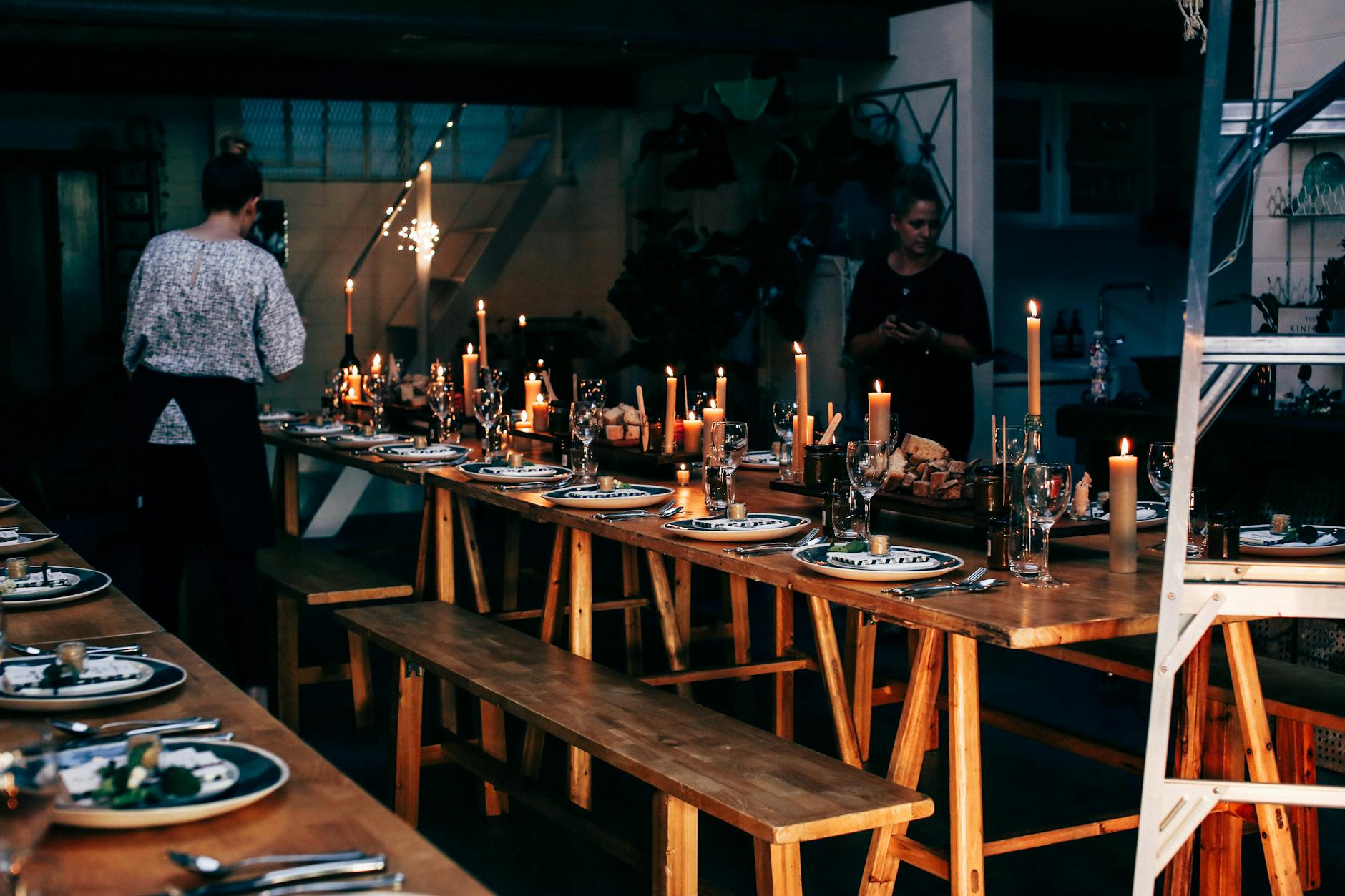
Planning a successful evening requires more than a grocery list and a clean tablecloth. Hosting dinner party kitchen workflow efficiency determines whether you spend the evening engaged with your guests or trapped behind a stove sautéing while your living room fills with conversation you cannot join. The most memorable hosts are not necessarily those with professional culinary training, but those who understand that preparation geometry matters more than perfection on the plate.
⚡ In a Rush? Key Takeaways
- Allocate 90 minutes prep for every hour guests spend at your table
- Front-loading prep reduces day-of cooking time by 60%
- Configure three dedicated kitchen zones for efficiency
- ✅ Plan menus and organize tools by frequency of use
How much time should you allocate for pre-party kitchen prep?
Allow 90 minutes of active kitchen work for every hour guests spend at your table. A standard three-hour dinner for six people requires approximately four to five hours of strategic preparation, distributed across two days to prevent same-day exhaustion and contamination risks associated with early chopping.
This ratio assumes you are cooking from scratch. If you front-load properly, your day-of cooking time drops to 45 minutes of active work. The math works in your favor: spending three hours prepping proteins and vegetables 24 hours ahead reduces your hourly kitchen labor during the event by roughly 60 percent. This buffer also absorbs the inevitable minor disaster—a forgotten ingredient, a spilled sauce, or a timer malfunction—without pushing your service time.
What is the most efficient preparation timeline?
Successful execution relies on temporal compartmentalization. Breaking tasks into specific windows prevents the cognitive overload that leads to forgotten dishes and cold mains.
Seventy-two hours before
Finalize your menu and conduct a thorough equipment audit. Check that you own sufficient serving vessels, matching flatware for the headcount, and oven capacity for your protein plus two sides simultaneously.
Twenty-four hours before
- Wash and dry greens
- Reduce stocks
- Prepare compound butters
- Marinate proteins
- Label containers with cooking times and temperatures
This step saves approximately 40 minutes of day-of fumbling.
Three hours before guests arrive
Set your table completely, including water glasses and bread plates. Clear your dishwasher to receive empty prep bowls. Prep your pan sauces up to the final reduction stage. Arrange your cooking timeline on paper taped to a cabinet door, noting which dishes require oven space versus stovetop.
Thirty minutes before
Shift into service mode. Turn on your oven for any warming requirements. Plate appetizers that can sit at room temperature. Pour your cooking wine into a measuring cup to avoid opening bottles mid-sauté.
How should you configure kitchen stations for group cooking?
Configure three dedicated zones: a cold prep station with cutting boards and labeled mise en place containers, a hot cooking zone within 24 inches of your primary heat sources with immediate tool access, and a clean plating area removed from heat and foot traffic patterns.
The standard kitchen triangle—sink, stove, refrigerator—expands during entertaining. You need a staging peninsula or cleared counter space measuring at least 18 by 24 inches solely for finished dishes awaiting service. Position your trash bowl or compost container within your prep station to minimize steps. Every motion across your kitchen consumes approximately three seconds; eliminating twenty unnecessary movements per dish saves roughly one minute per course across a four-course meal.
Organize your tools by frequency of use rather than size. Your tongs, tasting spoons, and pepper mill belong in a crock beside the stove, not in a drawer requiring two hands to open. Reserve your prime counter real estate for active work; relocate the stand mixer and coffee maker to secondary surfaces for the evening.
Which appliances offer the best efficiency for dinner party cooking?
| Option | Key stat | Best for |
|---|---|---|
| Convection oven | Cooks 25% faster, $0.45 per hour | Large dishes, proteins |
| Toaster oven/Induction burner | $0.28 per hour | Side dishes, small tasks |
Your dishwasher efficiency becomes relevant during cleanup. Modern Energy Star models consume approximately 3.5 gallons per cycle. Pre-rinsing dishes wastes approximately 6,000 gallons annually per household—skip this step and scrape directly into the compost bin. Load strategically: plates face center, glasses between tines, and serving platters along the sides. If you lack sufficient dishware for the party, the rental cost for supplemental settings ($3-$5 per person) often justifies itself against the water and energy costs of running multiple dishwasher cycles.
How much does it actually cost to host a dinner party?
Expect ingredient costs of $12 to $18 per guest for an efficient mid-range menu featuring seasonal proteins and vegetables, excluding wine. Utility costs—gas, electricity, and water for cleanup—add approximately $2 to $4 per party. A six-person gathering therefore carries a direct cost of $84 to $112, or roughly the cost of two restaurant entrées distributed across your entire table.
Using a recipe cost calculator before finalizing your menu prevents budget drift. Input your actual grocery receipts to determine your per-serving cost; if your protein selection pushes the per-person cost above $20, consider swapping beef tenderloin for pork shoulder or chicken thighs, which offer similar richness at roughly 40 percent lower cost per pound.
What workflow prevents the trapped-host syndrome?
The one-touch rule dictates that ingredients pass through your hands only once: from shopping bag to prep container, from prep container to cooking vessel, from cooking vessel to serving dish. This prevents the pile of half-chopped vegetables and abandoned measuring cups that trap you in cleanup loops while guests mingle.
Employ batch cooking techniques. If your menu requires caramelized onions for both tart and garnish, prepare the entire quantity simultaneously rather than starting a second batch later. Similarly, blanch all green vegetables together in the same pot of salted water, shocking them in ice water, then reheating quickly in butter just before service.
How do you minimize waste when cooking for guests?
American households waste roughly 40 percent of purchased food, and dinner party cooking exacerbates this through aspirational over-purchasing. Calculate portions precisely: plan for six ounces of protein and four ounces of starch per guest for a seated dinner, with two ounces of vegetables. This yields satisfaction without the burden of ten pounds of leftover mashed potatoes.
Label leftovers immediately upon clearing the table with destination dates, or send guests home with serving-sized containers. Kitchen organization systems that include designated leftover stations prevent the “science experiment” containers that eventually require disposal.
When should you call in support?
If your guest count exceeds eight and your kitchen lacks a second oven or warming drawer, consider hiring a dishwasher or server for four hours at $20-$25 per hour. The cost—approximately $100—buys you presence with your guests and prevents the resentment that builds when hosts spend the entire evening cooking while missing the conversation.
Alternatively, embrace partially prepared components. Purchasing high-quality bread from a local bakery costs $6-$8 and eliminates two hours of baking time with negligible quality difference to your guests. Your labor has value; calculate it at your hourly wage when deciding which components justify DIY attention.
Hosting dinner party kitchen workflow efficiency is ultimately an act of hospitality toward yourself. By distributing labor across time and organizing your physical space for economy of motion, you create the conditions for genuine presence. Your guests remember the warmth of your attention far longer than the temperature of the vegetables.
📊 Efficiency Verdict
Proper planning and organization can reduce kitchen labor by up to 60% during dinner parties.