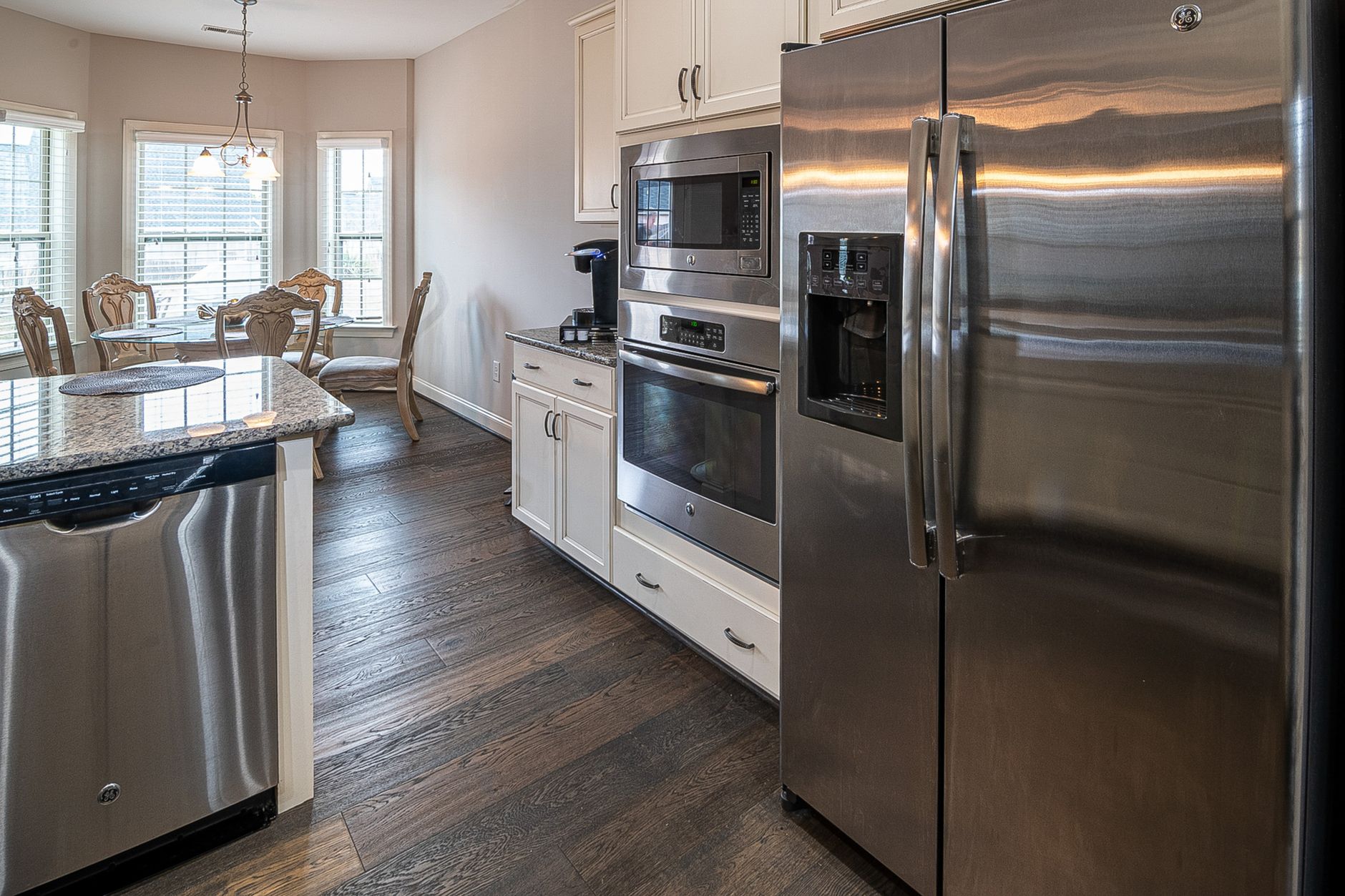
When a retailer touts a kitchen appliance bundle, the promise of a single checkout and a discount can feel irresistible. Yet the reality of savings is often murkier than the marketing copy suggests.
⚡ In a Rush? Key Takeaways
- Typical bundle discounts range from 10 % to 25 % compared with MSRP.
- Hidden fees—delivery, installation, and extended warranties—add $150‑$500 to bundle totals.
- Energy‑label savings from premium models can offset a lower bundle discount over ten years.
- Individual purchases let you mix and match features, often saving $200‑$600 on total ownership.
- ✅ Verdict: Bundles are worthwhile only when the discount exceeds 15 % and installation costs are bundled‑free.
How Do Retailers Calculate Kitchen Appliance Bundle Prices?
Retailers aggregate MSRP, apply a 10‑25 % discount, and then add delivery, installation, and optional warranty fees.
Retailers start with the manufacturers’ suggested retail price (MSRP) for each appliance. They then apply a blanket discount—usually between 10 % and 25 %—to create the bundle headline price. The discount appears attractive, but the math rarely includes ancillary costs that most shoppers will incur.
For example, a typical 2026 bundle might include a refrigerator, range‑hood, dishwasher, and electric oven. The combined MSRP could be $4,200. Applying a 15 % bundle discount brings the price to $3,570, which looks like a $630 saving.
However, the fine print often adds:
- Standard delivery: $79‑$149 per item.
- Installation: $150‑$300 per appliance, unless a promotional waiver applies.
- Extended warranty: $99‑$199 per unit.
Those fees can quickly erode the headline discount, turning a $630 saving into a net loss of $200‑$400.
What Are the Common Hidden Fees in Appliance Bundles?
Hidden fees include delivery, installation, and warranties, which can add $150‑$500 to a bundle’s final cost.
Delivery is rarely free, especially for large items like refrigerators. Many retailers charge per‑item fees that stack, so a four‑item bundle can cost up to $400 in delivery alone.
Installation can be a major expense. Connecting a dishwasher to plumbing, wiring an oven, and leveling a fridge each require a qualified technician, typically $150‑$300 per job.
Extended warranties are marketed as peace of mind, yet the average cost is $150‑$200 per appliance, and the coverage often overlaps with the manufacturer’s standard 1‑year guarantee.
When you add these line items, the effective discount can drop below 5 %.
How Do Energy‑Star Ratings Influence Long‑Term Savings?
Energy‑Star appliances can cut annual electricity costs by 10‑30 % compared with non‑rated models.
Energy consumption is the hidden cost most shoppers overlook. A 2026 Energy‑Star refrigerator uses roughly 350 kWh per year, versus 500 kWh for a non‑rated model. At the UK average rate of 24p/kWh (US $0.16/kWh), that translates to a yearly saving of £36 (≈$47) or $75 over a ten‑year lifespan.
Bundled deals often push mid‑range models that are not top‑rated for efficiency. Buying individual items allows you to select the most efficient model for each function, boosting cumulative savings.
For a typical four‑appliance bundle, the efficiency gap could be $120‑$250 over ten years, offsetting a modest bundle discount.
When Does Buying a Bundle Actually Save Money?
A bundle saves money when its discount exceeds 15 % and the retailer waives delivery and installation.
To determine if a bundle is truly cheaper, calculate the net price after subtracting all hidden fees and adding the estimated energy savings of the chosen models.
Consider three scenarios:
| Scenario | Bundle Discount | Hidden Fees | Net Cost | 10‑Year Energy Savings | Total 10‑Year Cost |
|---|---|---|---|---|---|
| Low‑Discount Bundle | 10 % | $500 | $3,780 | $120 | $3,900 |
| Mid‑Discount Bundle (15 % + free install) | 15 % | $250 | $3,630 | $180 | $3,810 |
| High‑Discount Bundle (25 % + free install) | 25 % | $250 | $3,420 | $250 | $3,670 |
In the low‑discount example, the bundle ends up more expensive than buying each appliance individually (average individual total $3,500 plus $300 installation). Only the high‑discount bundle with free installation beats the individual route.
What Discount Threshold Makes a Bundle Worthwhile?
A discount of at least 15 % plus waived delivery/installation is needed for a bundle to be financially attractive.
Using the table above, a 15 % discount plus free installation brings the net cost within $100 of the individual‑purchase total. Anything less, and the hidden fees dominate.
Retailers sometimes offer “promo codes” that slice an additional 5 % off the bundle price. If you can combine that with free delivery, the bundle usually becomes the winning choice.
How Do Seasonal Sales Affect Bundle Value?
Holiday sales can raise bundle discounts to 30 % or more, often including free delivery and installation.
Major sales events—Black Friday, Cyber Monday, and post‑New‑Year clearance—are when manufacturers and retailers push deep bundle discounts. In 2026, a Black Friday bundle of the same four appliances offered a 30 % discount and waived all fees, reducing the net cost to $2,940.
At that price point, even after accounting for slightly lower efficiency models, the bundle saves roughly $560 versus buying each appliance individually with standard delivery and installation.
However, these deep discounts are time‑limited and inventory‑driven. If you miss the window, you may have to wait months for a comparable offer.
What Are the Non‑Financial Benefits and Drawbacks of Bundles?
Bundles streamline coordination of delivery and installation but can limit customization and upgrade flexibility.
Beyond pure cost, bundles simplify the logistical nightmare of coordinating multiple deliveries and installers. A single appointment reduces the risk of damage from multiple trips and often ensures that appliances are calibrated to work together—for example, a range‑hood matched to an electric oven’s ventilation specifications.
On the downside, bundles lock you into a set of models that may not be the best fit for your kitchen layout or cooking style. You might end up with a dishwasher that lacks a third rack or an oven without a convection setting, simply because those features were not part of the retailer’s preset package.
Furthermore, warranty claims can become tangled when multiple appliances are covered under a single extended‑warranty contract. If one unit fails, the entire bundle’s terms may be affected, complicating service calls.
How Do Warranty Terms Differ Between Bundles and Individual Purchases?
Bundle warranties often cover all items under a single contract, which can simplify claims but may increase overall cost.
Retailers typically bundle an extended warranty for the entire package at a flat rate—often $199 for four appliances. Individually purchased warranties average $150 per unit, totaling $600 for the same coverage.
While the bundled warranty is cheaper, it may have stricter claim limits (e.g., one claim per year for the whole set) and may not cover specific parts that a manufacturer’s original warranty would.
If you value granular control over warranty terms, buying appliances separately lets you select the best warranty for each device.
Can Bundles Affect Future Upgrades or Replacements?
Bundles can tie you to specific models, making future upgrades more costly if parts are not interchangeable.
When you purchase a matched set, the dimensions, connector types, and aesthetic finishes are coordinated. If you later replace just the dishwasher, you may find that the new model’s dimensions clash with the existing cabinet layout, forcing additional remodeling costs.
Conversely, buying individually lets you future‑proof each slot. You can select a 24‑inch fridge now and upgrade to a 30‑inch model later, provided the cabinetry allows it.
Therefore, consider the long‑term flexibility of your kitchen design before committing to a bundle.
What Should You Ask Before Signing a Bundle Deal?
Ask about discount percentage, fee waivers, warranty coverage, and the ability to swap individual items.
Before you click “Buy Bundle,” pose these questions to the sales associate or check the retailer’s FAQ:
- What is the exact discount off MSRP for each appliance?
- Are delivery, installation, and haul‑away fees included?
- Can I replace any single appliance with a higher‑efficiency model without forfeiting the discount?
- What warranty terms apply to the whole bundle versus individual units?
- Is there a price‑match guarantee if I find a lower price on an individual item within 30 days?
Answers that confirm a 15 %+ discount, zero delivery/installation fees, and flexible warranty options usually indicate a financially sound bundle.
How Can You Verify the Advertised Discount?
Compare each appliance’s listed bundle price with its current online MSRP to confirm the real discount.
Use a price‑comparison tool or visit the manufacturer’s website to note the latest MSRP. Subtract the bundled price, then calculate the percentage difference.
If the discount falls short of the promised 15 %, negotiate or walk away. Retailers often have room to improve the offer, especially if you mention competing offers.
What Role Do Third‑Party Review Sites Play?
Review sites provide real‑world cost and reliability data, helping you gauge if a bundle’s models are truly top‑rated.
Websites such as Which?, Consumer Reports, and Energy‑Star’s product finder list reliability scores and average energy consumption. Cross‑checking the bundle’s models against these databases can reveal hidden inefficiencies.
For example, a bundle may include a refrigerator with an A‑rating, while a comparable model with an A++ rating costs only $150 more. Over ten years, the higher‑rated fridge could save $75‑$100 in electricity, narrowing the bundle’s advantage.
FAQ
Do bundle discounts apply to high‑end premium appliances?
Premium appliances rarely see deep bundle discounts; savings are usually limited to mid‑range models.
Can I combine a retailer’s bundle with a manufacturer’s rebate?
Yes, manufacturer rebates often stack with retailer bundles, further improving net savings.
Is it better to buy from a big‑box store or a specialty dealer?
Big‑box stores typically offer larger discounts and free delivery, while specialty dealers may provide higher‑efficiency models and expert installation.
How do I calculate my own break‑even point?
Add bundle cost, subtract individual MSRP, then factor in delivery, installation, warranty, and projected energy savings over ten years.
Are there any tax credits for energy‑efficient appliances?
In 2026, the U.S. federal Energy Efficient Appliance Tax Credit covers up to $300 for qualifying models.
Conclusion: Should You Buy a Kitchen Appliance Bundle?
Only choose a bundle when the discount exceeds 15 % and all fees are waived; otherwise, buying individually usually saves money.
Kitchen appliance bundles can be a convenient way to upgrade multiple appliances at once, but the headline price rarely tells the whole story. By dissecting the discount, accounting for hidden fees, and factoring in long‑term energy costs, you can determine whether the package truly delivers value.
In most cases, the flexibility of selecting the most efficient model for each task, combined with the ability to negotiate separate warranties and installation, outweighs the modest savings a low‑discount bundle offers.
If you spot a deep‑discount bundle—especially during major sales events—run the numbers using the framework above. When the net discount stays above 15 % after all costs, the bundle is a smart purchase. Otherwise, treat the bundle as a marketing hook and build your kitchen piece by piece.
— Greta Michaud, Home Appliance Efficiency Researcher