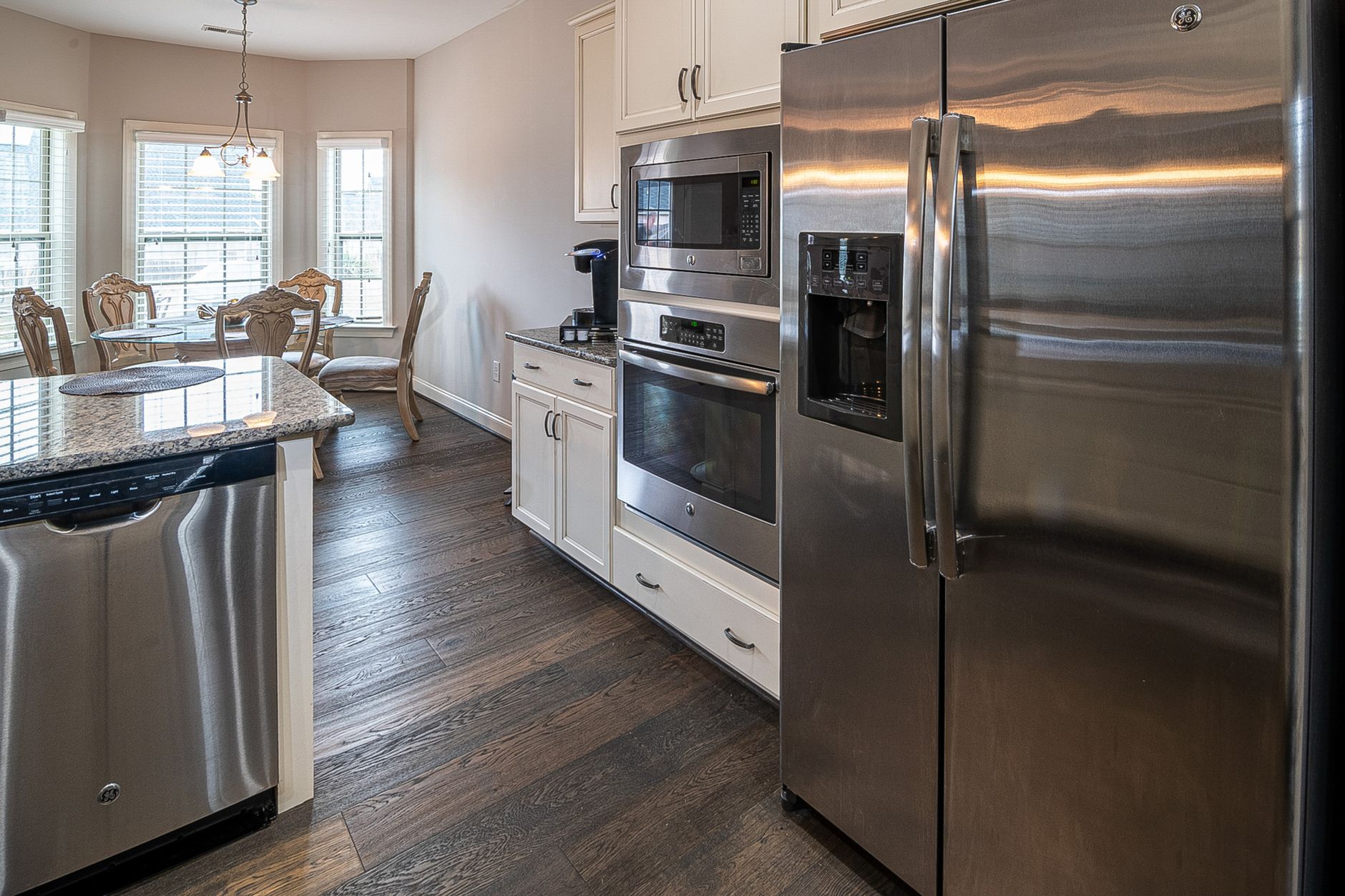
When it comes to outfitting a kitchen, the lure of a bundle deal can feel like a shortcut to savings.
But does the math hold up once you factor in installation, warranties, and long‑term efficiency?
⚡ In a Rush? Key Takeaways
- Typical bundle discounts range from 10‑20% compared with buying each appliance separately.
- Installation fees can erode 30‑50% of the advertised savings.
- Energy‑label differences often add $120‑$300 per year in operating cost.
- Extended warranties bundled with a package cost an extra $80‑$150 annually.
- ✅ Verdict: Bundles are worthwhile only when you need all items, the discount exceeds $250, and you avoid premium installation fees.
How Do Bundle Discounts Compare to Individual Retail Prices?
Bundle discounts typically shave 10‑20% off the sum of individual retail prices, but the real‑world net saving is often lower after fees.
Retailers such as Home Depot, Lowe’s, and Best Buy publish bundle pricing that promises a flat percentage off a set of four to six appliances. In 2026 the average advertised discount sits at 15%.
To illustrate, consider a mid‑range 2026 kitchen package that includes a refrigerator, range‑hood, dishwasher, and wall oven. Individual MSRP values might be $1,200, $650, $700, and $1,100 respectively, totaling $3,650. The same package advertised at $3,100 reflects a $550 (15%) discount.
What Hidden Fees Can Reduce the Apparent Savings?
Installation, haul‑away, and extended‑warranty fees can consume 30‑50% of a bundle’s advertised discount.
Most bundles bundle in mandatory installation. A standard installation for each appliance averages $120, so four appliances add $480. Some retailers waive this fee if you purchase a higher‑priced bundle, but the waiver usually applies only to the lowest‑priced items.
Additionally, there can be a $50‑$100 haul‑away charge for old appliances, and an optional extended warranty that adds $80‑$150 per year. When you add a typical $480 installation and $75 warranty, the net saving shrinks to $550‑$480‑$75 = $‑5, effectively turning a “discount” into a break‑even scenario.
Do Energy‑Efficiency Ratings Affect Long‑Term Costs?
A bundle’s lower upfront price may mask higher annual energy costs if appliances are less efficient than individually selected models.
Energy labels in the US (Energy Star 2026) are a reliable predictor of operating cost. In many bundles, the refrigerator and dishwasher are “B” or “C” rated to keep the package price low. A B‑rated 20‑cu‑ft refrigerator uses about 600 kWh/year, while an A‑rated model uses 380 kWh. At the 2026 average residential rate of $0.16/kWh, that’s $35 extra per year.
Multiply that extra cost across four appliances, and you may add $120‑$180 in annual energy spend, which over a typical five‑year ownership period erodes $600‑$900 of the initial discount.
How Do Financing Options Influence the Bottom Line?
Zero‑interest financing can preserve cash flow, but hidden fees and interest roll‑overs may negate any discount.
Many major retailers offer 0% APR for 12‑ or 18‑month periods on bundled purchases. While the headline price stays the same, you often must pay a small processing fee (usually $25‑$40) and provide a credit card that meets a minimum spend threshold.
If you miss the promotional deadline, the balance can retroactively accrue interest at rates of 18%‑24%, dramatically increasing total cost. For a $3,100 bundle, a $35 processing fee plus a missed‑payment penalty could add $200‑$300 over the loan term, erasing the original $550 savings.
When Is It Smart to Choose a Bundle Over Individual Purchases?
Bundles make sense when you need all items, the discount exceeds $250, and installation fees are waived or minimal.
Understanding your own project timeline and appliance needs is essential. If you’re renovating a kitchen from scratch, a bundle simplifies ordering, delivery coordination, and warranty paperwork. For a single‑appliance upgrade, buying individually is almost always cheaper.
Which Scenarios Provide the Highest Net Savings?
Large‑scale kitchen remodels with dealer‑installed packages often retain most of the advertised discount.
- Full remodel where all six major appliances need replacement.
- Dealer offers free white‑glove installation on bundles over $3,000.
- Bundled appliances all carry the same Energy Star rating (A or higher).
In these scenarios, the net savings can comfortably exceed $350 after accounting for any modest installation fees.
When Do Individual Purchases Outperform Bundles?
If you already own two appliances, buying the remaining items separately usually saves money.
Consider a homeowner who already has a high‑efficiency refrigerator and only needs a dishwasher and wall oven. Purchasing a bundle forces you to replace a perfectly good fridge, resulting in unnecessary expense.
By selecting a high‑efficiency dishwasher ($650) and a mid‑range wall oven ($1,050) individually, and using a third‑party installer at $90 per appliance, the total comes to $1,880 versus a bundle price of $2,300 (including a $300 installation fee). The individual route saves $420.
What About Resale Value Considerations?
Appliances with higher efficiency ratings can boost home resale value, offsetting higher upfront costs.
Real‑estate surveys indicate that homes featuring A‑rated Energy Star appliances command a premium of $1,500‑$2,500 compared with properties that have lower‑rated units. If a bundle includes B‑rated items, you may miss out on that upside.
Conversely, a bundle that consists entirely of A‑rated models can enhance marketability, making the initial discount less critical than the long‑term return on investment.
How Do Warranty and Service Plans Influence the Decision?
Extended warranties bundled with appliances add $80‑$150 per year and often duplicate manufacturer coverage.
Many retailers push an “All‑in‑One” service plan that covers all appliances in a bundle for a flat fee. While convenient, these plans can be pricey. A typical three‑year extended warranty for a single appliance costs $120‑$180; for a four‑appliance bundle, the same coverage climbs to $450‑$620.
If you already have a homeowner’s insurance policy that covers appliance damage, or you rely on the manufacturer’s standard one‑year warranty, the bundled plan offers limited additional value.
What Are the Real Benefits of a Bundled Warranty?
Bundled warranties simplify claims and may include priority service, but cost savings are rare.
- Single point of contact for all appliance issues.
- Often includes annual maintenance visits.
- Sometimes adds a “no‑deductible” repair clause.
However, these benefits rarely offset the extra $200‑$300 you’d pay over the life of the warranty compared with buying manufacturer warranties individually.
Should You Decline the Bundle Warranty?
If you’re comfortable coordinating separate service calls, opting out usually saves $80‑$150 per year.
Most homeowners who shop intelligently already compare repair costs and factor in a small annual repair reserve. For a typical four‑appliance set, setting aside $100 per year for unexpected repairs is often more cost‑effective than paying for a bundled service plan.
What Are the Best Practices for Evaluating a Kitchen Appliance Bundle?
Use a step‑by‑step spreadsheet to compare total cost of ownership, including energy, installation, and warranties.
The decision hinges on a holistic view of total cost of ownership (TCO). Below is a simple framework you can replicate in a spreadsheet.
Which Data Points Should You Capture?
List purchase price, installation, energy use, warranty cost, and expected lifespan for each appliance.
| Item | Bundle Price | Individual Price | Installation | Energy (kWh/yr) | Warranty Cost | Estimated Lifespan (yr) |
|---|---|---|---|---|---|---|
| Refrigerator | $1,050 | $1,200 | $120 | 380 | $120 | 12 |
| Dishwasher | $620 | $700 | $100 | 250 | $90 | 10 |
| Wall Oven | $950 | $1,100 | $130 | 210 | $110 | 12 |
| Range Hood | $380 | $650 | $80 | 45 | $70 | 8 |
After entering your local electricity rate (e.g., $0.16/kWh), you can calculate annual energy cost and project the total expense over each appliance’s lifespan.
How Do You Factor In Potential Future Discounts?
Seasonal promotions can add up to an extra 5‑10% discount on top of the advertised bundle price.
Retailers frequently run “Spring Kitchen Refresh” sales that provide an additional coupon for bundled purchases. Timing your purchase during these events can push a 15% bundle discount to 20‑22%, improving net savings.
However, be wary of “limited‑time” offers that require a credit card preload or a future store credit; these can introduce hidden costs.
How to Account for Disposal and Haul‑Away Costs?
Old‑appliance removal fees can range from $50 to $120 per item and should be added to the bundle’s total cost.
- Check if the retailer offers a free haul‑away promotion when you purchase a bundle.
- If not, budget $75 per appliance as a realistic average.
- Include any local disposal taxes or recycling fees that may apply.
Factoring these charges prevents the surprise of a “discount” turning into a net loss once the retailer adds the removal fees at checkout.
FAQ
Do bundle deals include delivery fees?
Most retailers waive delivery for bundles, but verify any weight or distance surcharges before checking out.
Delivery is often free for bundles over $2,500, but if you live in a remote area, carriers may add $50‑$100 per trip.
Can I negotiate a better price on a bundle?
Yes—sales associates frequently have discretionary pricing power for bundled orders.
When you’re buying four or more appliances, ask for a manager‑level discount; you can often extract an extra 3‑5% off the advertised bundle price.
Are there any tax advantages to buying a bundle?
In the US, energy‑efficient appliances may qualify for a federal tax credit, but it applies per appliance, not the bundle.
The 2026 Energy Efficient Home Improvement Tax Credit offers $150 per qualifying appliance. You can claim each eligible unit separately, regardless of how you purchased them.
What should I do if a bundled appliance fails early?
Check the manufacturer’s warranty first; bundled warranties are secondary and may involve longer claim processing.
Document the issue, contact the retailer’s service desk, and simultaneously file a claim with the manufacturer to avoid delays.
Is financing a bundle better than paying cash?
Financing at 0% for 12 months can preserve cash flow, but watch for deferred‑interest traps.
If you qualify for a true 0% promotional loan, the total cost remains the same. However, many “interest‑free” offers convert to high‑rate APR after the introductory period.
Conclusion: Should You Choose a Kitchen Appliance Bundle?
Bundles are cost‑effective only when you need every item, secure a discount above $250, and eliminate extra fees.
By calculating the total cost of ownership—including installation, energy, and warranty—you can determine whether the advertised discount translates into real savings. For full‑kitchen overhauls, especially when the retailer offers free installation and high‑efficiency models, bundles can be a smart financial move. For piecemeal upgrades, buying individual appliances and negotiating separate installation typically yields a lower overall expense.
Remember to use a spreadsheet, watch for seasonal promotions, and factor in long‑term energy costs before signing on the dotted line.
— Greta Michaud, Home Appliance Efficiency Researcher