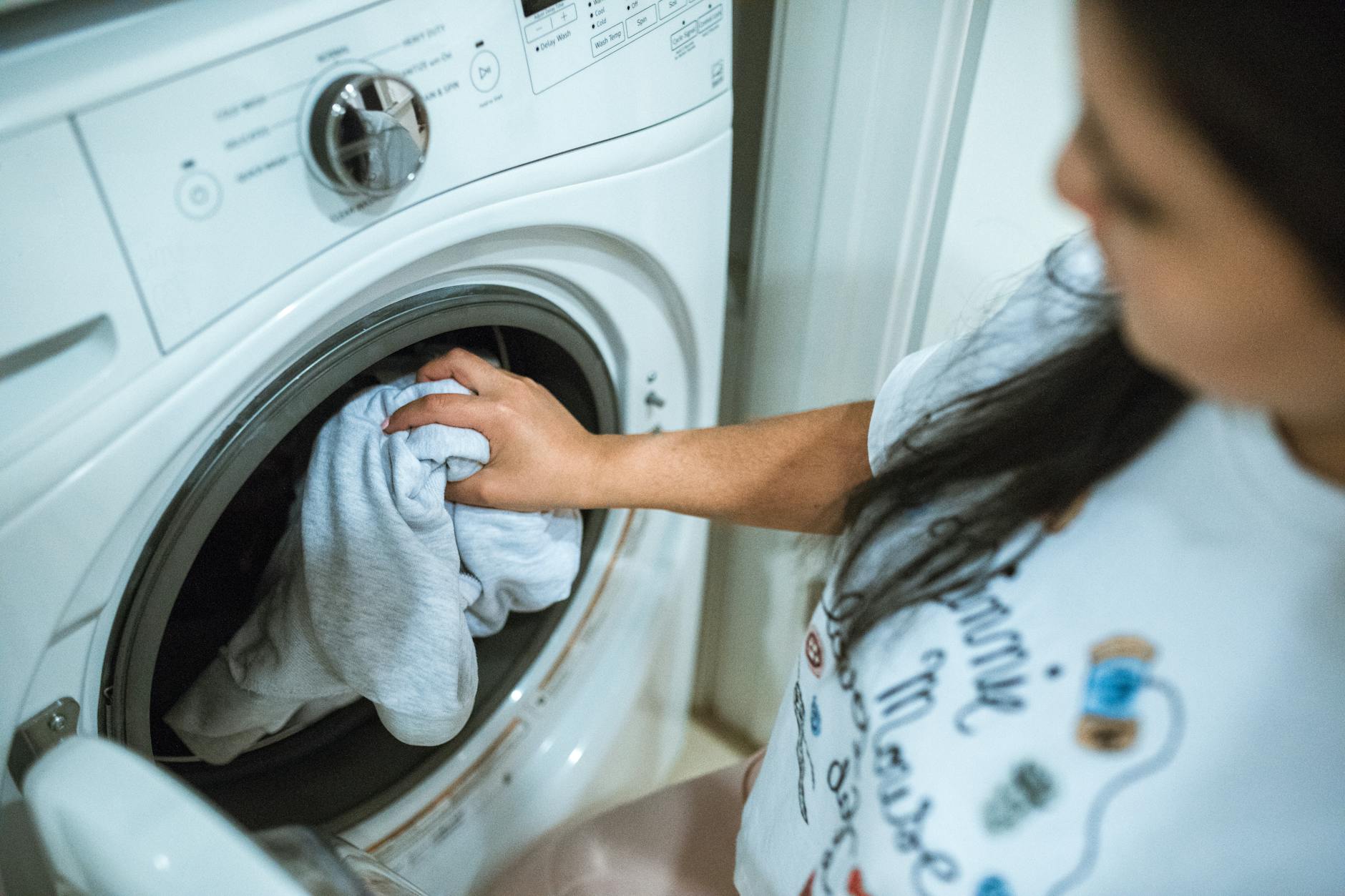
A typical load of laundry costs between $0.65 and $1.85 when you combine electricity for the washer and dryer, water and sewer charges, detergent, and machine depreciation — but switching to cold water and air-drying even half your loads can push that figure below $0.80 per load of laundry.
⚡ In a Rush? Key Takeaways
- Standard top-loaders use 40 gallons per cycle; high-efficiency front-loaders use 15–20 gallons, reducing water and sewer costs meaningfully.
- Electricity for drying a heavy load costs $0.27–$0.45 at average utility rates — more in Hawaii ($0.43/kWh) than Louisiana ($0.11/kWh).
- Cold water washes use 90% less energy than hot cycles, reducing per-load cost by $0.15–$0.40 depending on your water heater type.
- Winter inlet water temperatures (as low as 5°C/41°F) can raise your heating energy draw by 0.75 kWh per load versus summer months.
- ✅ Switch to cold water washes, measure detergent precisely, and air-dry half your loads to reduce per-wash expenditure to under $0.80.
What factors determine your laundry cost per load?
Four variables control your total: municipal water and sewer rates per gallon, utility electricity costs per kWh, detergent price per ounce, and your specific washing machine’s efficiency rating.
To calculate an accurate per-load figure, isolate each cost center. Start with water: standard top-loading machines consume approximately forty gallons per cycle, while high-efficiency front-loaders use fifteen to twenty gallons. Multiply your local water rate — typically $0.002 to $0.005 per gallon — by this volume, then add your sewer charge, which most municipalities bill at 80 to 95 percent of water volume. Next, examine electricity. Your washer’s motor and pump draw roughly 0.5 kWh per load, but temperature selection radically alters that figure. The dryer presents the largest single energy demand, averaging 2.5 to 4.5 kWh per cycle depending on load size and moisture content.
Detergent costs fluctuate based on formulation and dosing discipline. Premium liquid detergents cost $0.20 to $0.40 per ounce, while bulk powders run $0.08 to $0.15 per ounce. Single-use pods price at $0.25 to $0.50 per unit and encourage double-dosing on large loads. Finally, factor in machine depreciation: an $800 washer lasting ten years at five weekly loads incurs a $0.31 equipment cost per use before repairs. Budget an additional $50 annually for maintenance — laundry at home transfers all service risk to you, unlike a laundromat where repair costs belong to the operator.
How much does electricity contribute to each load?
A standard 3,000-watt dryer running for 45 minutes consumes 2.25 kWh, costing between $0.27 and $0.45 depending on your local utility rates — but geography matters enormously.
Electricity represents the most volatile component of laundry cost math. Rates vary from $0.11 per kWh in Louisiana to $0.43 per kWh in Hawaii, meaning the same dryer cycle costs four times as much in Honolulu as in New Orleans. In regions where utilities charge $0.12 per kWh, drying a heavy load of towels costs approximately $0.36; at $0.20 or above, that cycle approaches $0.60. If you are on a time-of-use tariff, running your washer and dryer during off-peak hours — typically 9 PM to 7 AM on weekdays — can reduce electrical costs by 40 to 60 percent on those cycles alone.
Temperature selection compounds the electricity variable significantly. A cold wash maintains that 0.5 kWh baseline, while a hot wash adds 3.0 to 6.0 kWh to heat twenty gallons of water from 50°F to 120°F. Over a year, exclusively washing in hot water adds $75 to $150 to your electric bill versus cold cycles. If you operate a high-efficiency washing machine, these differentials shrink slightly, but the proportional relationship remains: heat requires energy, and energy costs money.
Is washing in cold water actually cheaper than warm?
Yes. Cold water cycles use 90% less energy than hot washes, reducing the per-load cost by approximately $0.15 to $0.40 depending on your water heater type.
When you select a hot wash, eighty to ninety percent of the electricity consumed goes toward heating water, not running the motor. A standard residential water heater maintains a 120-degree tank, and each laundry draw forces it to reheat incoming cold water. Gas heaters cost less per therm than electric resistance heaters, but both represent significant expenditure. Cold water eliminates this entirely.
There is a winter caveat worth tracking: inlet water temperature in summer might reach 60°F, while winter mains water can drop to 40°F. Heating fifty liters from 40°F to 104°F requires measurably more energy than the same cycle in July — roughly 0.75 kWh more per load, adding $0.09 to $0.30 depending on your utility rate. Over four weekly washes, this seasonal penalty reaches $18 to $62 annually, rarely visible in standard per-load estimates. Modern enzyme detergents perform effectively at 60°F to 80°F regardless of season, dissolving stains and odors without thermal assistance. Reserve hot water for heavily soiled workwear, medical linens, or allergy-sensitive bedding where sanitation genuinely outweighs economy.
How do you calculate detergent cost per wash?
Divide the bottle cost by total ounces, then multiply by ounces used per load; a standard pour equals roughly $0.12 to $0.35 of liquid detergent — but most households over-pour by 20 percent or more.
Detergent mathematics expose how easily excess spending accumulates. A fifty-ounce bottle costing $8.00 contains $0.16 per ounce. If you pour two ounces per load — double the recommended amount for soft water — you spend $0.32 on cleaning agents alone. Pods simplify dosing but carry premium pricing: a forty-count container priced at $12.00 costs $0.30 per pod, and many users toss two pods into large loads, doubling the expense.
Powder detergents generally offer the lowest cost per wash, particularly in bulk. High-efficiency machines require significantly less soap due to reduced water volumes, so over-dosing not only wastes money but leaves residue that triggers additional rinse cycles, further increasing both water and electricity costs. Measure precisely using a dedicated scoop, and verify your machine’s HE requirement before purchasing a premium concentrated formula.
Dryer expenses vs. air drying: which costs less?
Air drying costs nothing beyond a $25–$60 rack purchase, while machine drying adds $0.30 to $0.70 per load in electricity charges — and vented dryers carry a hidden “make-up air” penalty in winter.
The drying phase presents the most significant opportunity for cost reduction. Vented electric dryers expel hot moist air from your home, forcing your heating system to compensate during winter months. This make-up air penalty adds an estimated $0.15 to $0.25 per load during heating season — a figure that rarely appears in standard dryer running-cost estimates. Ventless heat pump dryers eliminate this by recycling heat internally, lowering per-load costs to approximately $0.15, though their $600 to $900 purchase price requires a longer payback horizon.
Heated airers offer meaningful savings for apartment dwellers or those with limited outdoor space, costing approximately $0.10 to $0.20 per hour while protecting delicate fabrics from mechanical wear. If you air-dry indoors without ventilation, note that drying clothes raises relative humidity by fifteen to twenty percent; running a dehumidifier to compensate consumes roughly 0.6 kWh, partially offsetting savings. At four dryer loads weekly, eliminating machine drying entirely saves $60 to $145 annually. If you must tumble dry, clean the lint trap after every load and ensure external vents remain unobstructed — restricted airflow increases drying time by twenty to forty percent, directly inflating your per-load calculation.
Why front-loaders cost less per cycle than top-loaders
Front-loading machines typically use 40% less water and 25% less energy per load, averaging $0.15 to $0.25 cheaper per wash cycle in utility costs — and faster spin speeds cut drying time further.
Traditional agitator top-loaders fill completely with water, immersing clothes in twenty to forty gallons regardless of load size. High-efficiency front-loaders tumble clothes through a shallow pool, using gravity and mechanical action rather than volume to clean. This mechanism reduces water consumption by fifteen to twenty gallons per cycle, saving $0.03 to $0.10 in combined water and sewer charges alone.
Front-loaders also extract more moisture during the spin cycle — often reaching 1,200 RPM compared to a top-loader’s 600 RPM — reducing subsequent drying time by ten to fifteen minutes. Over five years of ownership, these incremental savings typically offset the higher initial purchase price. The upgrade math is straightforward: if an older C-rated machine costs $1.12 per load and a modern efficient washer costs $0.70, four weekly loads generate $87 in annual savings. When evaluating replacement machines, examine the EnergyGuide label specifically for the Integrated Modified Energy Factor (IMEF) and Integrated Water Factor (IWF); higher IMEF and lower IWF numbers indicate superior efficiency. The repair breakpoint: when a service call exceeds 30 percent of a new machine’s price, replacement almost always wins economically.
Home washing vs. laundromat: which costs less per load?
Laundry at home typically costs $0.65 to $1.85 per load all-in, while a laundromat charges $3.00 to $6.50 per wash cycle — meaning a home machine pays for itself within twelve to eighteen months of regular use.
The laundromat premium covers commercial-grade equipment, facility rent, and maintenance you never see. However, commercial machines extract more moisture during spin cycles (up to 1,400 RPM), reducing home drying time if you transfer wet laundry back. For apartment dwellers without in-unit machines, transport costs, time value, and the inconvenience of hauling baskets must factor against the $800 to $1,200 purchase price of a quality domestic washer. At five loads weekly saving $4.00 per load versus the laundromat, the machine pays for itself in ten to twelve months, excluding installation and water connection fees. Factor in $50 annually for maintenance — the risk you absorb in exchange for that per-load discount.
How to use the weekly laundry cost calculator
Input your local utility rates, machine specifications, and weekly load frequency to generate an accurate annual forecast of your total laundry cost.
Manual calculations provide insight, but systematic tracking reveals patterns. Our comprehensive weekly laundry cost calculator aggregates electricity rate (in cents per kWh from your utility bill), water and sewer charges per gallon, machine type, wash temperature preferences, and drying method into a precise per-load figure and annual total. For renters using shared basement facilities, input the coin-operated cost — typically $1.50 to $3.00 per wash and $1.00 to $2.50 per dry — rather than utility rates. Review this calculation quarterly as utility rates adjust seasonally. Establishing a baseline of $1.20 per load lets you measure the real impact of switching to cold water (reducing to $0.85) or air-drying half your loads (reducing to $0.65) — concrete benchmarks rather than estimates.
Can reducing load size lower your cost per wash?
No. Partial loads increase the per-item cost significantly; always wait for a full drum to distribute fixed water and electricity costs across more garments.
Fixed costs — water heating, baseline kWh per cycle for motor operation, and detergent minimums — remain constant whether you wash three shirts or thirteen. A half-load uses nearly identical water and energy to a full load, doubling your cost per item. Wait until you accumulate enough laundry to fill the drum to manufacturer specifications — typically three-quarters full for front-loaders, allowing room for tumble action. Avoid overloading; cramming the drum restricts water circulation and strains the motor, potentially shortening machine lifespan and triggering costly repairs. For single-item emergencies, hand-washing in a basin uses less than two gallons and negligible electricity, costing pennies rather than the full machine cycle price.
Conclusion
Understanding your laundry cost per load transforms an invisible utility drain into a manageable line item. By selecting cold water, measuring detergent precisely, maximizing load size, timing cycles to off-peak utility hours, and alternating drying methods, most households can reduce their per-wash expenditure from $1.50 to under $0.80 without sacrificing cleanliness. Track your specific numbers using the weekly calculator, adjust your habits accordingly, and redirect those savings toward more substantial household improvements.
📊 Efficiency Verdict
Switching to cold water washes, timing loads to off-peak utility hours, and air-drying half your loads can reduce your annual laundry expenditure by up to $200 — with zero compromise to fabric care.