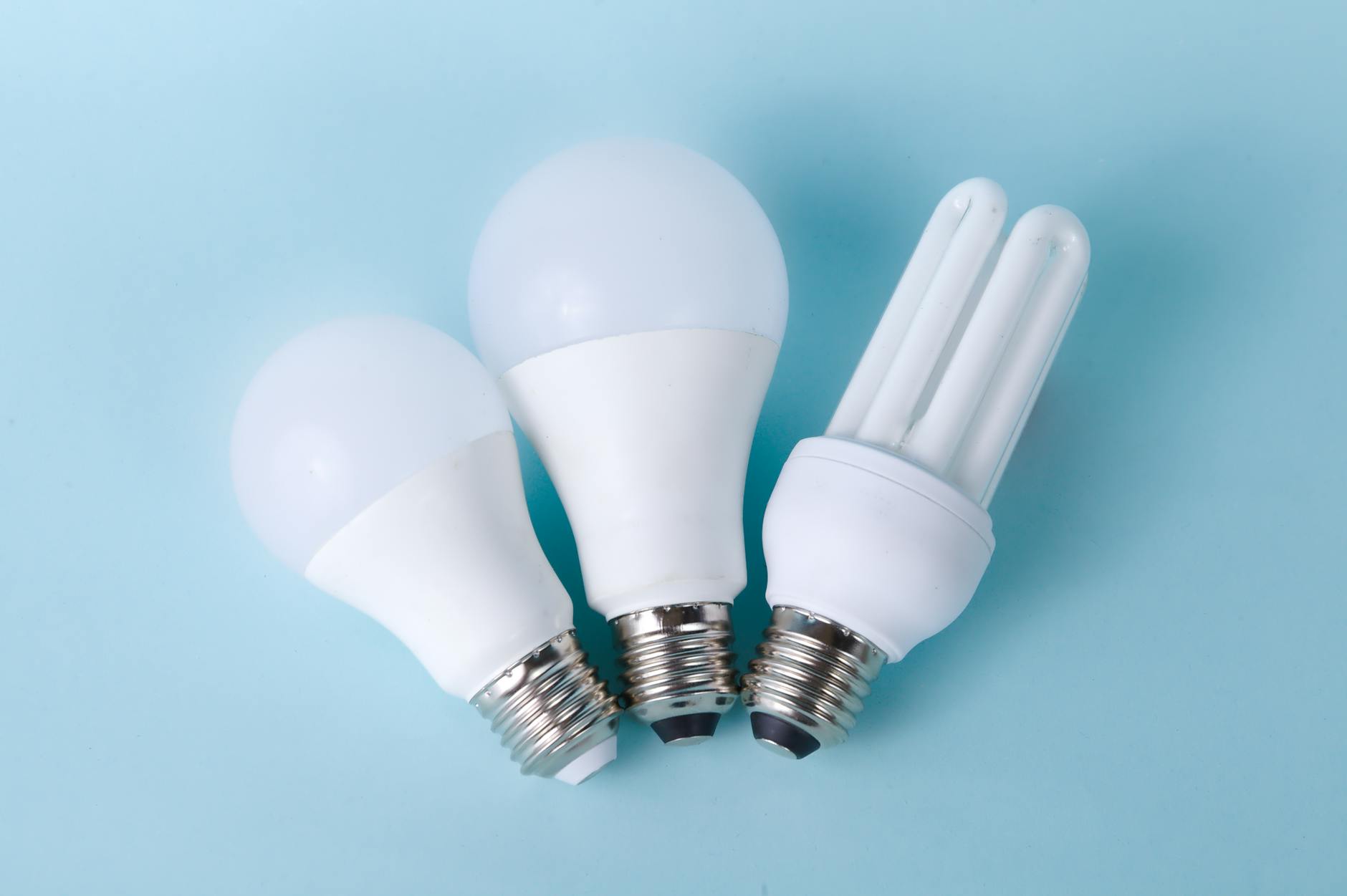
The transition from incandescent filament technology to solid-state lighting represents one of the most straightforward efficiency improvements available to homeowners. Yet the actual financial impact of replacing every bulb in your house remains surprisingly opaque at the point of purchase. An LED lighting savings calculator eliminates this ambiguity by translating wattage differentials into precise dollar amounts based on your specific usage habits and regional electricity rates.
For more detail, see our guide on led vs halogen lighting running cost comparison.
⚡ In a Rush? Key Takeaways
- A typical household saves $120–$180 annually by switching to LEDs.
- LED bulbs use 85% less energy than incandescent bulbs.
- LEDs last 25 times longer than incandescent bulbs.
- ✅ Upgrade your most used lights first for fastest returns.
Understanding these calculations allows you to prioritize which rooms to retrofit first, anticipate the reduction in your cooling bills, and determine exactly when your initial investment breaks even. The following guide examines the methodology behind accurate savings projections, provides benchmark data for typical residential usage, and identifies the technical considerations that affect long-term performance.
How much can LED bulbs actually save per year?
A typical household with twenty 60W bulbs saves $120–$180 annually after switching to LEDs, based on three hours of daily use at fifteen cents per kilowatt-hour.
To understand these figures, examine the energy differential between technologies. A standard 60-watt incandescent bulb producing 800 lumens consumes, as the name indicates, sixty watts of electricity. Its LED equivalent produces identical illumination using merely nine watts—a differential of fifty-one watts per fixture.
Calculating the annual savings for a single bulb requires multiplying this wattage reduction by usage time. If you operate a living room lamp for three hours daily, the annual consumption reduction equals 51 watts multiplied by 1,095 hours (three hours times 365 days), yielding 55.845 kilowatt-hours. At the national average residential rate of $0.15 per kilowatt-hour, each bulb saves $8.38 annually. Multiply this across twenty fixtures—roughly the count in a three-bedroom home—and the annual reduction reaches $167.60.
Regional variations in electricity rates significantly alter these projections. Households in states with rates exceeding $0.25 per kilowatt-hour may realize savings surpassing $300 annually, while those in regions with subsidized rates near $0.10 will see more modest reductions. For households with home office electricity consumption extending well into evening hours, these figures increase proportionally with usage time.
Is the upfront cost of LED lighting worth the investment?
Yes. At three dollars per bulb, LEDs typically pay for themselves within four to six months, then generate pure savings for two decades.
| Option | Key stat | Best for |
|---|---|---|
| Incandescent | $18.00 over 10 years | Temporary use |
| LED | $18.00 over 20 years | Long-term use |
The initial price differential between technologies creates psychological resistance despite compelling lifecycle economics. While an incandescent bulb retails for approximately $0.50 compared to $3.00 for a quality LED, this comparison ignores replacement frequency. Incandescent filaments fail after approximately 1,000 hours of operation, whereas quality LED products maintain specified lumen output for 25,000 hours or more.
Over a ten-year period, a single fixture operated three hours daily requires thirty-six incandescent replacements ($18.00) versus zero LED replacements ($3.00). When energy savings compound this advantage, the total ten-year cost of incandescent operation—including electricity at $0.15/kWh—exceeds $95 per fixture, compared to roughly $18 for LED operation.
The prudent approach treats LED acquisition as a capital investment with measurable monthly returns. For a kitchen containing eight recessed fixtures, the $24 upgrade cost generates approximately $67 in annual savings, achieving complete payback before the first quarter concludes.
How does an LED lighting savings calculator work?
An LED lighting savings calculator multiplies wattage reduction by daily usage hours, days per year, and your specific utility rate per kilowatt-hour.
- Wattageold − Wattagenew
- × Hoursdaily × 365
- ÷ 1000 × RatekWh = Annual Savings
The fundamental formula remains consistent across all implementation tools. However, comprehensive calculators incorporate additional variables that refine accuracy.
Sophisticated tools request room-by-room usage patterns rather than household averages, recognizing that kitchen lighting operates six to eight hours daily while guest bedrooms see perhaps thirty minutes. They also account for dimming scenarios where LEDs operate at reduced wattage, and calculate the HVAC interaction savings discussed in subsequent sections.
For households seeking precision without manual calculation, our dedicated calculator tool aggregates these variables into a comprehensive projection. Input your utility rate, fixture count, and approximate daily usage for each room to generate a twelve-month savings forecast and payback timeline specific to your home’s configuration.
Does switching to LEDs reduce your cooling bills?
Yes. Removing ten incandescent bulbs eliminates heat output equivalent to a five-hundred-forty-watt space heater, reducing cooling loads significantly.
Incandescent bulbs operate by heating a tungsten filament to approximately 4,600 degrees Fahrenheit, producing light as a byproduct of thermal radiation. Consequently, they convert roughly ninety percent of electrical input into infrared heat rather than visible illumination. Each sixty-watt bulb generates approximately 205 BTUs (British Thermal Units) per hour—comparable to a small radiator.
LED technology employs electroluminescence, generating minimal thermal waste. A nine-watt LED producing equivalent light generates merely thirty-one BTUs hourly. For a kitchen ceiling with six recessed fixtures, switching from incandescent to LED removes 1,044 BTUs of heat generation hourly—the equivalent cooling load of a small window air conditioning unit.
During cooling season, this heat reduction decreases air conditioner runtime. In climate zones with extended summer periods, the secondary HVAC savings typically add fifteen to twenty percent to the direct electricity reduction, though precise figures depend on insulation quality and thermostat programming.
What is the payback period for a complete LED retrofit?
Complete retrofits typically achieve payback in eight to fourteen months, though high-use areas like kitchens often recover costs within ninety days.
The payback calculation divides total acquisition cost by monthly savings. For a comprehensive home conversion replacing forty fixtures at $3.00 each, the $120 investment yields monthly savings of approximately $13.95 (the $167.60 annual figure divided by twelve). Simple division suggests an 8.6-month payback period.
However, strategic partial retrofits accelerate returns. By prioritizing the ten most frequently illuminated fixtures—typically kitchen pendants, living room lamps, and entryway sconces—you concentrate investment where usage hours maximize savings. These ten fixtures often generate $85–$100 in annual savings against a $30 investment, achieving payback in under four months.
Diminishing returns apply to rarely used spaces. A closet light operated ten minutes daily generates merely $0.25 in annual LED savings, requiring twelve years to recoup a $3.00 bulb purchase. Such fixtures warrant replacement only during routine maintenance or when pursuing comprehensive aesthetic consistency.
Which rooms benefit most from LED conversion?
Kitchens, living rooms, and home offices provide the fastest returns due to extended usage, while closets and guest rooms offer negligible financial impact.
The mathematics of illumination savings correlate directly with operational hours. Kitchens with under-cabinet and overhead fixtures typically accumulate seven to eight hours of daily use, generating annual savings exceeding $60 per fixture converted. Living rooms with multiple reading lamps and overhead lighting average five hours, yielding approximately $40 per fixture.
Bathrooms present an intermediate case—high brightness requirements for grooming tasks support the wattage differential, but usage remains brief, typically ninety minutes daily. Bedrooms vary significantly; master suites with reading lamps see three to four hours nightly, while children’s rooms or guest accommodations may see substantially less.
Prioritize conversion sequencing accordingly: first address continuously illuminated spaces like hallways and security lighting, then high-occupancy living areas, and finally auxiliary spaces only if budget permits or when existing bulbs expire.
Are there hidden costs in LED conversion?
Potential hidden costs include incompatible dimmer switches requiring replacement and enclosed fixtures that may need high-heat-rated LED models for longevity.
While LED technology has matured significantly, legacy infrastructure occasionally creates friction. Incandescent-compatible dimmer switches employ TRIAC circuitry designed for resistive loads; LED bulbs present capacitive loads that may cause flickering, buzzing, or premature failure. Upgrading to LED-compatible dimmers adds $15–$25 per switch, extending payback periods slightly but ensuring proper performance.
Fully enclosed ceiling fixtures trap residual LED driver heat, potentially shortening lifespan from the rated 25,000 hours to 15,000 or less. Specialty “enclosed fixture rated” LEDs cost approximately $1.50 more per bulb but maintain thermal tolerances that justify the premium through extended operational life.
Color temperature selection, while not a direct cost, impacts satisfaction. Greta recommends Philips WarmGlow dimmable LEDs for living spaces where 2700K warmth creates ambiance, and Cree Lighting standard A19 bulbs at 3000K for task-oriented areas like laundry rooms. I earn a small commission from purchases made through these links.
📊 Efficiency Verdict
Switching to LED bulbs can save you up to $300 annually and reduce your cooling bills.
Conclusion
The arithmetic of residential illumination favors immediate conversion. When analyzed through an LED lighting savings calculator, the data reveals not merely marginal efficiency gains but substantial, quantifiable reductions in household operating costs. By methodically retrofitting high-use areas first and selecting appropriate products for existing fixtures, homeowners typically achieve complete investment recovery within a single year, followed by two decades of reduced utility expenditure.