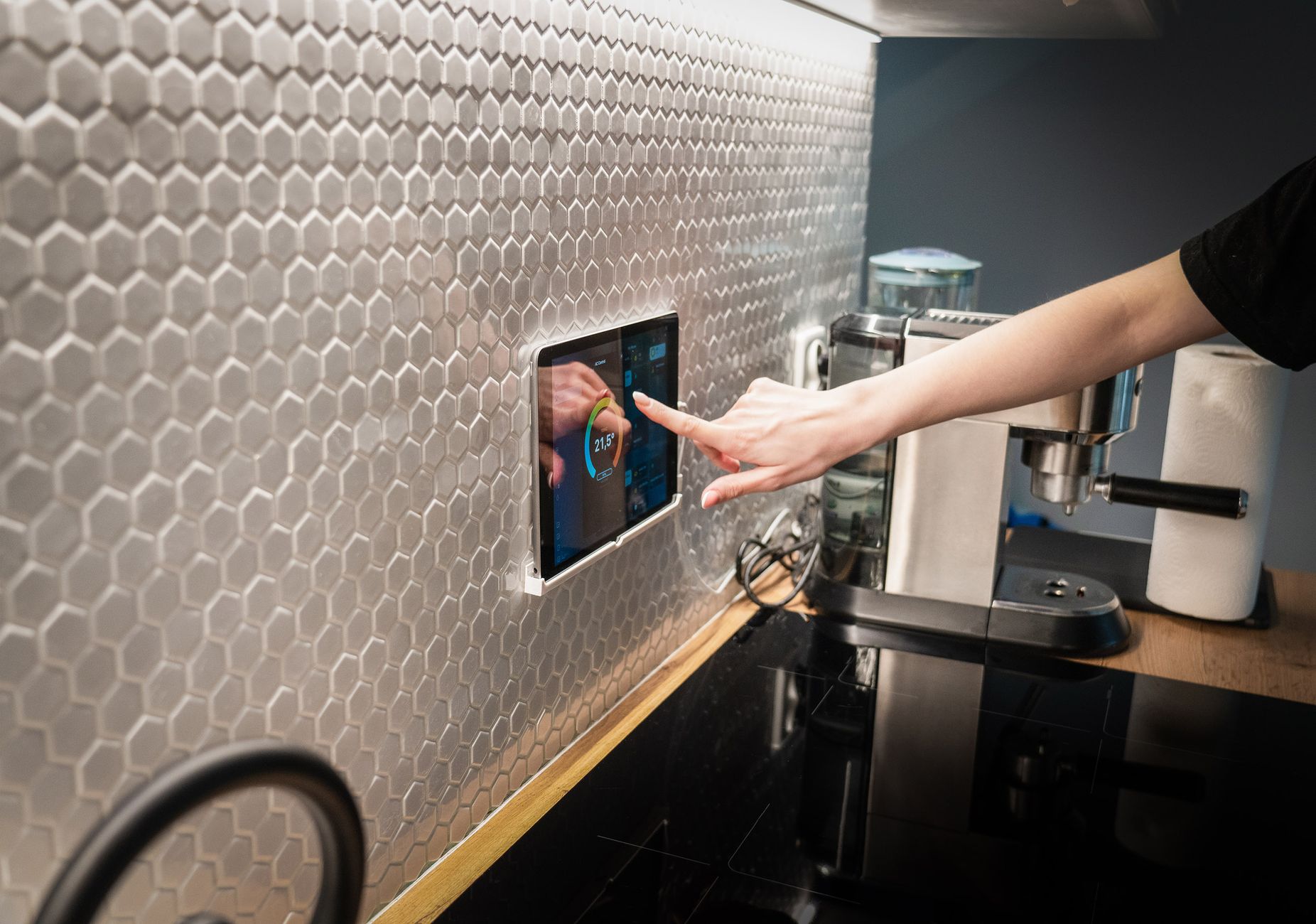
Is a connected kitchen truly the key to effortless meal planning?
A truly smart kitchen integrates devices to streamline tasks, but only select features offer significant time and money savings for meal planning and execution.
The idea of a “smart kitchen” often conjures images of futuristic appliances and smooth digital integration. For those of us managing household menus and grocery lists, the allure of technology that could simplify meal planning, reduce food waste, and even lower grocery bills is undeniable. Yet, the market is saturated with devices and apps, each promising a revolution in kitchen efficiency. The critical question for any homeowner or renter is not whether a kitchen is connected, but whether those connections translate into genuine, measurable benefits that align with our practical goals: saving time and money.
⚡ In a Rush? Key Takeaways
- Smart meal planning apps can save $30–$60 per month on groceries.
- Pantry inventory features reduce food waste by up to 20% annually.
- Connected ovens and smart displays offer minimal time savings over traditional methods.
- AI-driven recipe suggestions personalize plans and accommodate dietary needs effectively.
- ✅ Focus on app-based planning and inventory to get the best ROI.
Which smart kitchen features genuinely support meal planning?
Meal planning apps with integrated grocery lists and pantry tracking are the most impactful smart features for saving time and money.
How do smart meal planning apps improve grocery shopping?
Dedicated meal planning apps enhance grocery efficiency by generating smart lists, reducing impulse buys, and aligning purchases with planned meals, potentially saving $30–$60 monthly.
The cornerstone of a time- and money-saving smart kitchen setup for meal planning isn’t a refrigerator with a built-in screen, but rather a robust application that acts as your central hub. Meal planning apps, often available for smartphones and tablets, are designed to take the chaos out of weekly menu creation and the subsequent grocery run. These applications go beyond simple recipe storage; they integrate functionality that directly addresses the pain points of meal preparation. By allowing users to select recipes, automatically generate a shopping list based on those selections, and even categorise items by store aisle, they streamline the entire process.
The real value emerges when these lists are dynamic and intelligent. Many modern apps allow you to input your pantry’s current stock. The app then cross-references this against your chosen recipes and only adds ingredients you actually need to purchase. This feature is instrumental in cutting down on duplicate purchases and reducing impulse buys. A study by Fitia.app in 2026 found that households using such apps reported a 10-15% reduction in their monthly grocery bills, primarily by avoiding over-purchasing and sticking to their planned meals. For an average household spending $500 per month on groceries, this translates to savings of $50–$75 annually, though more diligent users can achieve higher savings.
Consider the common scenario: you plan for chicken breasts, but you already have two packs in the freezer. Without a smart inventory system, you might buy more, leading to waste or needing to adjust your plans later. A smart app prevents this. Furthermore, the ability to organise lists by grocery store or aisle is a significant time saver. Instead of backtracking through the supermarket, you can navigate efficiently, completing your shopping in 20-30% less time than with a haphazard, handwritten list. This consolidated approach not only saves time but also minimises the temptation to stray from your list with unplanned purchases.
Can smart pantry inventory systems reduce food waste?
Yes, smart pantry features in apps track inventory, send expiry alerts, and suggest recipes using soon-to-expire items, reducing household food waste by up to 20% annually.
Food waste is an insidious drain on household budgets and a significant environmental concern. The convenience of modern supermarkets means we often buy more than we can consume before spoilage sets in. Smart meal planning apps are increasingly incorporating pantry inventory features that directly combat this issue. These systems allow you to log staples, fresh produce, and other ingredients you have on hand. As recipes are added to your weekly plan, the app deducts the required ingredients, providing a real-time overview of what you possess.
The true innovation lies in the expiry date tracking. Users can input best-by dates for perishables. The app will then generate alerts when items are nearing their expiry, prompting action. This could be a notification stating, “Your spinach will expire in 3 days; consider using it in a frittata or salad.” The most sophisticated systems even suggest recipes that specifically incorporate these nearing-expiry items, turning a potential waste into a planned meal component. Research from medium.com indicates that households actively using these tracking features can reduce their kitchen food waste by as much as 20% over a year.
For a household that typically discards $100 worth of food each month, a 20% reduction means saving $20 monthly, or $240 annually. This saving, combined with the grocery list efficiencies mentioned earlier, highlights the tangible financial benefit. It transforms meal planning from a simple menu selection exercise into a holistic strategy for food management, ensuring that the food you purchase is actually used. This proactive approach requires a small upfront time investment to input inventory, but the long-term savings and reduction in wasted resources offer a substantial return.
- Pantry Tracking: Log items you own.
- Expiry Alerts: Receive notifications for items nearing their use-by date.
- Recipe Suggestions: Get ideas for using up ingredients.
- Automated Deductions: App removes used ingredients from inventory.
How do AI-powered recipe suggestions personalise meal plans?
AI enhances meal planning by learning user preferences, dietary needs, and cooking habits to generate personalised, varied, and appealing recipe suggestions, minimising decision fatigue.
Artificial intelligence is rapidly integrating into meal planning tools, moving beyond simple recipe databases to offer truly personalised experiences. Instead of sifting through thousands of general recipes, AI-powered systems learn your household’s preferences over time. They can factor in dietary restrictions (e.g., gluten-free, vegan, low-carb), allergies, disliked ingredients, and even your cooking skill level or available time. This personalisation is crucial for long-term engagement and success with meal planning.
For instance, an AI might notice you frequently choose quick, 30-minute meals or that your family enjoys Italian cuisine. It will then prioritise suggesting recipes that fit these patterns, ensuring the meal plan feels relevant and achievable. This reduces the mental load associated with deciding “what’s for dinner” every night. It also encourages culinary exploration by subtly introducing variations of familiar dishes or new recipes that align with your learned tastes, preventing meal fatigue and the dreaded “recipe rut.”.
Furthermore, AI can intelligently balance your weekly menu. It might ensure that a week includes a good mix of protein sources, vegetables, and cooking methods, promoting a more nutritious and varied diet. If you have a surplus of certain ingredients from a previous week’s shop, the AI can proactively suggest recipes that use them. This intelligent curation means that the meal plan is not just a list of meals, but a well-thought-out strategy that optimises for nutrition, taste, budget, and waste reduction, all tailored specifically to your household’s unique needs and habits. This level of customisation is a significant departure from generic meal plans and contributes to sustained adherence.
Do smart appliances like ovens or fridges add real value to meal planning?
Connected appliances offer limited utility for core meal planning; their benefits primarily lie in convenience during cooking, not in the planning or shopping phase.
Can smart ovens and cooktops truly expedite meal preparation?
Smart ovens offer remote preheating and guided cooking, saving perhaps 5–10 minutes per meal, but do not fundamentally alter the planning or shopping process.
Appliances such as smart ovens, refrigerators with touchscreens, and connected cooktops are often marketed as integral components of a smart kitchen. While they bring a degree of convenience to the cooking process itself, their impact on the actual *planning* and *shopping* phases of meal preparation is considerably less profound than dedicated apps. A smart oven, for example, can be preheated remotely via a smartphone, which is useful if you’re on your commute home and want the oven ready upon arrival. This might shave off 5–10 minutes of waiting time when you’re already transitioning into cooking mode.
Some advanced smart ovens offer guided cooking programs. You select a recipe from an integrated library, and the oven automatically adjusts temperature, cooking time, and even fan speed. This can reduce the cognitive load during cooking, preventing errors and ensuring a more consistent outcome, especially for complex dishes. However, this functionality typically requires the recipe to be pre-loaded into the appliance’s system or accessed through a proprietary app. It doesn’t inherently help you *decide* what to cook or *buy* the ingredients; it assists *after* those decisions have been made.
Similarly, smart cooktops can offer precise temperature control and remote monitoring, ensuring nothing is under or overcooked. Refrigerator screens can display recipes, manage inventory (though often less sophisticated than dedicated apps), or even order groceries directly. However, the effectiveness of the refrigerator’s inventory management is frequently hampered by the manual effort required for accurate input and by the limitations of its scanning or identification technology. For the dedicated meal planner, the efficiencies gained from these appliance features are often marginal and don’t justify the significant increase in cost compared to their conventional counterparts. The core benefits for meal planning and grocery shopping still reside with well-designed software solutions.
Are smart refrigerators effective for managing household groceries?
Smart refrigerators’ internal cameras and inventory features often fall short of dedicated apps, requiring significant manual input and offering limited ROI for grocery management.
The concept of a smart refrigerator that keeps track of its contents is appealing. Many models come equipped with internal cameras that can show you what’s inside when you’re at the grocery store, or software that allows you to manually log items. Some even attempt to automatically identify products as they are placed inside. In theory, this could greatly assist in managing your pantry and fridge inventory, preventing purchases of items you already own and prompting you to use food before it spoils.
In practice, however, the effectiveness of these features is often inconsistent. Internal cameras provide a visual snapshot but don’t offer granular detail about quantities or expiry dates. Manual logging can be tedious and is often abandoned after the initial novelty wears off. Automatic product identification can misidentify items, fail to recognise generic brands, or struggle with items that are partially obscured. This means that relying solely on a smart refrigerator for inventory management often leads to inaccuracies, which can be just as detrimental to meal planning as no system at all.
Dedicated meal planning apps, on the other hand, are purpose-built for inventory tracking and are generally more user-friendly and accurate. They can integrate with online grocery ordering services and offer more sophisticated alert systems. While a smart refrigerator might have a higher purchase price and offer a convenient dashboard for family notes or calendars, its functionality for the core task of efficient grocery management is often surpassed by software-only solutions. The energy consumption of these large, always-on appliances also adds to the running cost, a factor usually overlooked when considering the ‘smart’ premium.
What to look for in a smart kitchen setup for optimal results
Prioritise app-based meal planning with robust inventory tracking and AI personalisation for the best return on time and money saved, rather than appliance-centric tech.
Are app subscriptions for meal planning worth the cost?
Yes, premium app subscriptions ($3–$15/month) often offer superior AI, advanced inventory, and integrations that yield grocery savings of $30–$60/month, providing a clear ROI.
When considering a smart kitchen setup for meal planning, the investment often lies not in the hardware but in the software. Many of the most effective meal planning applications operate on a subscription model, ranging from $3 to $15 per month, or offer a premium tier with advanced features. It’s natural to question whether these ongoing costs are justifiable. In my experience, and supported by various consumer reports from 2025–2026, the return on investment (ROI) for well-programmed meal planning apps is typically strong.
These premium subscriptions unlock the most sophisticated AI-driven recipe recommendations, complete pantry and fridge inventory management with expiry alerts, and smooth integration with online grocery services like Instacart or specific supermarket apps. For instance, an app that can analyse your past purchasing habits and suggest recipes that use sale items at your preferred supermarket, while simultaneously ensuring nutritional balance and dietary compliance, offers value far beyond a basic, free offering. The $5–$10 monthly fee can easily be recouped through the reduced grocery spending and saved time that these advanced features provide. The key is to choose an app that offers a free trial so you can assess its specific benefits, AI capabilities, and user interface before committing.
A good premium meal planning app can help you save $30–$60 per month on groceries by preventing impulse buys and reducing food waste. Over a year, this amounts to $360–$720 in savings. When compared to a $10 monthly subscription fee, the financial benefit is clear. Furthermore, the time saved by automating list generation, optimising shopping routes, and simplifying recipe selection adds to the overall value proposition, making the subscription a wise investment for anyone serious about efficient home cooking.
How can I integrate multiple smart devices effectively?
Integration is best achieved through a central app or platform that can talk to various devices, focusing on apps that manage planning and inventory over appliance controls.
The dream of a fully integrated smart kitchen often involves devices communicating smoothly. While true, universal compatibility remains a work in progress, effective integration for meal planning typically centres around a primary app or platform. For instance, your meal planning app might integrate with a smart grocery delivery service, which in turn might acknowledge certain smart refrigerator inventory levels (though this is less common and reliable). The most practical approach is to select a primary meal planning app and see which other services it supports.
If your goal is efficient meal planning and reduced waste, the focus should be on how well your chosen app integrates with your grocery purchasing habits (e.g., online ordering, loyalty programs) and how it manages your pantry and fridge inventory. Linking your smart devices for cooking control is a secondary concern for the planning phase. For example, if your oven can receive cooking instructions from a recipe app, that’s a bonus for convenience during preparation, but it doesn’t help you decide which recipe to choose from your weekly plan in the first place. Therefore, prioritise apps and platforms that centralise your planning and inventory management, and view appliance integration as an added layer of convenience rather than a necessity.
- Central Hub Approach: Use one primary app for meal planning.
- Grocery Integration: Connect with your preferred online grocer for smooth ordering.
- Inventory Sync: Ensure your app’s inventory management is robust.
- Consider Voice Assistants: Alexa or Google Assistant can help add items to your list via voice command, further saving time.
What are the most effective connected features for saving money?
The most money-saving smart features are automated grocery list generation tied to pantry inventory and AI-driven recipe suggestions that leverage sales and prevent waste.
When focusing on the bottom line, the efficacy of connected kitchen features in saving money hinges on their ability to directly prevent overspending and reduce waste. The intelligent grocery list generation, particularly when linked to a real-time pantry inventory, stands out as the primary money-saver. By ensuring you only buy what you need, it directly tackles the problem of duplicate purchases and impulse buys that inflate grocery bills. Many sources, including user discussions on Reddit, highlight how simply sticking to a dynamically generated list can cut a household