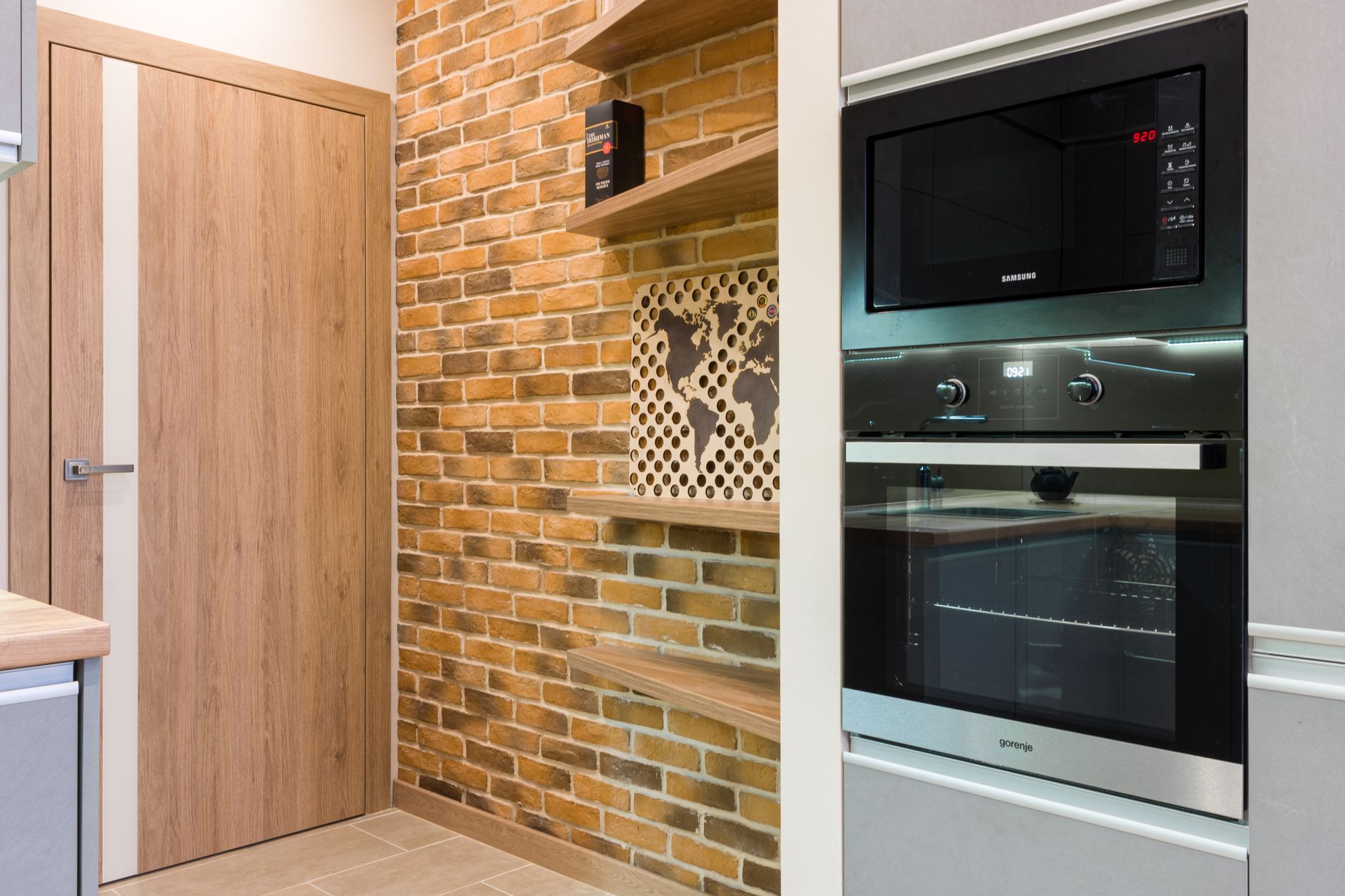
Smart ovens have transitioned from novelty to a more common appliance feature. These connected ovens offer Wi-Fi capabilities, allowing control via smartphone apps and integration with voice assistants. But as with most technology upgrades, the core question remains: are the added conveniences and capabilities worth the often significant price premium over a conventional oven?
⚡ In a Rush? Key Takeaways
- Smart ovens typically cost $300–$1,000 more than comparable conventional models.
- App control is most useful for preheating and monitoring, not active cooking.
- Recipe integration and guided cooking offer minor time savings for novice cooks.
- Durability concerns exist, as added electronics can be points of failure.
- ✅ Verdict: For most, smart features offer marginal convenience for a high cost; consider a high-quality conventional oven.
Are Smart Ovens Truly Beneficial for Everyday Cooking?
Smart ovens offer advanced features like remote preheating and cooking notifications, potentially saving 15-30 minutes across weekly use.
The allure of the smart oven lies in its promise of enhanced convenience and control. Imagine preheating your oven on your commute home or receiving a notification when your roast is perfectly cooked. These are the primary selling points manufacturers highlight. However, in practice, the utility of these features is often more nuanced than the marketing suggests. For many home cooks, the time saved is minimal, and the need for constant remote monitoring during complex cooking tasks is debatable.
Many smart features, such as remote diagnostics or firmware updates, are designed to improve the appliance’s longevity and your experience over time. This can be a significant advantage, particularly as complex electronics become more integral to modern appliances. The ability of the oven to communicate potential issues before they become major problems could save a homeowner considerable expense and stress.
What Are the Core Connected Features of Smart Ovens?
Key features include app control, remote diagnostics, recipe integration, and voice assistant compatibility, all adding to the appliance’s purchase price.
At its most basic, a smart oven is a conventional oven equipped with Wi-Fi connectivity. This allows it to communicate with a dedicated smartphone application. Through this app, users can typically preheat the oven, adjust temperature settings, set timers, and even monitor cooking progress via internal cameras in some high-end models. Voice assistant integration, such as with Alexa or Google Assistant, allows for hands-free operation, enabling users to ask their oven to start preheating or set a timer.
Beyond direct control, smart ovens often boast features like guided cooking programs. These might offer step-by-step instructions for specific recipes, automatically adjusting cooking modes and times. Some also include remote diagnostics, allowing the manufacturer or a technician to troubleshoot issues without an in-person visit. For example, the oven might send an error code to your phone that can be relayed to customer support for faster resolution.
How Much Time Can Smart Features Realistically Save?
Remote preheating and notifications save an estimated 15 to 30 minutes per week in total, a small but noticeable convenience for busy households.
The time savings often advertised for smart ovens are achieved through a few key functions. Remote preheating is perhaps the most practical. While it takes a conventional oven 10–20 minutes to reach temperature, being able to start that process as you leave work means the oven is ready the moment you arrive home. This can shave 10 minutes off your arrival-to-dinner timeline for meals that require a hot oven.
Notifications are another point of convenience. Instead of setting a timer and hoping for the best, a smart oven can alert you when a dish is done, preventing overcooking and the associated stress. For busy parents or professionals juggling multiple tasks, these alerts can be genuinely helpful in keeping a meal on track. However, for most home cooks who are present in the kitchen, the need for a phone alert instead of a timer’s beep is marginal.
| Feature | Estimated Time Saved Per Week | Primary Benefit | Potential Drawbacks |
|---|---|---|---|
| Remote Preheating | 5–10 minutes | Oven ready upon arrival | Requires stable Wi-Fi and app connection; security concerns |
| Cooking Notifications | 5–10 minutes | Prevents overcooking, reduces monitoring | Can be intrusive; requires phone proximity |
| Guided Cooking Programs | 5–10 minutes | Simplifies complex recipes, ensures accuracy | Limited recipe selection; inflexibility for experienced cooks |
| Remote Monitoring (Camera) | 0–5 minutes | Visual check without entering the kitchen | Camera quality varies; limited utility for many dishes |
The total time saving across these features, for a household that leverages them consistently, might amount to 15–30 minutes weekly. While not insignificant, it’s crucial to weigh this against the additional cost and potential for technological failure.
Are Smart Ovens More Reliable Than Conventional Models?
Smart ovens introduce more electronic components, which can be prone to failure and may increase repair costs compared to simpler conventional ovens.
When considering appliance purchases, reliability is paramount. A conventional oven, with its mechanical controls and fewer electronic parts, often presents a simpler, more robust system. Smart ovens, however, integrate Wi-Fi modules, microprocessors, sensors, and complex software. While these components enable advanced features, they also introduce additional points where failure can occur. A malfunctioning Wi-Fi chip or corrupted software could render a smart oven’s high-tech features useless, or worse, affect basic oven operation.
The cost of repair can also be a factor. Replacing a faulty control board on a smart oven is likely to be more expensive than repairing a traditional mechanical thermostat. Furthermore, the lifespan of integrated electronics may not match the mechanical components of the oven itself. This means that while the oven cavity might remain functional for 15-20 years, the smart capabilities could become obsolete or fail much sooner, potentially much like a smartphone that becomes unsupported after a few years. Consumers should investigate warranty details and the availability of replacement parts for smart components.
What is the True Cost of Ownership for Smart Ovens?
Smart ovens cost $300-$1,000 more upfront. Annual running costs are similar, but potential repair costs for electronics can be higher.
The most immediate difference between smart and conventional ovens is the purchase price. Typically, a smart oven will command a premium of $300 to $1,000 over an otherwise identically performing conventional model. This price increase is directly attributable to the embedded technology: the Wi-Fi module, the sophisticated control board, and the integrated sensors. For instance, a high-quality conventional double oven might cost $2,000, while a comparable smart double oven could easily reach $3,000 or more.
Beyond the initial outlay, the running costs are generally comparable. Both types of ovens consume energy based on their heating elements, insulation, and usage patterns. However, the added electronics in a smart oven do consume a small amount of standby power when not in active use, though this is usually negligible—typically less than 5 watts. The primary financial consideration beyond purchase price would be the potential for more expensive repairs if the advanced electronic components fail over the appliance’s lifespan. A conventional oven’s repairs are often simpler and less costly.
- Purchase Price Premium: $300 – $1,000+
- Running Costs: Similar to conventional ovens (energy consumption during use).
- Standby Power: Negligible (< 5W) for smart components.
- Repair Costs: Potentially higher for electronics (control boards, Wi-Fi modules).
- Lifespan of Smart Features: May be shorter than mechanical components; subject to software obsolescence.
How Do Smart Ovens Integrate with Smart Home Ecosystems?
Integration with ecosystems like Google Home or Alexa offers voice control and can be part of larger home automation routines.
For consumers already invested in smart home technology, the integration capabilities of smart ovens can be a significant draw. Many models are designed to work smoothly with popular voice assistants. This means you can ask Alexa to preheat your oven to 350 degrees Fahrenheit, or tell Google Assistant to set a timer for 20 minutes, all without touching the oven or your phone. This hands-free operation can be incredibly useful when your hands are messy from cooking.
Furthermore, smart ovens can often be incorporated into broader smart home routines. For example, you might set a routine that, when you say “Good night,” turns off all the lights, locks the doors, and ensures the oven is off or set to a specific cooking mode. This level of automation elevates the kitchen from a singular appliance experience to a connected part of a cohesive home environment. However, the necessity of this level of integration for the average home cook is questionable. It offers a layer of convenience, but it also introduces complexity and an additional dependency on your home network and cloud services.
Are Smart Ovens Just Another Kitchen Gimmick?
For consumers who do not actively use smart home devices or seek advanced cooking assistance, smart ovens may indeed feel like an unnecessary gimmick.
The perception of a smart oven as a gimmick often arises from a mismatch between the advertised benefits and the actual user experience for a significant portion of the population. If your cooking routine is straightforward, and you are comfortable with the tactile feedback of physical knobs and buttons, the added layer of app control or voice commands might feel redundant. For example, if you are already in the kitchen to prepare a meal, the energy involved in walking to the oven to set the temperature is minimal, and checking on food visually or audibly is second nature.
The Reddit community, for instance, often voices skepticism, with comments like, “Smart is just a fancy way of saying Wi-Fi connected, and since you’re already around the kitchen, it makes no sense for you to have them.” This sentiment highlights a key point: the most effective use cases for smart ovens often involve scenarios where the user is not immediately present. If your lifestyle involves significant time away from home during typical cooking hours, or if you heavily rely on voice commands for everyday tasks, the “gimmick” might actually serve a purpose.
Who Benefits Most from Smart Oven Technology?
Newer cooks, busy professionals, and tech enthusiasts are the primary beneficiaries who can leverage the time-saving and guided cooking features.
The ideal candidate for a smart oven is often someone who finds cooking a bit intimidating or time-consuming. Guided cooking programs can be invaluable for novice cooks, offering step-by-step instructions that ensure a higher likelihood of success with challenging dishes. These programs can demystify complex cooking processes, taking the guesswork out of temperatures and timings. For individuals who are frequently multitasking or away from the home during peak cooking periods, the ability to preheat remotely or receive timely notifications can genuinely streamline meal preparation.
Technology enthusiasts are another group likely to appreciate smart ovens. For them, the integration with their existing smart home ecosystem, the ability to control appliances via voice, and the novelty of cutting-edge technology are compelling factors. The “cool factor” and the convenience of a connected home are often worth the investment. However, for experienced home chefs who enjoy the hands-on process of cooking and are familiar with their kitchen, the benefits might be less pronounced, making a high-quality conventional oven a more practical choice.
What Are the Alternatives to Smart Ovens?
Conventional ovens with advanced features like convection, precise temperature control, and keep-warm functions offer excellent performance without connectivity.
If the core need is excellent cooking performance, a high-quality conventional oven can often meet or exceed the results of a smart oven, at a lower price point. Many conventional models now include sophisticated features that were once exclusive to smart appliances. True convection systems, which use a third heating element and fan, provide even heat distribution for superior baking and roasting. Precise temperature control, often displayed digitally, ensures accuracy, while bake/broil elements with multiple zones offer flexibility for searing or gentle cooking. Some premium conventional ovens also include keep-warm functions and delayed start timers, providing some of the convenience without the need for Wi-Fi connectivity.
For instance, a Breville Smart Oven Pro, while not a full-size oven, is frequently cited as a top performer for toaster ovens due to its precise controls, extensive cooking functions, and reliable performance, without relying on app connectivity. This highlights that advanced functionality and excellent baking results can be achieved through thoughtful design and robust engineering, rather than solely through digital integration. The focus remains on the cooking outcome, which is, after all, the primary purpose of an oven.
Are Smart Ovens Recommended in 2026?
In 2026, smart ovens are recommended only for specific users who fully use their connected features and smart home integration, not as a universal upgrade.
As of 2026, the market for smart ovens has matured, but the fundamental value proposition has not drastically changed. They offer undeniable conveniences for a certain segment of the population. If you are deeply integrated into a smart home ecosystem, appreciate remote control for specific tasks like preheating, and find guided cooking programs beneficial due to your cooking experience level, then a smart oven might indeed be a worthwhile investment. However, for the majority of home cooks, the premium price tag associated with smart connectivity may not align with the tangible benefits experienced in daily use.
It is crucial to consider your personal cooking habits and technological comfort level. If you primarily use your oven for basic baking and roasting, and you are generally present in the kitchen during cooking, the advanced features might go largely unused. In such cases, allocating the extra budget towards a higher-quality conventional oven with superior build materials, better insulation, or more versatile cooking modes (like true convection) would likely yield a more satisfying and long-term culinary experience. The decision hinges on whether the “smart” aspects translate into meaningful improvements in your kitchen workflow and cooking outcomes.
What Should Consumers Prioritize When Buying an Oven in 2026?
Prioritize cooking performance, build quality, and energy efficiency; smart features should be a secondary consideration for those with specific needs.
When selecting an oven in 2026, the most critical factor remains its ability to cook food exceptionally well. This means looking for excellent temperature accuracy and consistency, even heat distribution (often helped by true convection systems), and responsive controls. Robust build quality, including high-grade stainless steel, durable racks, and well-sealed doors, contributes to longevity and performance over the many years an oven is typically in use. Energy efficiency is also increasingly important, with many consumers opting for models with better Energy Star ratings to manage utility bills.
Smart features, while appealing, should be evaluated with a critical eye. Do they solve a real problem in your kitchen workflow? Will you actively use them? If the answer is yes, then a smart oven might be a good fit. However, if your priority is uncompromising cooking performance and long-term reliability, investing in a top-tier conventional oven without the connectivity often proves to be a more practical and cost-effective choice. The true value lies in the oven’s ability to deliver delicious results consistently, year after year.
How to Evaluate a Smart Oven’s Connectivity in Detail?
Examine app usability, Wi-Fi stability, voice command reliability, and the extent of integration with other smart home devices.