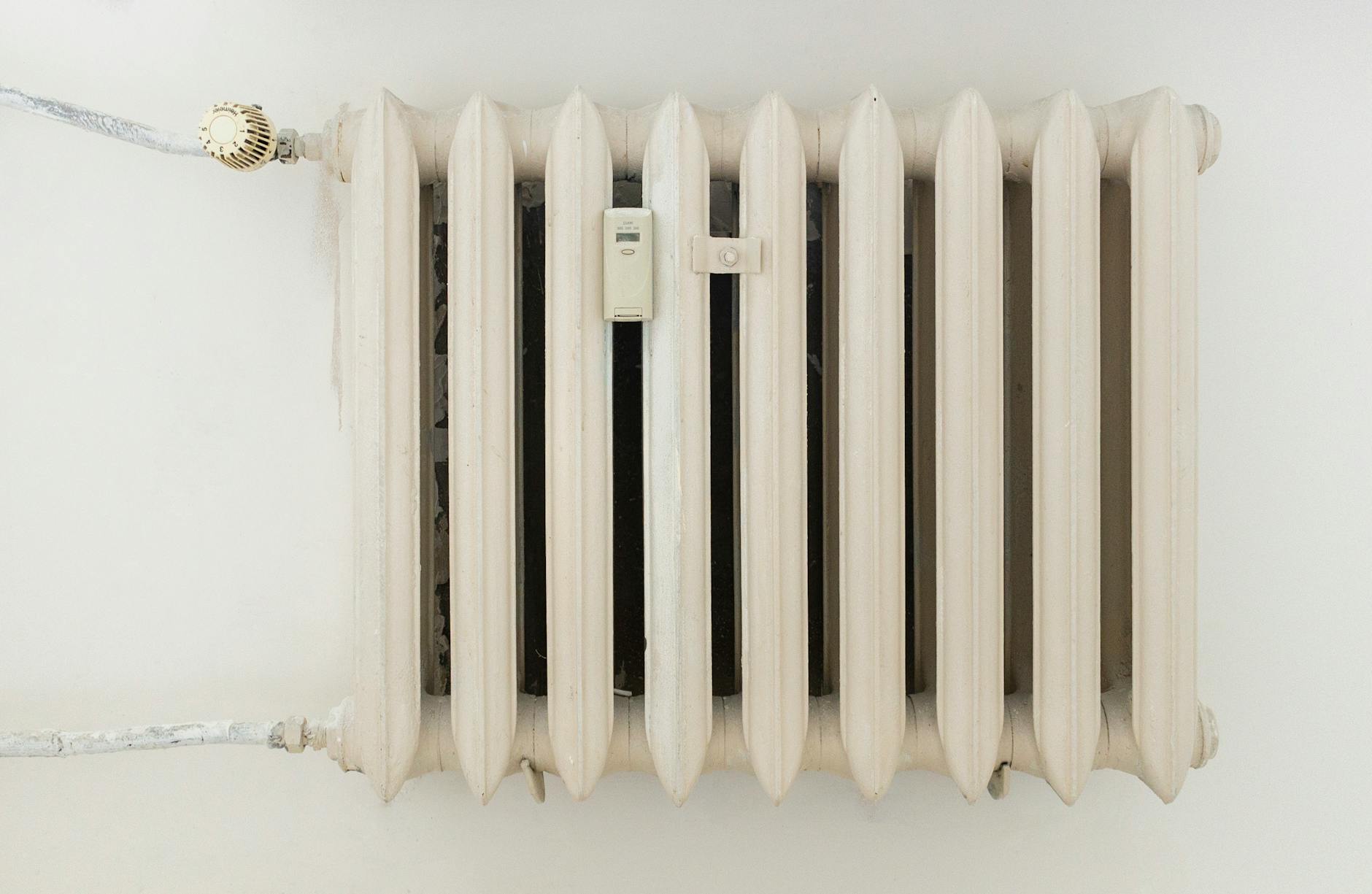
Bleeding a radiator restores full heat output by expelling trapped air that prevents hot water from circulating through the entire radiator surface — a task that takes under ten minutes, costs nothing beyond a £4 radiator key, and can reduce your seasonal heating bills by up to £60 while cutting boiler runtime by 20 percent.
⚡ In a Rush? Key Takeaways
- Trapped air reduces radiator heat output by up to 30% and forces your boiler to cycle 15–20% longer.
- Regular radiator bleeding can save £40–£60 on annual gas bills in a typical three-bedroom home.
- Bleeding restores full radiator surface area, improving heat transfer efficiency by 25–30%.
- Always check boiler pressure after bleeding and top up to 1–1.5 bar before restarting.
- ✅ Bleed radiators every September before the heating season, and immediately whenever you notice cold spots or gurgling sounds.
Why does bleeding a radiator save money?
Removing trapped air restores full heat output, allowing your thermostat to reach temperature faster and reducing boiler runtime by up to 20 percent — which translates directly to lower fuel bills across a six-month heating season.
Air enters closed wet central heating systems through multiple pathways: initial installation residues, ongoing corrosion of mild steel components, dissolved oxygen separating from water during seasonal heat-and-cool cycles, and fresh water introduced after pump maintenance. Because air is lighter than water, it rises to the highest points in your heating system — typically the top corner of upstairs radiators — and creates a barrier that stops convection currents from distributing heat evenly. The bottom of the radiator stays warm while the top remains cold to the touch. Your thermostat senses the chilly room and demands more from the boiler, which fires longer cycles to compensate. When air pockets occupy the top third of a radiator, the boiler must run 15–20% more frequently to maintain the same ambient temperature. Over a full heating season, that inefficiency adds £40–£60 to a typical household’s gas bill — and accelerates wear on circulation pumps and zone valves, whose premature replacement costs far exceed the price of a simple radiator key.
The economics are hard to ignore: a £3–£4 bleed key and twenty minutes of annual attention yield a heating efficiency gain comparable to a boiler upgrade setting, at a fraction of the cost. Pair regular radiator bleeding with lowering your thermostat by just one degree — each degree saved is worth approximately £80–£100 at current energy price caps — and you have a maintenance routine that pays measurable dividends every heating season.
How do you know when a radiator needs bleeding?
- Cold spots at the top of the radiator while the bottom is warm.
- Gurgling or bubbling sounds when the heating first cycles on.
- Rooms taking noticeably longer to warm up than they used to.
- Boiler running continuously without satisfying thermostat demand.
- You find yourself raising thermostat settings to achieve previous comfort levels.
Walk through your property with the back of your hand held near the top of each radiator. Cold segments indicate air accumulation and confirm the radiator needs bleeding. Listen carefully when the heating first cycles on: trapped air produces a distinctive hiss or gurgle as water attempts to force its way past the pocket. Radiators at the highest elevation in your home — third floors, attic conversions, top-floor en suites — typically show symptoms first because air naturally migrates to these apex points. If the boiler seems to run indefinitely without satisfying demand, inspect radiators before assuming the boiler itself requires service.
What tools do you need to bleed a radiator?
| Tool | Typical cost | Best for |
|---|---|---|
| Radiator bleed key | £3–£6 / $4–$6 | Traditional square-recess bleed valves |
| Flathead screwdriver | Common household item | Modern slotted bleed valves |
| Old towels or cloths | On hand | Protecting flooring from iron oxide sludge |
| Small container or bleed cup | £3–£4 | Catching expelled water cleanly |
The traditional radiator key is a small brass or steel square socket wrench designed to fit the protruding nipple of older bleed valves. Modern radiators often feature a slotted screw head that accepts a standard flathead screwdriver, though the key provides better leverage and reduces the risk of stripping soft brass fittings. Avoid using pliers or adjustable wrenches — they damage the valve body and create leaks requiring professional repair. Store your radiator key with your furnace filters so it is to hand for annual maintenance. The initial discharge often spurts discolored water carrying iron oxide from internal corrosion, so use heavy absorbent towels beneath the valve and consider wearing old clothing, as the dark water stains fabric permanently. For high-pressure systems, substitute a small bucket for a shallow pan.
Is it safe to bleed radiators yourself?
Yes, provided you follow two non-negotiable precautions: turn the heating system off completely before you start, and check boiler pressure afterward to prevent system damage.
Unlike gas line work or electrical repairs, radiator bleeding requires no permits or licensed tradespeople in most jurisdictions. The primary hazards are thermal burns and water damage. Never attempt to bleed your radiator while the heating is running — water in an operational boiler exceeds 140°F (60°C) and causes immediate scalding. Switch off at the thermostat or programmer and wait at least thirty minutes until pipes feel warm rather than hot. The second risk is boiler pressure: releasing air reduces system pressure, and if it drops below the operational minimum — typically 12 PSI or 0.8 bar for residential systems — you risk triggering safety shutoffs or drawing fresh air back in through automatic vents. Always locate your boiler’s pressure gauge before beginning the procedure.
How to bleed a radiator step by step
Switch off the heating, locate the bleed valve at the top corner of the radiator, open it one-quarter turn until you hear a hiss, wait for a steady stream of water, then close immediately and check boiler pressure.
| Step | Action | Approx. time |
|---|---|---|
| 1 | Switch off heating and allow to cool | 30 minutes |
| 2 | Prepare workspace and position towels and container | 2 minutes |
| 3 | Open bleed valve one-quarter turn anti-clockwise | 1 minute |
| 4 | Wait for hiss to stop and steady water to appear | 30 sec–2 minutes |
| 5 | Close valve and wipe area dry | 1 minute |
| 6 | Check and restore boiler pressure | 5 minutes |
Step 1 — Switch off and cool down. Turn off your boiler at the thermostat or programmer so the circulation pump stops. Allow thirty minutes for the system to cool to a safe working temperature. If your radiators have thermostatic radiator valves (TRVs), ensure they are open during bleeding — closed TRVs prevent air from escaping fully.
Step 2 — Prepare the workspace. Locate the bleed valve at the top corner of the radiator, on the side opposite the supply pipe — it resembles a small round nut with a square recess or slotted head. Spread towels beneath it and, if you have carpet, place a plastic sheet under the towels. Position your container directly below the valve outlet.
Step 3 — Open the bleed valve. Insert the radiator key or flathead screwdriver and turn anti-clockwise one-quarter turn only. Do not fully unscrew the valve — a quarter turn provides controlled venting without releasing a sudden pressurized jet that can stain ceilings and walls. You should hear a distinct hiss as compressed air escapes. Maintain gentle pressure on the key throughout; escaping air can occasionally eject the key.
Step 4 — Wait for water. Hold the key steady and keep your container in position. The hiss will continue for thirty seconds to two minutes depending on how much air has accumulated. As the air pocket clears, the sound changes pitch and transitions to a liquid gurgle. When a steady stream of water flows rather than mist or intermittent drips, the trapped air has fully evacuated.
Step 5 — Close and wipe. Turn the key clockwise immediately to close the bleed valve. Apply firm hand pressure but do not overtighten — excess torque strips the threads or cracks the valve seat, creating a persistent leak. Wipe the valve area dry and remove towels carefully to avoid spilling captured water onto flooring.
📊 Efficiency Verdict
A £4 radiator key and 20 minutes of annual radiator bleeding can restore 25–30% heat transfer efficiency and save a typical household £40–£60 per heating season — one of the highest return-on-investment maintenance tasks available to a homeowner.
Step 6 — Check and restore boiler pressure
Locate the pressure gauge on your boiler’s front panel. For residential hot water systems, the needle should sit between 1 and 1.5 bar (12–15 PSI) when the system is cold. Bleeding multiple radiators almost always drops pressure below this range. To restore it, locate the filling loop — a braided metal hose connecting your cold water supply to the return pipe — and open its valve slowly while watching the gauge. Once the needle reaches the normal range, close the valve firmly and check for leaks at the connection. Never leave the filling loop open continuously; over-pressurization when the system heats up will activate the pressure relief valve. Consult your boiler manual if the filling loop location is unclear.
What if no air or water comes out?
A seized bleed valve is common in older properties or hard water areas. Apply penetrating oil, wait twenty-four hours, and try again. If the valve still will not turn, do not force it — contact a heating engineer rather than risk shearing the valve body.
Brass valve stems corrode and seize, particularly in homes with untreated water. Never force the radiator key with excessive torque; a sheared valve requires radiator removal and professional replacement at £150–£300 in labour. Instead, apply WD-40 or Liquid Wrench around the valve stem base, allow it to penetrate for twenty-four hours, and tap the valve gently with a hammer to help the oil work into the threads. If the valve moves but neither air nor water emerges, the radiator may already be fully water-filled with no air trapped — check that other radiators on the same zone are heating correctly before assuming valve failure.
When to bleed versus when to call a professional
Bleed your radiator yourself for cold tops with warm bottoms. Call a Gas Safe registered engineer if bleeding fails to resolve the problem, if a bleed valve weeps continuously after closing, if the same radiator needs bleeding more than once per season, or if boiler pressure drops repeatedly within 48 hours.
Persistent cold spots after successful bleeding indicate internal sludge or corrosion blocking the waterways — a problem requiring a chemical flush or power flush. A radiator that needs bleeding monthly suggests either a faulty automatic air vent on the boiler or a system leak drawing in oxygen-rich fresh water; both require pressure-testing equipment to diagnose. If a bleed valve leaks continuously after closing, the internal seat washer has deteriorated — a heating engineer can replace the insert efficiently, often without draining the full system, for around £100–£150. Never attempt bleeding on a single-pipe steam system common in older apartment buildings; those operate under different principles and require steam valve maintenance rather than air bleeding.
How often should you bleed radiators?
Bleed annually each September before the heating season begins, immediately after any major plumbing work or boiler servicing, and whenever gurgling sounds or cold tops reappear during operation.
Set a calendar reminder for early autumn, when ambient temperatures allow comfortable working conditions and before heating engineers enter their busiest period. After system draining and refilling — following boiler servicing, for instance — fresh oxygen dissolves into the water and separates during the first heating cycles, often requiring a secondary bleed within 48 hours to establish stable circulation. If you find yourself bleeding the same radiator repeatedly in a single season, treat this as a diagnostic signal rather than a routine chore: the underlying cause needs professional investigation before oxygen corrosion damages your heat exchanger.
Regular radiator bleeding, paired with annual boiler servicing and thermostatic radiator valve checks, keeps your heating system maintenance costs predictable and your energy expenditure firmly under control. The quiet efficiency of a fully heated radiator — no hiss, no cold top, no boiler cycling endlessly — is the most reliable signal that your home is running exactly as it should.