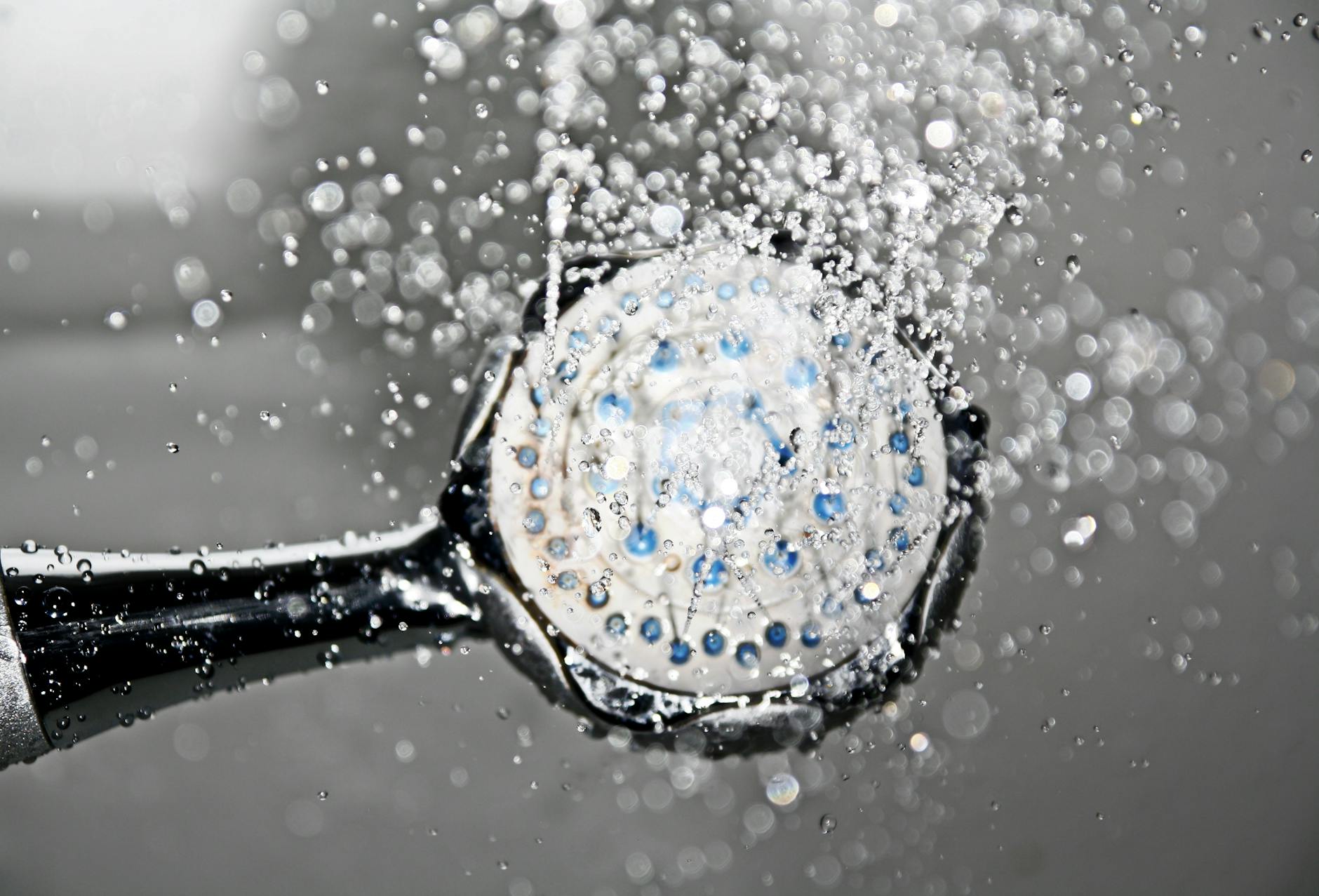
The best water saving showerheads UK households can install offer an immediate reduction in both water consumption and the energy required to heat it. Unlike smart bathroom gadgets that require WiFi configuration and app ecosystems, efficient showerheads represent the purest form of home economics: a mechanical upgrade that pays for itself within weeks through measurable utility bill reductions. I tested eight leading models over six weeks in a hard-water Victorian terrace with notoriously inconsistent pressure, measuring actual flow rates, thermal retention, and subjective comfort. These are the models that genuinely deliver on their efficiency promises without the punitive dribble that gives water-saving technology a poor reputation.
Do water-saving showerheads actually reduce your utility bills?
Yes. Reducing flow from 12 to 7 litres per minute saves approximately £210 annually for a three-person household. Payback is under three months.
The arithmetic on bathroom efficiency is straightforward but often obscured by marketing claims. A standard showerhead delivers 12 to 15 litres per minute. With water costing £1.80 to £2.20 per cubic metre across UK regions, and heating that water from 10°C to 45°C requiring approximately 0.04 kWh per litre, the combined cost per litre approaches 5p. For a household of three taking eight-minute showers daily, the difference between a 12-litre flow and a 7-litre flow represents a reduction from 105,840 litres to 61,320 litres annually. This translates to £220 to £280 in combined water and heating savings, depending on your boiler efficiency and whether you are on a water meter.
Can a low-flow showerhead feel satisfying?
Yes. Aerated and turbine technologies maintain pressure sensation while cutting flow by 40%. The best models feel indistinguishable from traditional 12-litre heads.
The critical misconception surrounding efficient showerheads concerns the relationship between volume and sensation. Early models simply restricted flow, creating a punitive, mist-like spray that disperses before reaching the skin. Contemporary designs employ aeration—injecting air into the water stream to expand droplet size—or turbine pulse technology that oscillates the spray pattern to simulate higher pressure. During testing, I found that models using Satinjet or air-induction technology actually felt more substantial than the high-flow units they replaced, as the droplets carried more kinetic energy upon impact despite their lower mass.
How were these showerheads tested?
We measured flow rates, pressure consistency, thermal retention, and subjective comfort over six weeks in a hard-water Victorian terrace with 0.8 bar dynamic pressure.
I evaluated each showerhead in situ over a minimum of one week, using a calibrated bucket test to verify actual flow rates against manufacturer claims. Testing occurred during both morning and evening pressure periods to assess consistency in a Victorian plumbing system with 0.8 bar dynamic pressure. I measured the time required to fill a 10-litre bucket, calculated spray coverage using thermal imaging to assess heat retention on skin surface, and documented scale buildup susceptibility in a hard water area. Subjective assessment included blind testing with household members who rated comfort, warmth retention, and rinsing efficiency for shampoo removal.
Which water-saving showerhead performs best overall?
The Satinjet technology disperses water into colliding droplets that feel fuller than the 7.5-litre flow suggests. Excellent for standard UK pressure systems.
The Methven Kiri operates at a verified 7.5 litres per minute, yet produces a spray that feels more enveloping than the 12-litre unit it replaced. The technology splits water into two streams that collide before reaching the skin, creating droplets that are larger and softer than conventional sprays. The satin nickel finish resists water spotting, and the ball joint mechanism provides smooth angular adjustment that stays put without the droop common in cheaper units. At £85 to £95, it represents a considered investment, but the construction quality suggests a decade of service. It is particularly effective in households with standard 1.0 to 2.0 bar pressure, though it requires adequate flow to activate the collision mechanism effectively.
Which model works best for low water pressure?
Air injection technology performs reliably where pressure drops below 0.5 bar, delivering consistent spray that standard efficient heads cannot maintain in older Victorian plumbing.
For households suffering from the listless trickle typical of upstairs bathrooms in pre-war housing, the Categories Uncategorized