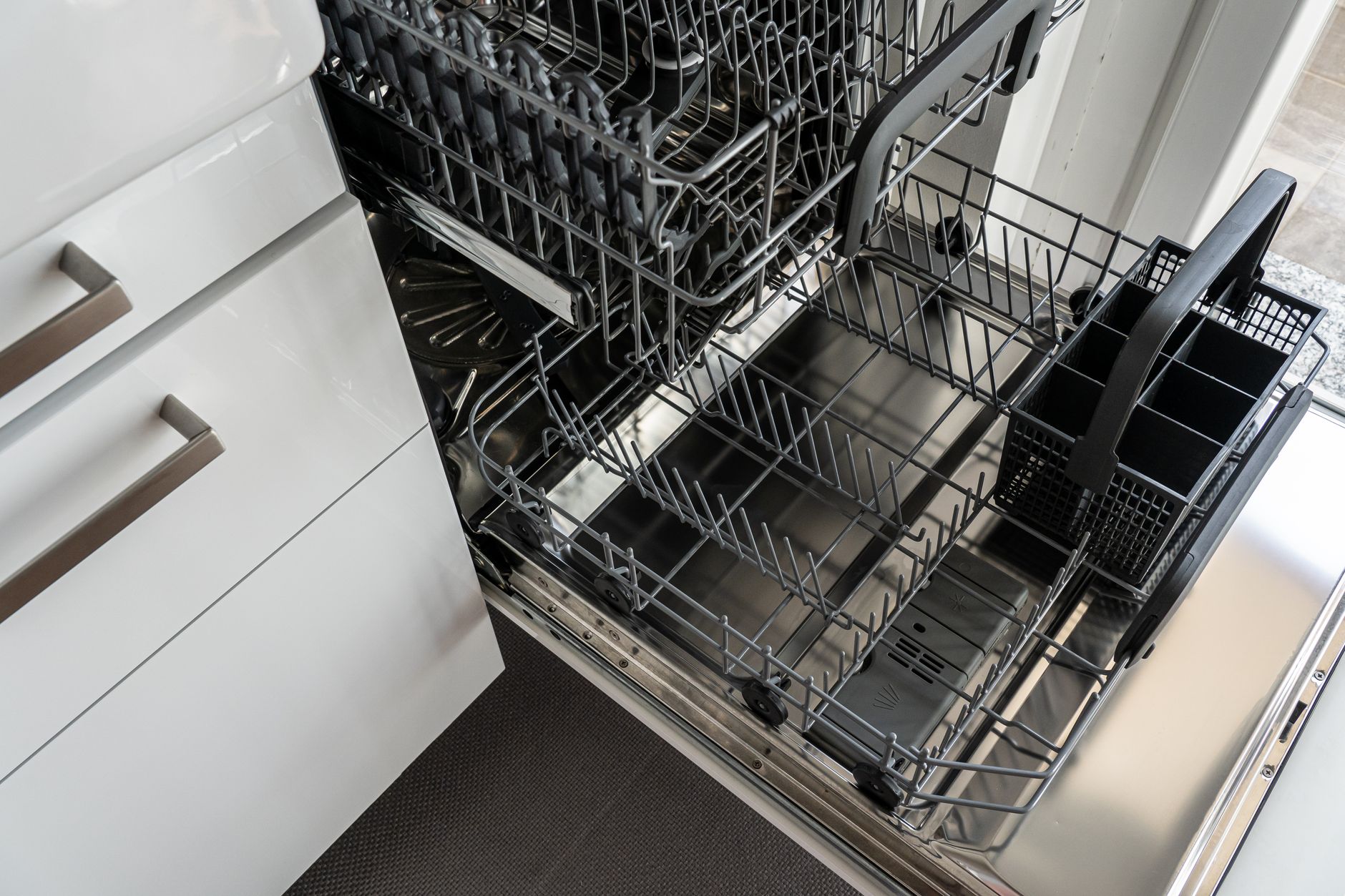
Dishwashers use approximately 3 to 5 gallons of water per cycle, representing a significant efficiency gain over the 15 to 27 gallons required for hand-washing equivalent loads. Choosing the right machine for your home requires balancing upfront cost against the energy and water consumption you will face over the next decade of ownership.
⚡ In a Rush? Key Takeaways
- Modern dishwashers use 70% less water than hand-washing a full load.
- Turning off the heated dry cycle saves approximately 0.5 kWh per wash.
- High-efficiency models use 100–200 kWh per year, versus 400+ for older units.
- Regular salt and rinse aid use prevents heating element scale buildup, saving $150+ in repairs.
- Verdict: Always prioritize a machine with an ‘Eco’ cycle and adjustable rack flexibility.
How Do You Calculate the Real Running Cost of a Dishwasher?
Running costs combine energy consumption per cycle and water usage. A modern unit averages $30–$50 annually based on 215 yearly cycles.
Does Energy Labeling Really Predict Monthly Bills?
Energy labels provide a standardized baseline, but real-world costs vary by 15% based on your specific water heater temperature settings.
Many homeowners rely solely on the energy sticker without accounting for their water heating source. If your dishwasher heats its own water, the load on your electrical panel is higher during the wash phase.
I have observed that machines with a delay-start feature allow you to run cycles during off-peak hours. In many utility markets, shifting your wash cycle to later in the evening can reduce the total cost of energy by another 10%.
- Energy-star qualified units: 100–150 kWh/year
- Standard efficiency models: 200–250 kWh/year
- Older units (pre-2015): 400+ kWh/year
Is the ‘Eco’ Cycle Actually Worth the Time?
The Eco cycle uses 20–30% less energy by extending wash times, allowing detergents to break down grime without high water temperatures.
The trade-off for efficiency is almost always time. An Eco cycle often lasts three hours, whereas a standard wash might finish in ninety minutes.
However, since the machine does the work while you are sleeping or out, the time is rarely a practical inconvenience. This efficiency is central to the broader energy goals for any modern, cost-conscious home.
Which Features Actually Improve Dishwasher Performance?
Look for soil sensors, adjustable rack systems, and stainless steel tubs. These features provide tangible utility rather than gimmickry.
Why Does a Stainless Steel Tub Matter?
Stainless steel retains heat better than plastic, which improves drying performance and resists odors and staining over many years.
I have found that plastic tubs tend to hold onto food odors after a few years of heavy use. A stainless interior is not just about aesthetics; it is about sanitation and longevity.
When selecting your unit, check the door seals for quality. A well-built seal is a hallmark of a unit that will last over a decade.
How Should You Manage Water Hardness?
In hard water areas, internal water softeners and consistent use of rinse aid prevent calcification on essential heating components.
Hard water is the silent killer of dishwashers. If you notice white residue on your glassware, your heating element is likely coating with scale as well.
Using kitchen maintenance workflows that include checking your salt levels once a month will save you from premature repair costs. If your area has very hard water, consider an external softener for the whole house.
What Are the Common Maintenance Myths?
You do not need to pre-rinse every dish. Modern sensors detect turbidity and adjust water levels accordingly for a cleaner result.
Does Pre-Rinsing Save Water or Waste It?
Pre-rinsing wastes up to 20 gallons of water per load. Modern enzymes in detergent require some food particles to work effectively.
Scraping food into the bin is necessary, but rinsing under the tap is redundant. You are essentially paying for water twice—once at the sink and once in the machine.
Trust your machine’s sensors to handle the rest. This habit change is one of the easiest ways to improve your home cleaning efficiency immediately.
Is Repairing a Dishwasher Always Worth the Cost?
Repairs under $200 are usually worth it for units under seven years old. Beyond that, the energy efficiency gap makes replacement wiser.
| Component | Typical Repair Cost | Lifespan Impact |
|---|---|---|
| Heating Element | $150–$300 | High |
| Drain Pump | $100–$250 | Medium |
| Door Seal | $50–$100 | Low |
Frequently Asked Questions
-
How often should I clean the filter?
Clean your filter once a month to prevent odors and maintain water flow, which ensures your machine does not struggle during cycles.
-
Can I use any detergent in a dishwasher?
Use only formulated dishwasher detergent. Hand-dish soap causes suds that can leak and damage the internal pump and motor sensors.
-
Why are my dishes still wet after the cycle?
Ensure your rinse aid dispenser is full, as this surfactant allows water to sheet off items, significantly improving the drying outcome.
-
What is the ideal temperature for a dishwasher?
Most units perform best with incoming water between 120°F and 140°F. Anything lower results in poor cleaning and residual grease buildup.