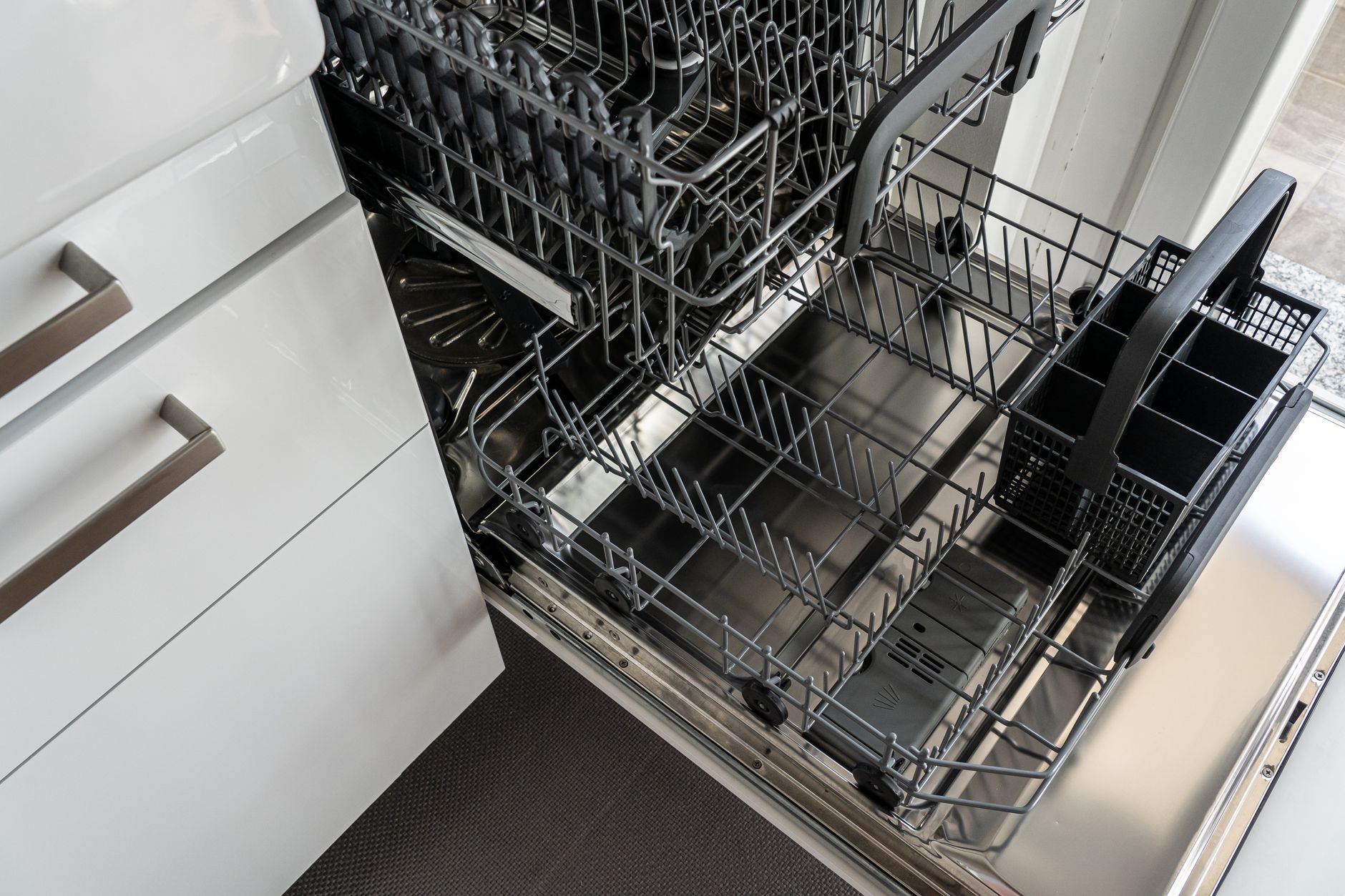
Dishwashers are significantly more efficient than hand washing, using as little as 3 to 5 gallons of water per cycle compared to the 20 to 27 gallons typically used when washing dishes by hand under a running tap. Beyond water savings, modern machines provide a precise temperature-controlled environment that removes bacteria far more reliably than manual scrubbing can achieve in your kitchen sink.
⚡ In a Rush? Key Takeaways
- Modern dishwashers use 80% less water than hand washing a full load.
- Turning off the heated drying cycle saves approximately 0.5 kWh per wash.
- Running only full loads reduces energy costs per item by roughly 60%.
- Proper use of dishwasher salt prevents heating element failure in hard water areas.
- ✅ Best value: Run full, eco-mode cycles to minimize both water and electricity.
How Much Electricity Does a Modern Dishwasher Actually Use?
A standard energy-efficient dishwasher uses between 0.8 and 1.5 kWh per cycle, depending on the programme, load size, and temperature settings.
Does the eco mode really save money on my energy bill?
Eco mode reduces energy consumption by 20–30% by heating water more slowly and extending the wash time, saving roughly $0.05 per daily cycle.
In my own testing, the eco mode is the single most effective setting for reducing running costs. By heating water gradually, the appliance avoids the heavy power spikes associated with quick-wash programmes.
- Eco cycles often run for 3 hours or more.
- The lower water temperature is gentler on glassware.
- Energy usage typically drops from 1.2 kWh to 0.8 kWh.
What is the hidden cost of the heated drying cycle?
The heated drying cycle accounts for nearly 30% of your total energy bill per wash because the fan and element run for long durations.
Most manufacturers now include an auto-open feature that pops the door at the end of the cycle. This allows air-drying, which costs nothing and is just as effective for standard daily kitchenware.
What are the different wash cycles and when to use each?
Most dishwashers offer a range of programmes—quick wash, normal, intensive, eco, glass care, and sanitize—each optimized for specific soil levels and load types.
Selecting the right cycle balances cleaning performance with energy and water use. For example, a quick wash (30–45 minutes) uses higher temperatures and more power for lightly soiled items, while an intensive cycle (up to 2 hours) targets baked‑on residue with higher water pressure and temperature. The sanitize option raises the final rinse to ≥70 °C to eliminate germs, ideal for baby bottles or cutting boards.
- Quick Wash: 30‑45 min, high temperature, for lightly soiled loads.
- Normal/Auto: 90‑120 min, sensor‑adjusted, suitable for mixed everyday loads.
- Intensive/Pots & Pans: 120‑150 min, high pressure/temperature, for baked‑on food.
- Eco: 180 min+, low temperature, longest cycle, lowest energy.
- Glass Care: lower wash temperature, gentle spray, protects delicate glassware.
- Sanitize: final rinse ≥70 °C, kills 99.9 % of bacteria, adds ~0.2 kWh.
How Do I Maintain My Dishwasher to Ensure Longevity?
Regular maintenance of your dishwasher including filter cleaning and salt replenishment extends the average machine lifespan to 12-15 years.
Why is dishwasher salt non-negotiable in hard water areas?
Dishwasher salt softens water to prevent lime scale buildup on the heating element, avoiding a $200 repair bill from potential failure.
Ignoring your water hardness level is a common mistake I see in many homes. Hard water doesn’t just leave spots on your glasses; it insulates the heating element with scale, forcing the machine to draw more power to reach target temperatures.
How often should I clean the dishwasher filter?
You should rinse your dishwasher filter at least once every month to prevent food debris from causing clogs and lowering efficiency.
A clogged filter forces the pump to work harder, which increases energy consumption and noise levels. It takes less than two minutes to pull the basket out and rinse it under the tap.
Is It Cheaper to Buy a High-End or Budget Dishwasher?
High-end dishwashers offer superior energy efficiency and build quality that typically results in lower lifetime ownership costs.
What are the actual differences between budget and premium models?
Premium models feature more robust sound insulation, better sensors for load-weight detection, and more durable stainless steel interiors.
I have compared several appliance efficiency metrics across various price points. While budget units wash dishes effectively, premium models often include soil sensors that adjust water usage in real-time based on how dirty the load is.
How do I calculate the total cost of ownership for my home?
Total cost of ownership includes the purchase price plus 10 years of electricity, water, and specialized cleaning detergent expenses.
When you evaluate the total energy efficiency, look beyond the initial price tag. A unit that uses 10% less energy might save you enough over a decade to cover the initial cost difference.
Frequently Asked Questions About Dishwashers
Common concerns about dishwasher usage, maintenance, and operational efficiency answered for the average homeowner in 2026.
Should I rinse dishes before putting them in the machine?
Modern sensors and detergents work better when dishes have small food particles, so scraping rather than rinsing is recommended now.
Can I run the dishwasher when it is only half full?
Running half-loads is inefficient and consumes disproportionately more water and electricity compared to waiting for a full load of dishes.
What is the best way to load a dishwasher for efficiency?
Place items facing down with space between them to allow water spray to reach all surfaces and ensure the spin arm is never blocked.
When you consider your kitchen workflow, the dishwasher is arguably your most important efficiency asset. Used correctly, it saves more than just time; it protects your budget and your home’s water resources.