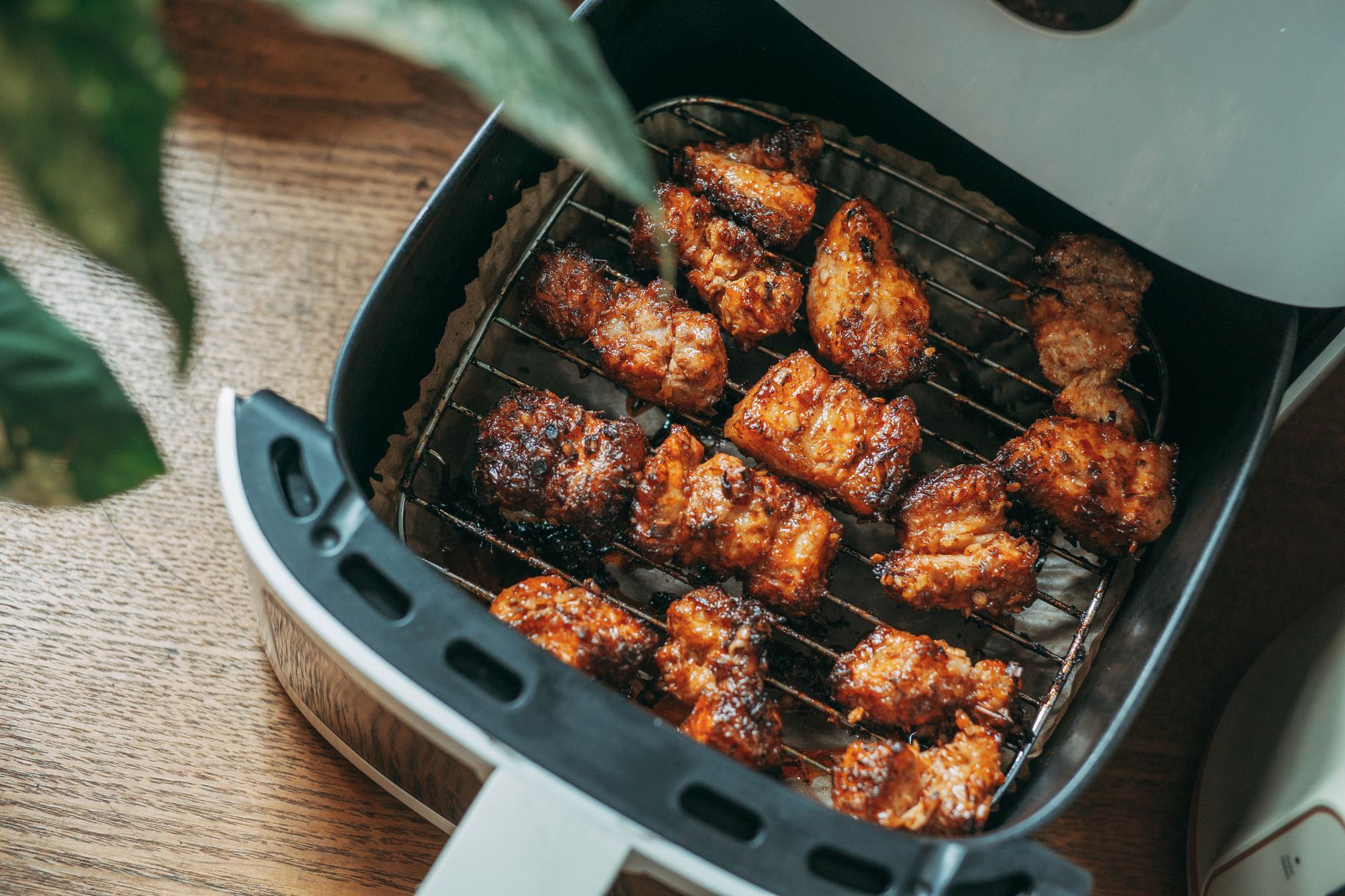
With electricity prices continuing to climb, the appeal of a more energy-efficient cooking appliance is strong. Air fryers have surged in popularity, often touted as a way to prepare meals faster and cheaper than conventional ovens. But does this promise hold up under real-world conditions, or is the perceived saving more about marketing than actual efficiency? This analysis dives into the operational costs and practical applications of both air fryers and standard ovens to determine where your money is truly saved.
⚡ In a Rush? Key Takeaways
- Air fryers typically consume 1.2-1.8 kWh per hour, while ovens use 2-5 kWh, but ovens are more efficient for larger batches.
- For small meals taking less than 20 minutes, an air fryer can be 30-50% cheaper to run than a full-sized oven.
- Ovens can be more cost-effective for full family meals that require 45+ minutes of cooking due to better insulation and capacity.
- Some studies show air fryers saving up to 84% energy for specific tasks compared to an electric oven, but actual savings vary by use.
- ✅ Best value: Use an air fryer for small portions or quick tasks, and your oven for larger meals or batch cooking.
An air fryer uses 1.2–1.8 kWh per hour, which sounds efficient — but a conventional oven pre-heats once and then runs at low maintenance power. For a single portion or small item, the air fryer wins easily. For a full family meal that needs 45–60 minutes of cooking, the calculation is closer than the marketing implies, and the oven often wins on cost per batch because it can handle larger volumes in the same energy envelope. I track cost per serving, not cost per hour.
Many households are looking for ways to trim their utility bills, and cooking is a significant energy consumer. Around 3% of the average home’s energy use comes from cooking, making efficiency choices in the kitchen particularly impactful. Understanding the different energy profiles of these two appliances can help you make informed decisions for your daily cooking habits and truly run a better home for less.
Which Appliance is More Energy Efficient for Small Meals?
For cooking small portions or individual servings, an air fryer is generally more energy-efficient, using 30-50% less power than a traditional oven.
When you’re preparing a quick snack, a single chicken breast, or a small batch of fries, the air fryer often comes out on top in terms of energy efficiency. Its compact size means less air needs to be heated, leading to faster preheating times and concentrated heat.
How Does Air Fryer Size Impact Energy Consumption?
Smaller air fryer models are more energy-efficient for small tasks, as larger units or dual-zone models can approach or exceed oven consumption for similar volumes.
The physical dimensions of your air fryer play a crucial role in its energy use. A compact model with a 3-litre capacity will naturally consume less energy to heat up and maintain temperature than a larger 7-litre or dual-zone unit. The smaller the internal volume, the less energy required to circulate hot air effectively. This is where understanding air fryer running costs becomes crucial, as not all models are created equal.
- Compact models (2-4L): Ideal for 1-2 servings, typically use 0.8-1.2 kWh per hour.
- Medium models (5-7L): Suitable for 2-4 servings, generally use 1.2-1.5 kWh per hour.
- Large/Dual-zone models (8L+): Can approach 1.5-1.8 kWh per hour, sometimes similar to a small oven’s consumption.
Is Preheat Time a Major Factor in Energy Savings?
Yes, the significantly shorter preheat time of an air fryer (2-5 minutes) versus an oven (10-15 minutes) contributes to considerable energy savings.
A conventional oven can take 10 to 15 minutes or more to reach its target cooking temperature, during which it draws significant power. Air fryers, by contrast, typically preheat in just 2 to 5 minutes. This rapid preheating alone can account for a substantial portion of the energy savings, especially for dishes that cook quickly. For instance, cooking something for 15 minutes in an air fryer with a 3-minute preheat uses far less energy overall than the same item cooked in an oven requiring a 12-minute preheat.
When is a Conventional Oven More Cost-Effective?
For larger meals, batch cooking, or items requiring longer cooking times, a conventional oven often becomes more cost-effective due to its insulation and capacity.
While air fryers excel at small, quick tasks, the traditional oven maintains its economic advantage for bulk cooking. Its insulated cavity and larger internal space are better suited for roasting a whole chicken, baking multiple trays of cookies, or preparing a large casserole.
Does Oven Insulation Affect Running Costs for Long Bakes?
Absolutely. A well-insulated oven maintains a steady temperature more efficiently, reducing heat loss and therefore power consumption during long cooking periods.
Modern ovens are designed with thick insulation to retain heat more effectively once they reach the desired temperature. This means that after the initial energy-intensive preheating phase, they often cycle on and off to maintain temperature, drawing less power than an air fryer that relies on continuous high-speed fan circulation. For dishes requiring an hour or more of cooking, this insulation advantage minimises ongoing energy consumption. This is a point where appliance energy ratings provide crucial insights into long-term running costs.
For What Types of Meals is an Oven More Economical?
Ovens are more economical for large roasts, batch baking, multiple trays of food, and dishes requiring consistent, ambient heat for 45+ minutes.
Consider the scenario of cooking a Sunday roast. An oven has the capacity for the joint of meat, roast potatoes, and vegetables all at once. To achieve the same amount of food, you would likely need to run an air fryer in multiple batches, negating any per-batch energy savings. The total energy expenditure across multiple air fryer cycles could easily surpass that of a single, well-managed oven cycle.
Here’s a comparison of meal types and optimal appliance use:
| Meal Type | Optimal Appliance | Reasoning |
|---|---|---|
| Single serving fries/wings | Air Fryer | Fast preheating, concentrated heat, small volume. |
| Batch of cookies/muffins | Oven | Larger capacity, even heat distribution for multiple items. |
| Roast chicken/large casserole | Oven | Capacity for large items, sustained heat, insulation. |
| Frozen pizza (personal size) | Air Fryer | Quicker cook time, suitable for single item. |
| Sheet pan dinners (family) | Oven | Accommodates larger trays, better for mixed ingredients. |
Which Appliance Has a Higher Wattage and What Does it Mean for Bills?
Air fryers typically range from 1,200-1,800 watts, while ovens range from 2,000-5,000 watts, impacting hourly electricity costs.
The wattage of an appliance is a direct indicator of how much power it draws. While an air fryer (1,200-1,800W) has a lower wattage than an oven (2,000-5,000W), this doesn’t automatically mean it’s always cheaper to run. The key lies in how long each appliance operates and for what purpose. A study by Instant Pot found that cooking with an air fryer can save up to 84% of energy compared to an electric oven for specific tasks. However, this is for concentrated use and not a blanket figure for all cooking. It’s crucial to consider the true cost of appliance ownership.
How Can Homeowners Optimise Cooking Appliance Usage for Savings?
To maximise savings, homeowners should strategically choose between their air fryer and oven based on meal size, cooking time, and appliance efficiency.
The goal isn’t to declare one appliance universally superior, but to understand their respective strengths and weaknesses to deploy them effectively. The most efficient kitchen is one where both tools are used appropriately.
What are the Real-World Electricity Costs for Both Appliances?
At average US electricity rates of $0.16/kWh, an air fryer costs $0.19-0.29/hour to run, while an oven costs $0.32-0.80/hour.
Understanding the hourly running costs is fundamental. Let’s break down the approximate costs based on average US electricity rates (around $0.16/kWh, though this varies by state and provider). These figures are for active use, not standby.
- Air Fryer (1500W): 1.5 kWh * $0.16/kWh = $0.24 per hour. (Ranges from $0.19 to $0.29 for 1200-1800W models).
- Electric Oven (3000W): 3.0 kWh * $0.16/kWh = $0.48 per hour. (Ranges from $0.32 to $0.80 for 2000-5000W models).
These figures highlight that while an oven has a higher hourly cost, its ability to cook more food simultaneously often balances the scales for larger families.
Can Using Both an Air Fryer and an Oven Increase Overall Costs?
Yes, using both an air fryer and an oven simultaneously or unnecessarily can increase overall electricity consumption and monthly bills.
This is a common trap. An air fryer will save you a little money if you use it instead of the oven. However, because it makes such good chips, it’s easy to slip into the habit of using it as well as the oven, increasing your overall power consumption. Having a dual-zone air fryer can help with this a little, but it becomes quite hard to put chips in the oven knowing how much better they’ll be from the fryer. The key is substitution, not addition. If you end up using both appliances more than you would have used just one, your bills will inevitably rise.
Are There Other Factors Beyond Energy Cost to Consider?
Beyond energy, factors like convenience, cooking time, desired texture, and clean-up ease should also influence your choice between an air fryer and oven.
While this article focuses on the financial aspect, it’s worth acknowledging that efficiency isn’t just about kWh. The convenience of a quick air fryer meal, the superior crispiness it often delivers, or the ability of an oven to handle delicate baking without drying out are all valid considerations. Ultimately, the ‘best’ appliance is the one that best meets your specific needs while keeping utility costs in mind.
Frequently Asked Questions About Air Fryer vs. Oven Running Costs
-
Which is cheaper to run for a family of four?
For a family of four, an oven is generally cheaper for full meals, as its higher capacity prevents multiple air fryer batches, saving time and energy overall.
-
Does an air fryer use less electricity than a microwave?
No, a microwave heats food much faster with less power for reheating or small tasks. An air fryer functions more like a mini-oven for cooking, not reheating.
-
Is it always better to use an air fryer instead of an oven?
No, it’s not always better. Air fryers excel for small, quick jobs, but ovens are more efficient and cost-effective for larger meals or batch cooking.
-
How much money can I save in a year by using an air fryer?
Annual savings vary, but judicious use for small meals can save $30-$50 per year compared to heating a full oven. Incremental use leads to minimal or no savings.
Get quick answers to common questions about the energy efficiency and cost savings of air fryers compared to regular ovens.
The Bottom Line: Making Smart Choices for Your Kitchen
Both air fryers and ovens have their financial advantages, and savvy homeowners will use each tool for its intended purpose to maximise savings.
The answer to whether an air fryer actually saves money compared to a regular oven isn’t a simple yes or no. It’s a nuanced response that depends heavily on what, and how much, you’re cooking. For small meals, quick snacks, or single-serving reheats, the air fryer’s rapid heating and concentrated cooking space make it the hands-down winner for energy efficiency. However, for larger volumes, baking multiple items, or family-sized roasts, the traditional oven often becomes the more economical choice.
In essence, the most efficient kitchen is one where both appliances coexist, each deployed for the tasks they perform best. By understanding the specific energy profiles and operational costs, you can make informed decisions that trim your utility bills and contribute to a more efficient home, benefiting both your wallet and the environment.
— Greta Michaud, Home Appliance Efficiency Researcher
Last tested/reviewed: April 2026