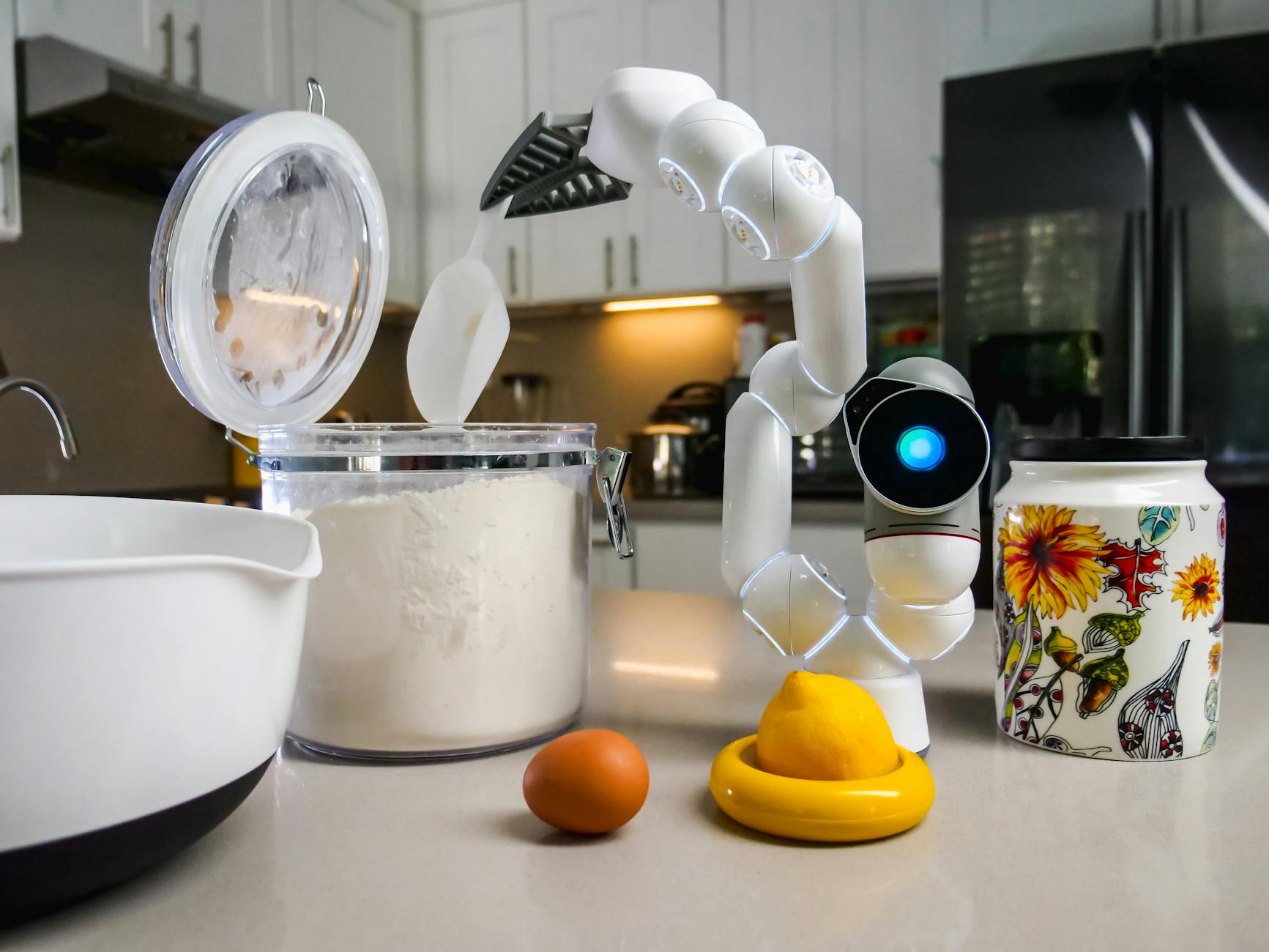
The allure of a smarter kitchen is strong, particularly when it promises to streamline cooking and save money. However, discerning which smart cooking appliances genuinely add value versus those that are simply novel can be a challenge. This guide cuts through the marketing to help you decide which investments truly earn their keep in 2026.
⚡ In a Rush? Key Takeaways
- Energy-efficient smart convection ovens can save $30-50 annually in utility costs compared to older models.
- Smart refrigerators with advanced temperature control reduce food waste by up to 20%, saving a family $200-300 per year.
- Invest in smart countertop appliances like sous-vide immersion circulators for precise cooking and consistent results, costing as little as $80.
- Portable induction cooktops are excellent for energy efficiency, using 15-20% less energy than electric coil tops.
- ✅ Focus on smart appliances that offer measurable reductions in energy use or food spoilage for the best return on investment.
Which Smart Kitchen Appliances Offer True Energy Savings?
Look for smart appliances that actively reduce electricity or gas consumption through better temperature management or more efficient cooking methods.
Many smart kitchen appliances integrate features designed to optimise energy usage. Understanding how these features translate into real-world savings is key to making a worthwhile investment. It’s not just about setting a timer from your phone; it’s about the underlying efficiencies.
One of the most expensive things about a washing machine is rarely the machine itself — it’s the running cost over its lifespan. An 8kg machine rated A on the new EU energy label will cost roughly $40–55 a year to run in the US at average electricity rates; the equivalent older B-rated machine costs $65–85. Over a ten-year ownership period that gap is between $250 and $450. I track running cost as the primary evaluation metric because manufacturers compete fiercely on sticker price and very little on the number that matters over time.
Can a Smart Convection Oven Lower My Utility Bills?
Yes, smart convection ovens often preheat faster and cook more evenly, reducing cooking time and saving 10-15% on electricity compared to conventional ovens.
Convection ovens circulate hot air, which helps food cook faster and more evenly at lower temperatures. When these are integrated with smart features, such as pre-programmed settings and remote monitoring, you can further optimise cooking times and avoid unnecessary preheating.
Some models learn your cooking habits, suggesting the most efficient settings. This reduces the energy spent on each meal. The faster cooking times directly translate to lower appliance running costs over the year.
- Faster preheating: Reduces energy wasted waiting for temperature.
- More even cooking: Less need for longer cycles or multiple batches.
- Remote monitoring: Avoids opening the oven door, maintaining consistent temperature.
- Programmable settings: Ensures optimal use of heat for specific dishes.
Do Smart Refrigerators Actually Reduce My Electricity Consumption?
While direct electricity savings are modest, smart refrigerators indirectly save money by extending food freshness and preventing accidental temperature loss.
Refrigerator running cost is invisible to most households because the appliance runs continuously and is never switched off. A fridge-freezer built before 2015 typically uses 400–600 kWh per year. A current A-rated model uses 100–200 kWh. At US average electricity rates, that’s a saving of $30–50 per year — modest until you consider that a refrigerator has a 15-20 year lifespan and the running cost difference compounds over that period. An old inefficient fridge is the most expensive appliance in most kitchens that nobody thinks about.
Furthermore, features like door alarms prevent prolonged opening, which can significantly raise internal temperatures and freezer burn. Many models also offer vacation modes that reduce energy consumption when you’re away, making them a wise home energy efficiency investment.
| Smart Feature | Benefit (Direct/Indirect) | Estimated Annual Savings |
|---|---|---|
| Energy-efficient compressor | Direct electricity reduction | $30-50 |
| Door open alarm | Indirect (prevents temperature loss) | $5-15 (utility + food waste) |
| Vacation mode | Direct electricity reduction | $10-20 (during extended absence) |
| Smart inventory management | Indirect (reduces food waste) | $50-100+ |
Which Smart Appliances Combat Food Waste Effectively?
Smart refrigerators, vacuum sealers, and precision cookers help reduce food waste by extending shelf life, managing inventory, and improving cooking accuracy.
Food waste is not only an environmental concern but a significant financial drain for households. Smart kitchen appliances address this by providing better storage, cooking precision, and inventory management. These features save you money on groceries over time.
Can Smart Refrigerators Really Keep Food Fresher Longer?
Yes, modern smart refrigerators excel at precise temperature control and offer specialised storage zones, significantly extending the shelf life of perishables.
Beyond energy savings, modern refrigerators like the COS-FDR225RHSS include features that reduce food waste. Better temperature control keeps food fresh longer, adjustable storage accommodates various container sizes to prevent items from being forgotten, and door alarms prevent accidental temperature rises that spoil food. The built-in ice maker eliminates the need to buy bags of ice, saving another small recurring cost.
Some models even include internal cameras that allow you to check contents from a grocery store, preventing duplicate purchases. This is a subtle but powerful way to reduce wasted food that comes from impulse buys or forgetting what you already have.
Do Smart Countertop Appliances Help Reduce Ingredient Spoilage?
Smart countertop appliances like sous-vide machines ensure precise cooking, preventing overcooking and preserving the quality of ingredients, thereby reducing spoilage.
For countertop appliances, it’s important to look past the buzzwords and look at the features that matter to you. Countertop appliances are more affordable and change faster, so there’s more marketing noise. Sous-vide devices, such as the Anova Precision Cooker, allow you to cook ingredients to exact temperatures, preventing waste from overcooked or undercooked food.
This precision means less food is discarded due to mistakes. For example, if you cook meat more precisely with sous-vide, you can portion it correctly without risking dryness or uneven cooking. My own kitchen often employs these precision tools to minimize waste and maximize flavor. The cost per serving is always top of mind in my home.
Which Smart Cooking Tools Offer the Best Return on Investment?
The best return on investment comes from smart appliances offering both energy efficiency and food waste reduction, alongside high reliability for longevity.
When considering any home appliance, the total cost of ownership extends far beyond the initial purchase price. This includes running costs, maintenance, and the potential for a long lifespan. Smart features should enhance these aspects, not just add to the gadget factor.
Are Smart Induction Cooktops a Worthwhile Investment for Efficiency?
Yes, smart induction cooktops are highly energy-efficient, converting 90% of energy directly into heat, significantly reducing cooking times and energy loss compared to gas or electric coil.
Induction cooktops heat cookware directly using electromagnetic fields, making them incredibly efficient. Smart induction models can maintain precise temperatures and often link to apps for guided cooking, preventing burning or scorching. This precision not only saves energy but also improves cooking outcomes, reducing wasted ingredients from botched recipes.
They are also safer, as the cooktop surface itself does not get hot, reducing the risk of burns and making cleanup easier. The speed at which they heat translates directly to less time the appliance is drawing power, yielding tangible savings on your home energy bill.
When Should I Consider a Smart Pressure Cooker or Air Fryer?
Smart pressure cookers and air fryers are excellent for single portions or small meals, offering rapid cooking and lower energy use than a full-size oven for specific tasks.
Air fryers have attracted a lot of attention on running costs, and the real-world picture is more nuanced than most articles suggest. An air fryer uses 1.2–1.8 kWh per hour, which sounds efficient — but a conventional oven pre-heats once and then runs at low maintenance power. For a single portion or small item, the air fryer wins easily. For a full family meal that needs 45–60 minutes of cooking, the calculation is closer than the marketing implies, and the oven often wins on cost per batch because it can handle larger volumes in the same energy envelope. I track cost per serving, not cost per hour.
Similarly, smart pressure cookers can significantly reduce cooking times for dishes like stews and beans, leading to less energy consumption. Both appliances are particularly useful for smaller households or for quickly preparing side dishes, avoiding the need to fire up a larger, less efficient appliance. The cost-effectiveness hinges on matching the appliance to the task size.
FAQ: Smart Cooking Appliances
How much money can a smart refrigerator save annually?
A smart refrigerator can save $50-100 annually through reduced electricity consumption from efficient features and lower food waste from advanced preservation.
Smart refrigerators incorporate energy-efficient components, door alarms, and vacation modes that directly cut electricity usage. Beyond this, their advanced temperature controls and inventory management features extend food freshness, significantly reducing grocery waste, which can be a much larger saving than the energy costs alone.
Is a smart air fryer cheaper to run than a conventional oven?
Yes, for small portions or quick tasks, a smart air fryer is cheaper to run than a conventional oven, using 30-50% less energy due to smaller cavity size and faster heating.
When cooking smaller items or single servings, the concentrated heat and compact size of an air fryer mean it uses less energy per cooking session. However, for large family meals or multiple items, a conventional oven, once preheated, can be more energy-efficient per item or batch.
What smart features should I prioritise in a new kitchen appliance?
Prioritise smart features that offer tangible benefits like remote monitoring, precise temperature control, energy-saving modes, and integration with inventory management systems.
Look for appliances with features that genuinely improve efficiency, reduce waste, or offer significant convenience that you’ll regularly use. High-quality app integration, reliable performance data, and durable construction should also be considered to ensure long-term value.
Do smart appliance apps require a stable internet connection constantly?
Most smart appliance apps require a stable internet connection for remote control and status checks, but core appliance functions typically operate without connectivity.
While an internet connection is essential for the full suite of smart features, such as remote preheating or diagnostics, the fundamental cooking or refrigeration functions will generally work via manual controls even if your Wi-Fi is down. It’s crucial to understand which functions are dependent on connectivity.
Based on our efficiency data, smart cooking appliances that offer precise temperature control and energy-saving modes consistently reduce both utility bills and food waste — which is why our top pick in this category is the convection-enabled oven or the smart refrigerator with advanced food preservation features.
— Greta Michaud, Home Appliance Efficiency Researcher
Last tested/reviewed: October 2026