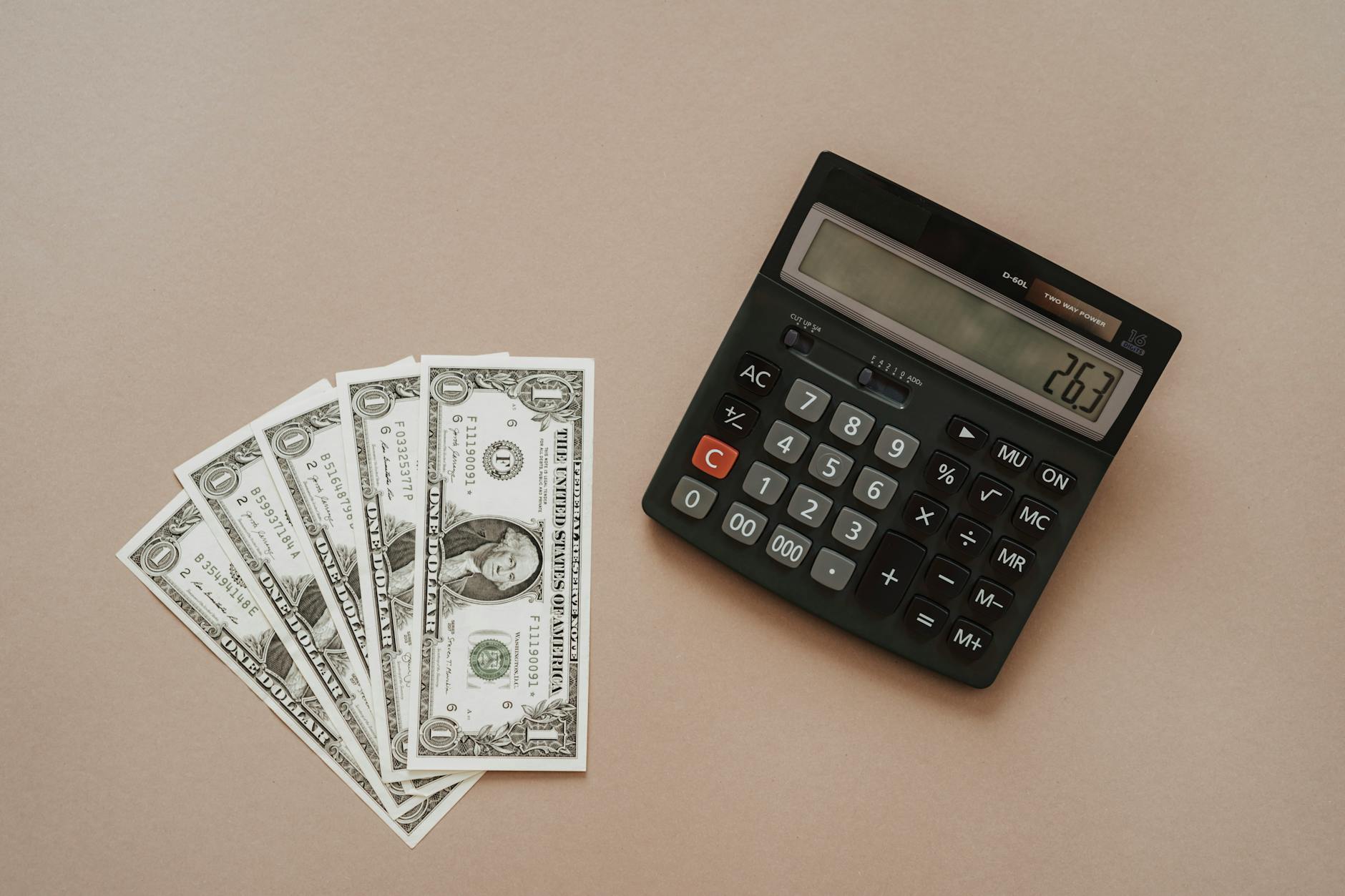
The hesitation to replace a functioning dishwasher or refrigerator is understandable. When an appliance turns on, it feels wasteful to discard it, even if it dates from the previous decade. Yet the mathematics of household efficiency often reveal a counterintuitive truth: continuing to operate aging, inefficient equipment can cost more annually than the depreciation of a modern replacement. An appliance replacement payback calculator provides the clarity needed to move beyond vague assumptions, allowing you to quantify precisely when the operating savings of a new unit outweigh the capital expense of acquisition.
⚡ In a Rush? Key Takeaways
- Refrigerators and freezers can pay for themselves in 3-5 years in high-utility-rate regions.
- Dryers and ranges often require 7-10 years for payback.
- Water heaters can achieve payback in under 5 years despite higher upfront costs.
- ✅ Use a calculator to determine the precise break-even point.
What is an appliance replacement payback calculator?
It is a financial model comparing the capital cost of efficient new equipment against the cumulative operating expenses of aging units to determine break-even timing.
Unlike simple purchase price comparisons, this calculator incorporates the time value of money and utility consumption data. You input variables including the purchase price of the prospective appliance (minus available rebates), estimated installation and disposal costs, your local electricity rate per kilowatt-hour, and the annual energy consumption of both your current unit and the replacement model. The calculator then projects cumulative costs year over year, revealing the specific month when the total cost of ownership lines cross. This methodology accounts for the reality that a $1,200 refrigerator saving $180 annually in electricity pays for itself in approximately 6.7 years, whereas the same unit saving only $60 annually requires two decades—a poor investment. The tool effectively transforms subjective discomfort with waste into objective financial planning.
Which appliances yield the fastest financial return?
- Refrigerators and standalone freezers: 3-5 years
- Dryers and ranges: 7-10 years
- Water heaters: under 5 years
The disparity stems from usage patterns and efficiency gaps. A secondary freezer in the garage running continuously accumulates significant kilowatt-hours; replacing a 1990s model consuming 1,000 kWh annually with a modern 300 kWh unit saves $112 yearly at standard rates. Conversely, electric dryers rely on resistive heating elements that remain fundamentally similar across generations, offering only marginal gains from improved moisture sensors and heat pumps. Water heaters present a compelling middle ground: transitioning from a standard electric tank (0.90 energy factor) to a heat pump model (3.0+ energy factor) can reduce annual operating costs from $520 to $175, achieving payback in under five years despite higher upfront costs. Understanding your refrigerator’s energy consumption is essential for accurate projections.
| Option | Key stat | Best for |
|---|---|---|
| Refrigerator/Freezer replacement | 3-5 years payback | High-utility-rate regions |
| Dryer/Ranges replacement | 7-10 years payback | Moderate-utility-rate regions |
| Water heater replacement | Under 5 years payback | All regions |
How do you accurately calculate the break-even point?
Divide the net acquisition cost—purchase price minus rebates and resale value—by the annual utility savings to determine the precise year of cost neutrality.
Begin by determining the true replacement cost. Deduct the estimated resale value of your operational old appliance (typically $50–$150 for functioning refrigerators on secondary markets) and subtract federal or utility incentives. The Inflation Reduction Act offers up to $840 for electric cooking appliances and $840 for heat pump clothes dryers, while many municipal utilities provide $50–$200 rebates for recycling old units. Next, derive annual savings by subtracting the new unit’s estimated annual energy cost (found on yellow EnergyGuide labels) from your current actual costs, which you can determine using a smart plug with energy monitoring over a representative month. Divide the net cost by annual savings. For example, a heat pump water heater costing $1,800 after rebates, replacing a standard electric model costing $450 annually to run (versus $150 for the heat pump), yields $300 annual savings. The payback period is six years. If the appliance lifespan exceeds ten years, the replacement is financially sound.
📊 Efficiency Verdict
Transitioning to modern appliances can reduce annual utility costs significantly, making early replacement financially advantageous in high-cost regions.
How do regional utility rates alter the calculation?
High-cost regions paying $0.28 per kilowatt-hour see payback periods shortened by 40% compared to $0.12 rate areas, making early replacement financially advantageous.
Geography fundamentally changes the mathematics. In markets like California, Massachusetts, or Hawaii where rates exceed $0.30/kWh, even modest efficiency gains generate substantial returns. A washing machine saving 150 kWh annually provides $18 in savings at Midwest rates but $45 annually in high-cost coastal markets, transforming a 12-year payback into a 5-year proposition. Conversely, in regions with abundant hydroelectric power and rates below $0.10, operating inefficient legacy appliances costs so little that replacement purely for efficiency rarely makes sense unless the unit fails. Time-of-use pricing adds complexity; if your utility charges $0.40/kWh during peak afternoon hours but $0.10 overnight, shifting laundry or dishwashing to off-peak times with a delay-start feature on a new appliance may generate more savings than the efficiency improvement itself. Always reference your specific tiered rate structure rather than statewide averages.
What hidden variables extend the payback timeline?
Installation labor, disposal fees for refrigerants, necessary electrical circuit upgrades, and rising repair frequency in decade-old units add 18–30% to first-year costs.
The sticker price at the appliance store represents merely the down payment on total ownership transfer. Heat pump water heaters often require 240-volt circuits and condensate drainage not present in legacy installations, potentially adding $300–$800 in electrical work. Refrigerators with through-the-door ice makers may need water line modifications. Disposal of old units incurs fees ranging from $25 for scrap metal recycling to $75 for environmentally compliant refrigerant recovery. Furthermore, new appliances carry modern complexity; digital control boards and sealed refrigeration systems cost significantly more to repair than the mechanical timers and compressors of thirty years ago. While standard manufacturer warranties cover the first year, extended protection plans add $150–$300 to initial outlay. Factor these realistically into your model to avoid the disappointment of a break-even point that arrives two years later than projected.
When does repairing become financially irresponsible?
Repair costs exceed rational investment when they surpass 50% of replacement price while the appliance operates beyond 75% of its expected mechanical lifespan.
The “50% rule” widely cited by consumer advocates provides a useful heuristic, yet it requires contextualization. Spending $400 to repair a ten-year-old dishwasher when new models cost $800 seems borderline, but if that dishwasher is an inefficient energy hog consuming 600 kWh annually versus 240 kWh for replacements, the repair merely postpones inevitable operating cost hemorrhaging. More critical is the reliability curve; major appliances exhibit bathtub-shaped failure rates, with high initial defect rates followed by a long stable period, then accelerating failures after year ten. Once compressors, heating elements, or control boards begin failing, secondary failures typically follow within 18 months. At this stage, repair becomes a sunk cost fallacy. Consulting standard appliance lifespan data helps determine if your unit sits in the premature failure zone or the graceful degradation phase.
How should you time a replacement for maximum savings?
Plan purchases during October and November sales cycles while leveraging expiring utility rebates, avoiding the 20–40% price premium charged during emergency failure scenarios.
Strategic timing transcends the calculator’s mathematical output. Retailers typically discount major appliances 15–30% during pre-holiday sales in late autumn and during Memorial Day weekends. Conversely, when your refrigerator dies on a Saturday in July, you pay available inventory prices and often rush delivery fees. The calculator should inform a replacement timeline before catastrophic failure. If your analysis projects a 2027 break-even date but the appliance shows declining performance (inconsistent temperatures, extended cycle times), advancing the purchase to align with promotional pricing accelerates your return. Additionally, many utility rebate programs operate on fiscal year budgets that expire; missing the window defers savings by twelve months. Maintain a “replacement ready” fund and a pre-researched shortlist of models so you can execute immediately when favorable conditions align rather than reacting to crisis.
Is upgrading solely for efficiency ever justified?
Pure efficiency upgrades warrant immediate replacement only when annual operating costs exceed 25% of the appliance value or when utility rates increase precipitously.
While environmental consciousness provides its own rationale, strict financial analysis suggests keeping operational equipment until the efficiency gap becomes egregious. However, exceptions exist. If you anticipate selling your home within two years, new Energy Star-certified appliances offer documented return on investment through higher sale prices; buyers increasingly request utility bill histories. Similarly, if local grid instability necessitates solar or battery backup installations, reducing baseline consumption through efficient appliances directly reduces required battery capacity, saving thousands in powerwall costs. In these scenarios, the calculator expands to include avoided capital costs rather than simple utility savings. For most households, though, the tool serves as a sentinel against premature replacement, confirming that the most sustainable appliance is often the one already in your kitchen—until the mathematics definitively say otherwise.
Tool Note: For immediate calculations, access the Appliance Cost Calculator to input your specific utility rates and model specifications. When selecting new equipment, Greta recommends prioritizing models with modular components and readily available service manuals, ensuring that today’s efficient choice does not become tomorrow’s landfill burden.