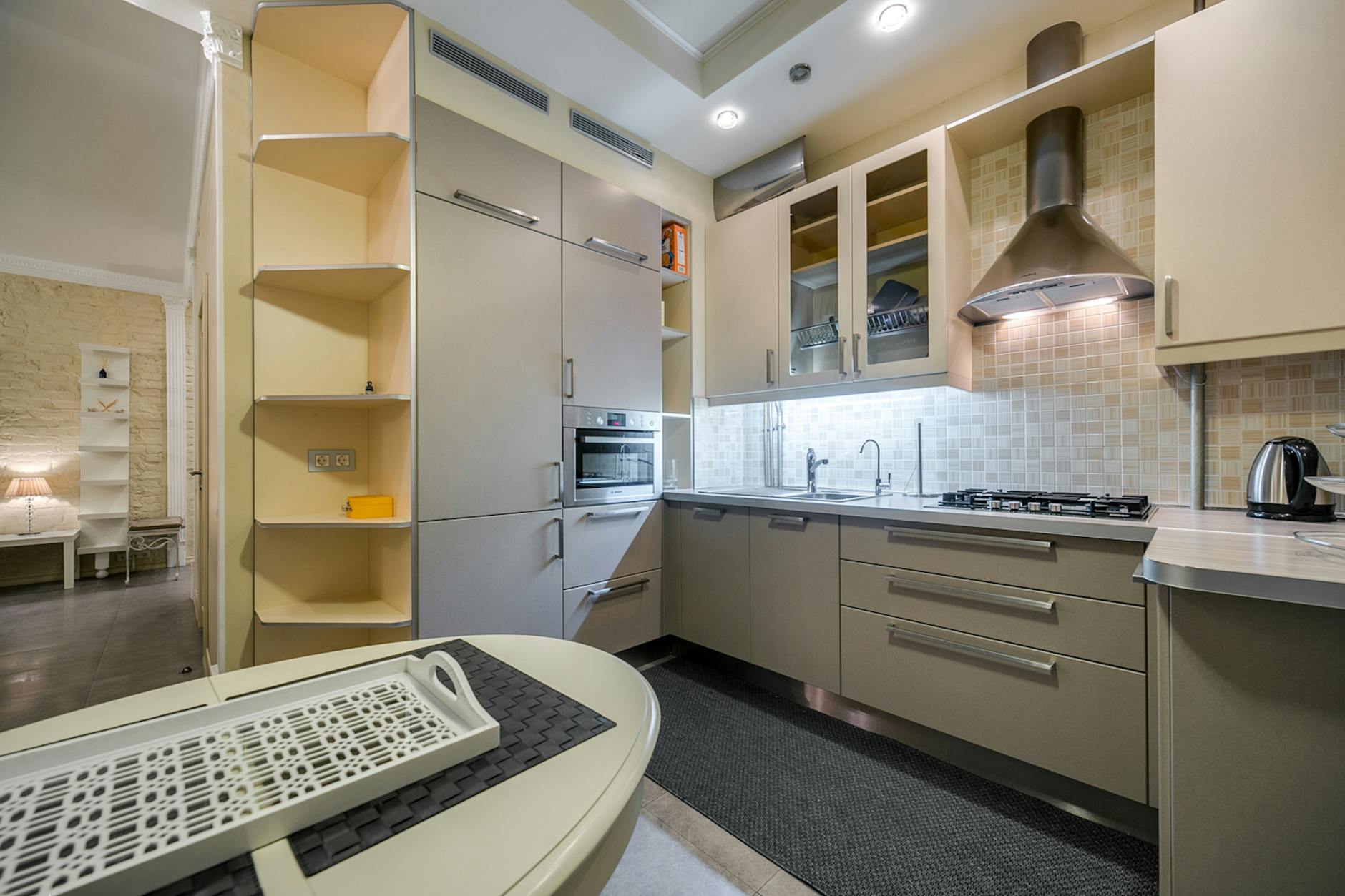
The average kitchen houses between fifteen and twenty small appliances, yet most home cooks rely on fewer than four for daily meals. This disparity creates a persistent organisational challenge: valuable cabinet space fills with bread makers and spiralizers used twice yearly, while workhorse items like the kettle and toaster clutter limited counter real estate. Research suggests that cluttered environments increase cortisol levels; a clear counter, therefore, constitutes a health intervention as much as an organisational one. When you cannot locate the immersion blender, you purchase a replacement, or worse, abandon home cooking for expensive convenience meals. The financial calculation extends beyond replacement costs to include the premium paid for larger homes with bigger kitchens necessitated by poor storage efficiency.
This organising small appliances kitchen guide addresses the mechanics of efficient storage without advocating for expensive built-in systems or additional square footage. Thoughtful kitchen layout planning begins with understanding that storage efficiency directly impacts cooking costs. The strategies below focus on workflow optimisation, injury prevention through proper ergonomic placement, and the financial benefit of knowing exactly what you own.
Why do small appliances create so much kitchen clutter?
Most kitchens hold 15-20 small appliances, yet only 3-4 see weekly use. The remainder occupy premium storage space, creating visual noise and workflow friction that slows daily cooking.
The proliferation begins innocently—an immersion blender for soups, a rice cooker for convenience, a spiralizer for that single January health kick. Individually, each appliance occupies roughly one cubic foot of cabinet space. Collectively, they consume the equivalent of a small closet within your kitchen’s footprint. This physical clutter generates hidden costs: the minutes spent unstacking the food processor to reach the colander behind it, the replacement purchase when you cannot locate the hand mixer, the stress of working in crowded conditions. When countertop appliances block natural light or prep space, they actively degrade the cooking experience. The first step toward efficiency involves acknowledging that storage real estate is finite and valuable—approximately £35 per square foot when calculated against average kitchen renovation costs. Treating this space as a commodity forces the necessary ruthlessness about what deserves to remain within arm’s reach.
How do I decide which appliances deserve prime storage space?
Weekly-use appliances deserve accessible storage. Monthly-use items belong in secondary zones. Annual-use equipment should occupy the least accessible cabinet depths or leave the kitchen entirely.
Conduct a frequency audit. Remove every small appliance from cabinets and counters, then track usage for thirty days. You will likely discover that the electric kettle and toaster earn their counter space, while the bread machine and pasta maker collect dust. Categorise ruthlessly: Tier One (daily/weekly) remains in prime real estate—either counter or the first level of accessible cabinets. Tier Two (monthly) moves to higher shelves or the pantry’s back row. Tier Three (annual or never) must
⚡ In a Rush? Key Takeaways
- Most kitchens hold 15-20 appliances, but only 3-4 see weekly use.
- Each appliance occupies roughly one cubic foot of cabinet space.
- Cluttered environments increase cortisol levels, affecting cooking experience.
- Weekly-use appliances deserve accessible storage.
- ✅ Conduct a frequency audit to decide appliance storage tiers.
Conduct a frequency audit. Remove every small appliance from cabinets and counters, then track usage for thirty days. You will likely discover that the electric kettle and toaster earn their counter space, while the bread machine and pasta maker collect dust. Categorise ruthlessly: Tier One (daily/weekly) remains in prime real estate—either counter or the first level of accessible cabinets. Tier Two (monthly) moves to higher shelves or the pantry’s back row. Tier Three (annual or never) must
| Appliance | Usage Frequency | Recommended Storage |
|---|---|---|
| Electric Kettle | Daily | Counter or Tier One Cabinet |
| Toaster | Daily | Counter or Tier One Cabinet |
| Bread Machine | Annual | Least accessible cabinet depth or leave kitchen |
| Pasta Maker | Never | Least accessible cabinet depth or leave kitchen |
📊 Efficiency Verdict
By categorising appliances and storing them based on usage frequency, you can save up to 15 minutes daily and reduce stress in the kitchen.