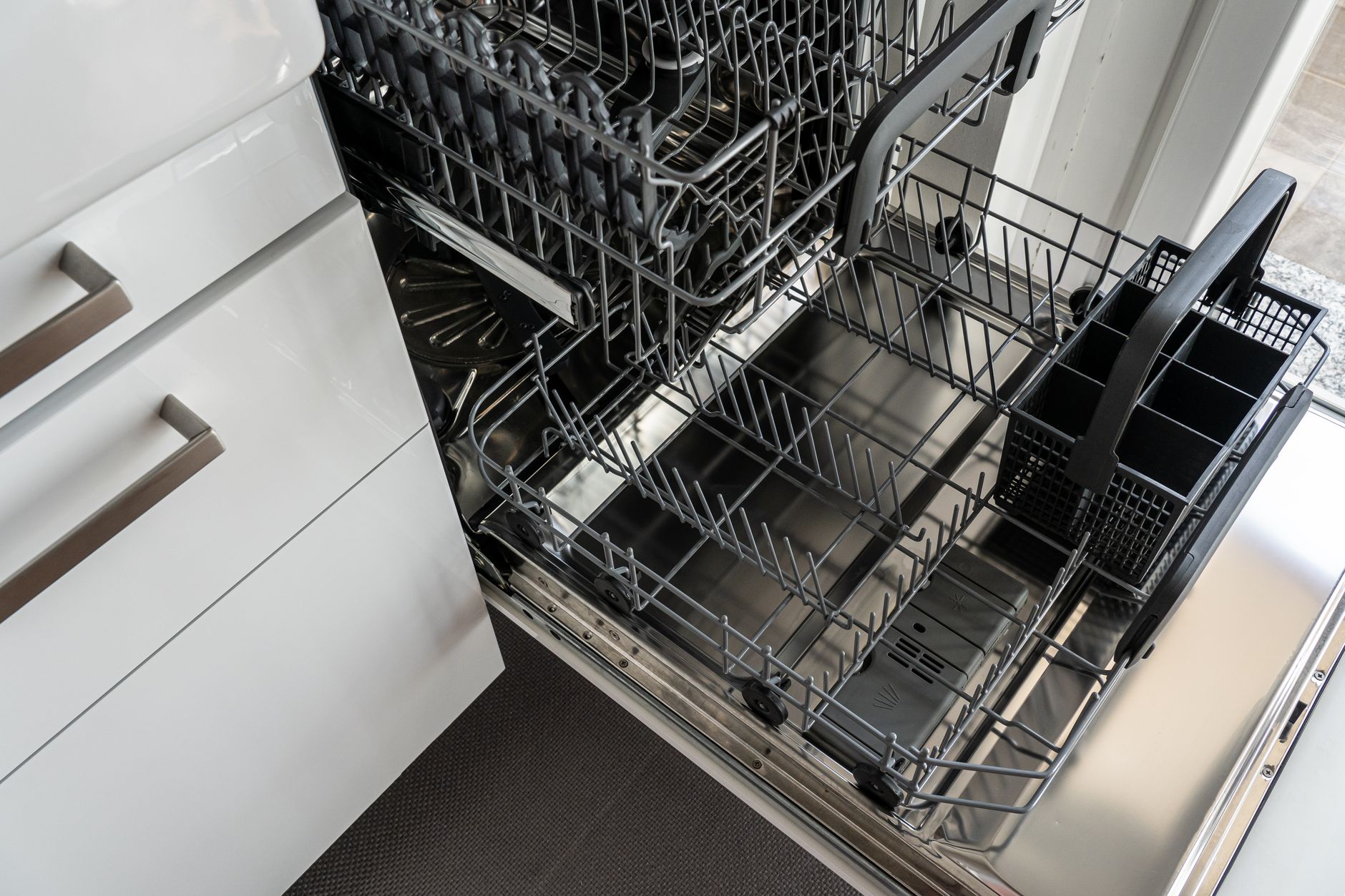
Dishwashers are significantly more efficient than hand-washing, typically using roughly 70% less water and electricity to clean the same volume of kitchenware. By using a controlled spray-wash cycle rather than a continuous flow from a tap, a modern appliance handles full loads with a level of resource precision that manual washing cannot replicate.
⚡ In a Rush? Key Takeaways
- Modern dishwashers use 3 to 5 gallons per cycle, versus 20+ gallons for hand-washing.
- Running a full load on eco-mode consumes less than 1 kWh of electricity per cycle.
- Using salt and rinse aid in hard water areas prevents scale buildup and saves $150+ in repair costs.
- ✅ Verdict: A full-sized A-rated machine pays for itself in water and energy savings within five years.
How Much Water and Energy Does a Dishwasher Really Use?
Modern dishwashers use 3–5 gallons per cycle, whereas hand-washing equivalent items under a running tap consumes 20–30 gallons of water.
Does the eco-mode setting actually save money?
Eco-mode reduces energy use by 20–40% by extending cycle times and heating water more gradually to ensure maximum cleaning efficiency.
Many users avoid eco-mode because they assume longer cycle times require more power. In reality, the energy cost is dominated by the water-heating phase, not the duration of the cycle.
- Standard cycles reach 60°C quickly, drawing high power.
- Eco-mode maintains lower temperatures for longer, requiring less peak electricity.
- Slower mechanical action ensures cleaner dishes with less thermal stress.
Why does water temperature matter for efficiency?
Heating water accounts for 80% of total energy consumption per load, making the internal temperature calibration vital for home utility costs.
Most modern dishwashers include sensors that adjust water usage based on soil levels. Ensuring your hot water supply is primed can help the machine reach optimal performance faster.
Is a Dishwasher More Cost-Effective Than Hand-Washing?
A modern dishwasher reduces annual water utility bills by $30–$50 for the average family, significantly offsetting the initial purchase price.
How do repair costs compare to the appliance lifespan?
Basic maintenance like clearing filters and using salt adds 5 years to the lifespan, preventing costly heating element failure repairs.
I have observed that machines receiving consistent salt and rinse aid last significantly longer. You can read more about optimising appliance lifespan through regular care and proper detergent selection.
Can I reduce running costs with simple daily habits?
Turning off the heated-dry function and opening the door to air-dry saves roughly 0.5 kWh per cycle, which totals $20 in annual savings.
- Scrape plates rather than pre-rinsing with hot water.
- Always wait for a full load to avoid “empty space” energy waste.
- Clear the drain filter monthly to maintain spray arm pressure.
How should I load the dishwasher for optimal cleaning?
Proper loading ensures water reaches all surfaces, prevents nesting, and maximizes capacity, reducing the need for extra cycles.
Place larger items like pots and pans on the bottom rack, angled so spray can reach inside. Avoid blocking the spray arm with tall items; instead, position them at the sides or back. On the top rack, place glasses, cups, and small bowls upside down to prevent water pooling. Utensils should be mixed in the cutlery basket with handles down for safety, but some knives up to avoid nesting.
Leave space between items for water circulation; overcrowding leads to poor cleaning and may require a second wash. Adjustable racks and tines can be repositioned to accommodate odd-shaped items, improving efficiency.
What Features Should I Prioritize When Buying in 2026?
Prioritize machines with soil sensors, adjustable racks, and high-efficiency energy ratings to ensure the lowest total cost of ownership.
Are high-end brands worth the extra investment?
Reliable brands like Bosch or Miele often have lower long-term repair rates, making them cheaper than budget models over a 10-year period.
When evaluating kitchen workflow systems, consider that an appliance that fails at year four is a false economy. Investing in a unit with a proven track record is smarter for your long-term budget.
Is a full-size dishwasher always better than a compact?
Full-size units typically offer lower cost-per-place-setting, making them more economical for families of three or more people.
If you are struggling with space, optimising your kitchen layout is often a better route than compromising on appliance capacity. Capacity dictates how often you must run the machine, which is the primary driver of utility consumption.
Frequently Asked Questions
Find quick answers to common questions about dishwasher efficiency, maintenance, and the real cost savings for your household this year.
Do I need to pre-rinse dishes?
No, pre-rinsing wastes up to 20 gallons of water per load and is unnecessary for modern enzymatic detergents to work effectively.
How often should I clean the filter?
Clean your dishwasher filter every two weeks to prevent clogs that force the pump to work harder, increasing electricity usage.
Is air-drying better than heated-drying?
Yes, air-drying saves energy and prevents plastic items from warping, saving you money on both electricity and replacement costs.