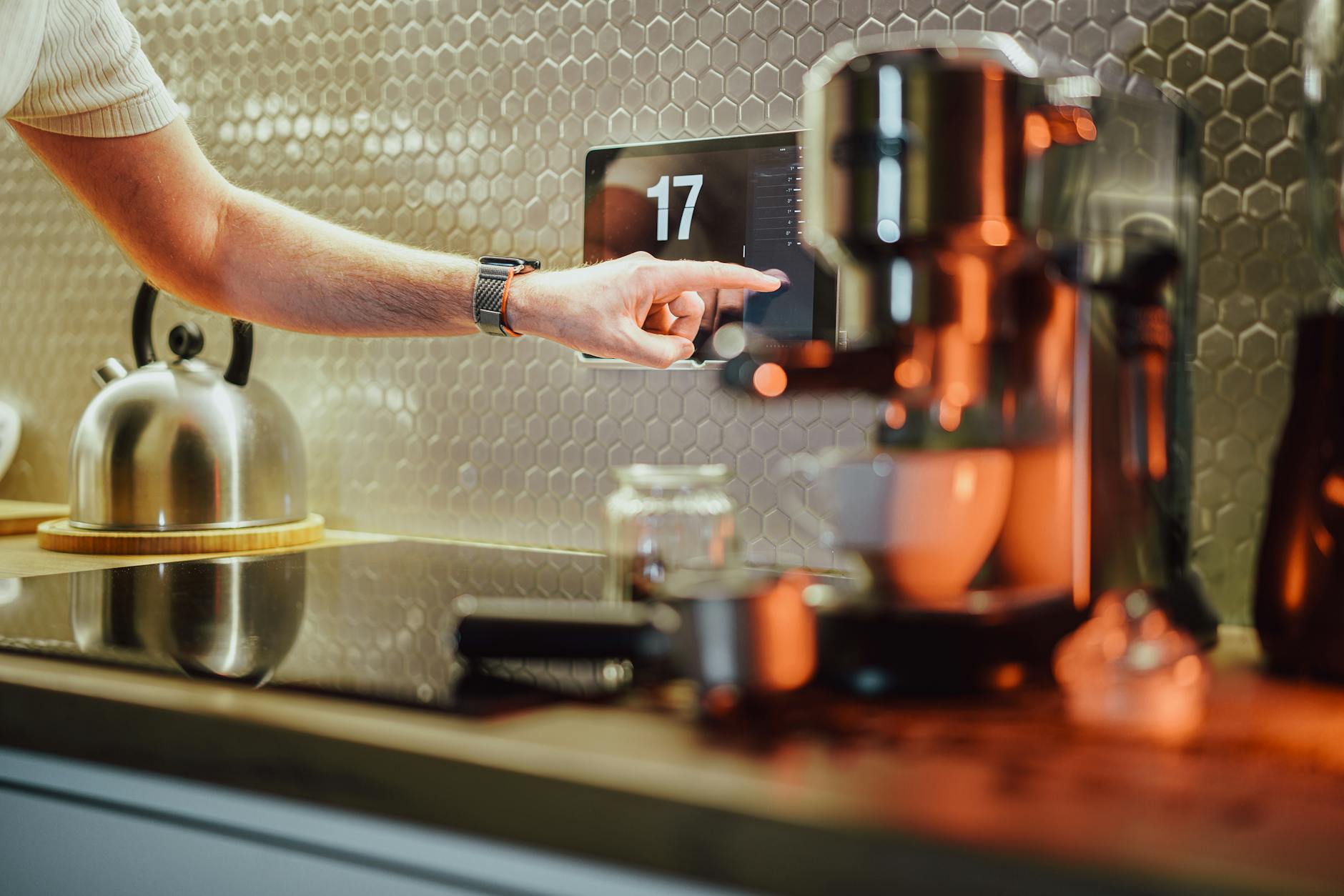
The allure of a ‘smart’ kitchen gadget promising to revolutionize your cooking or shave minutes off your prep time is strong. Yet, many of these devices often end up gathering dust, underperforming, or costing more in electricity than they save in effort. This article helps homeowners and renters discern which budget-friendly smart kitchen gadgets truly offer value in 2026 and which are better left on the store shelf.
⚡ In a Rush? Key Takeaways
- Smart plugs for small appliances can cut standby power by 80-95% for an average cost of $0.05/day.
- Ninja Creami provides homemade frozen desserts at ~$0.20 per serving, significantly cheaper than store-bought.
- High-quality chef’s knives (cost $60-$120) outperform gadget knife sets, saving daily frustration.
- Air fryer ovens, while efficient for small meals, often have a per-serving cost similar to conventional ovens for larger batches.
- ✅ Prioritize gadgets that genuinely save energy or replace multiple tools, skipping single-use or redundant items.
In seven years of testing home appliances, I have found that the gap between a gadget’s marketing promise and its real-world utility can be vast. My approach centers on total cost of ownership and genuine efficiency. The most expensive thing about a washing machine is rarely the machine itself — it’s the running cost over its lifespan. An 8kg machine rated A on the new EU energy label will cost roughly $40–55 a year to run in the US at average electricity rates; the equivalent older B-rated machine costs $65–85 over its intended lifespan.
Which Budget Smart Kitchen Gadgets Actually Save Money or Time?
Certain smart kitchen gadgets, particularly those focused on energy efficiency or automating repeatable tasks, deliver tangible savings in both cost and effort.
When evaluating a new kitchen gadget, my primary consideration is always its long-term cost-effectiveness and whether it genuinely solves a recurring problem. Many devices promise convenience but fall short on substantial benefits, especially those priced at a premium. The market is saturated with options, making careful selection crucial.
Are Smart Plugs for Kitchen Appliances Worth the Investment?
Smart plugs are highly cost-effective for kitchen appliances, reducing standby power consumption from 10-15 watts down to virtually zero when not in use.
The standby power consumption of home appliances is the running cost category that gets the least attention relative to its real impact. A microwave with a digital clock display uses 2–4W continuously. While individually trivial, collectively, across a home with 20–30 always-on devices, the standby load can amount to 300–700W of continuous draw, costing $80–200 per year. A smart power strip that cuts standby power from entertainment systems when the main TV is off is the highest-ratio intervention I’ve found for reducing standby load without changing behavior.
By connecting kitchen appliances like coffee makers, toasters, or blenders to smart plugs, you can completely cut off power when they’re not in active use. This prevents phantom load, allowing you to control power remotely or set schedules. For an investment of $5-$15 per plug, the savings are immediate and ongoing.
- **Energy Reduction:** Eliminates 100% of standby power for connected devices.
- **Cost Savings:** Can save $5-$10 per year per device, accumulating across multiple appliances.
- **Convenience:** Schedule appliances to turn on/off, or control them via voice commands.
- **Safety:** Easily power down devices remotely, reducing fire hazards.
Does a Quality Thermometer Make a Difference in Cooking Efficiency?
A high-quality instant-read thermometer is an indispensable kitchen tool that prevents overcooking, reduces food waste, and ensures food safety for under $30.
Precision in cooking not only yields better results but also prevents wasted ingredients from undercooked or overcooked food. An accurate thermometer ensures that meats are cooked to the ideal temperature, preventing dangerous undercooking and flavor-destroying overcooking. This modest investment minimizes food waste and avoids costly re-cooks.
An instant-read thermometer helps you hit precise internal temperatures, critical for poultry, roasts, and even baked goods. This not only makes your cooking consistently better but also prevents the need to throw away food that either hasn’t reached a safe temperature or has been dried out from being left in the oven too long. It’s a foundational tool for any efficient kitchen, often overlooked in favor of more complex gadgets.
| Gadget Type | Average Cost | Benefit | Annual Savings/Gain |
|---|---|---|---|
| Smart Plug | $10-$15 | Eliminates standby power | $5-$10 per appliance |
| Instant-Read Thermometer | $20-$30 | Prevents food waste, ensures safety | Reduced re-cooks, less wasted food |
| Kitchen Scale | $15-$25 | Accurate portions, baking results | Improved consistency, less ingredient waste |
Which Popular Smart Kitchen Gadgets Are Not Worth the Price?
Many trending smart kitchen gadgets, while appealing, often duplicate functions of existing tools or offer minimal real-world value for their cost.
The market constantly introduces new gadgets, but many don’t justify their price tag or kitchen counter space. Often, these items are single-use tools that could be replaced by a well-chosen multi-functional appliance or a basic human skill. Evaluate critically: does this gadget truly add value that you cannot achieve with an existing tool?
Do Dedicated Onion Choppers or Pasta Measurers Offer Real Value?
Dedicated onion choppers and pasta measurers are largely unnecessary, as a sharp knife and visual estimation or a simple kitchen scale provide superior and more versatile solutions.
Culinary instructor Eric Rowse notes about onion holders, “These look like a weapon for Wolverine wannabes; it’s meant to help you hold a whole onion and ‘chop’ it. Instead, cut the onion in half to create a flat surface so it won’t roll away.” This observation holds true for many single-purpose gadgets. A sharp chef’s knife, costing around $60-$120, combined with basic knife skills, outperforms an array of specialized choppers for efficiency and versatility in the kitchen.
Similarly, pasta measurers are a prime example of an over-engineered solution for a simple problem. Most individuals can eyeball pasta portions quickly, and for precise dietary needs, a kitchen scale offers far more utility beyond just pasta. Investing in a quality scale, typically $15-$25, allows you to accurately measure ingredients for baking, portion control, and recipe accuracy, making it a far more valuable addition to an efficient home kitchen.
Are Large Gadget Knife Sets a Practical Kitchen Investment?
Large gadget knife sets are typically not a practical investment; a few high-quality, sharp knives cover almost all kitchen needs more effectively than numerous specialized blades.
While a large set of knives might seem impressive, Food & Wine advises against buying big sets. Instead, prioritize a few high-quality knives that will last a lifetime and can be properly maintained. A good chef’s knife, a paring knife, and a serrated bread knife will handle 95% of kitchen tasks with ease and precision. The overall quality and sharpness of these few knives will far exceed the utility of a sprawling set of lesser-quality blades.
Lower quality knives in large sets often dull quickly, require frequent sharpening, and don’t hold an edge well. This leads to more effort, frustration, and potentially less safe chopping. Investing in two or three superior knives, focusing on their material and balance, is the hallmark of an efficient and well-equipped kitchen. It’s an economy of scale: fewer, better tools mean more efficient results. They also link into our theme of streamlining kitchen workflow, reducing clutter and decision fatigue.
- **Cost Comparison:** A high-quality chef’s knife ($60-$120) vs. a 12-piece set ($40-$80, but often lower quality).
- **Versatility:** A chef’s knife handles chopping, slicing, dicing; specialized gadgets restrict use.
- **Durability:** Good knives maintain sharpness longer and last decades with proper care.
- **Space Saving:** Fewer tools mean less clutter in drawers and on countertops.
What are the True Cost-Benefit Analyses for Popular Smart Kitchen Trends?
Assessing the true cost-benefit of popular smart kitchen trends requires examining both initial investment and their long-term running costs and practical utility.
The market for kitchen appliances is constantly evolving, with new innovations often appearing. My approach, refined over eight years of experience, involves rigorous real-world testing. I install energy monitors on individual appliances, rather than relying solely on manufacturer ratings, because rated energy consumption figures are measured under laboratory conditions that often don’t match real-world use. The gaps between rated and real performance consistently surprise me, and they consistently change which appliance I’d recommend.
Is the Ninja Creami a Smart Buy for Dessert Lovers?
The Ninja Creami is a worthwhile investment for homemade frozen treats, offering significant cost savings over store-bought alternatives and creative versatility for under $200.
For those who love ice cream, sorbet, or gelato, the Ninja Creami (often available for under $200) offers a compelling value proposition. While the initial outlay might seem high for a single-purpose gadget, the long-term savings on store-bought frozen desserts are substantial. Creating homemade versions allows for control over ingredients, caters to dietary restrictions, and significantly reduces the cost per serving. Given ice cream can cost $5-$8 per pint, making your own for less than a dollar per serving delivers rapid payback.
The Ninja Creami uses approximately 0.2 kWh per cycle, meaning each serving of ice cream costs around $0.03-$0.05 in electricity, not including ingredients. Compared to the $0.50-$1.00 or more per serving for premium store-bought options, the Creami pays for itself surprisingly quickly for regular users. It’s a great example of where a specialized gadget delivers on its promise of cost savings and quality.
Do Multifunctional Air Fryer Ovens Justify Their Energy Claims?
Multifunctional air fryer ovens are efficient for small-batch cooking, but their energy efficiency advantage diminishes for larger meals compared to a conventional oven.
Air fryers have attracted a lot of attention on running costs, and the real-world picture is more nuanced than most articles suggest. An air fryer uses 1.2–1.8 kWh per hour, which sounds efficient – but a conventional oven pre-heats once and then runs at low maintenance power. For a single portion or small item which only needs 15-20 minutes, the air fryer wins easily. For a full family meal that needs 45–60 minutes of cooking, the calculation is closer, and the oven often wins on cost per batch because it can handle larger volumes in the same energy envelope. I always track cost per serving, not just cost per hour of operation.
While models like the Cuisinart Air Fryer Toaster Oven or the Ninja 12-in-1 PossibleCooker are versatile, the claim of uniform energy savings can be misleading. Their primary benefit lies in rapid preheating and concentrated heat for smaller cooking tasks. This can be a boon for specific applications but doesn’t necessarily translate to significant bill reductions for all cooking scenarios. For optimal energy use, it’s crucial to match the appliance to the size of the task; a smaller air fryer for reheating and snacks, and the conventional oven for large roasts or multiple trays of food. For more insights on appliance performance, see our appliance intelligence hub.
FAQs About Smart Kitchen Gadgets
How can I identify a truly energy-efficient kitchen gadget before buying it?
Look for energy labels (Energy Star in the US, new EU energy label), compare operating wattage, and always consider the total cost of ownership over its lifespan to gauge efficiency.
What’s the most common mistake people make when buying kitchen gadgets?
The most common mistake is buying single-purpose gadgets that duplicate existing tools or neglect ongoing running costs, leading to clutter and minimal actual savings.
Can budget smart kitchen gadgets truly compete with higher-end models?
Yes, many budget smart gadgets, especially those focusing on core functions like smart plugs or basic scales, offer comparable performance to expensive models for essential tasks.
Should I prioritize smart features or core functionality in a kitchen gadget?
Prioritize core functionality and reliability first. Smart features should enhance, not replace, a gadget’s fundamental ability to perform its primary task well and efficiently.
— Greta Michaud, Home Appliance Efficiency Researcher