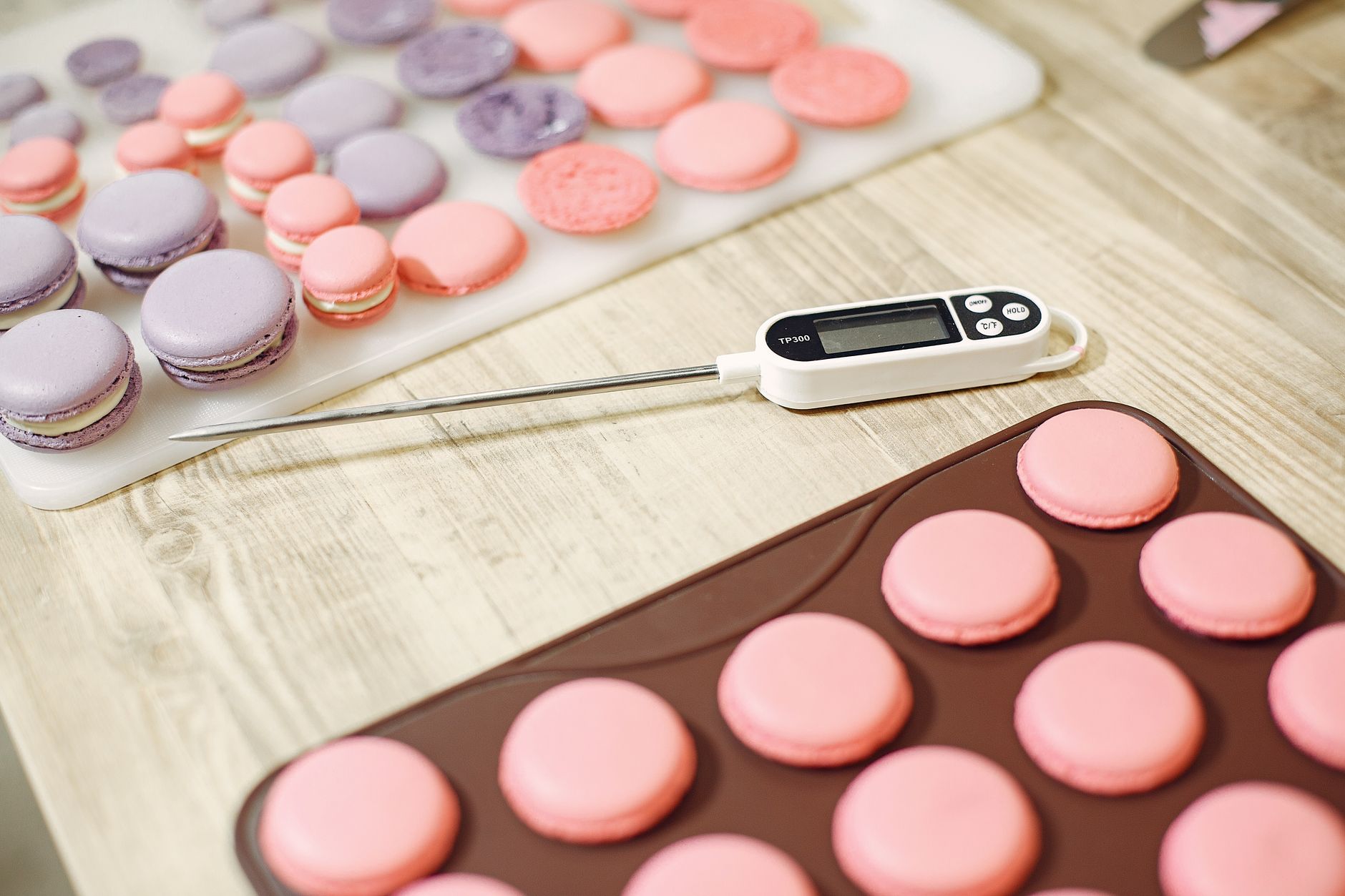
Achieving perfectly cooked food, whether it’s a Thanksgiving turkey or a simple weeknight steak, relies heavily on understanding internal temperatures. Overcooking leads to dry, unappetizing meals, while undercooking poses significant health risks. Choosing the right food thermometer is the indispensable first step towards consistently safe and deliciously prepared dishes.
⚡ In a Rush? Key Takeaways
- Thermometer accuracy is typically within ±2°F to ±4°F, with professional models offering ±1°F.
- Instant-read thermometers provide readings in 2-5 seconds, crucial for quick checks.
- Probe thermometers ensure consistent internal temperature for roasts over extended cooking times.
- Key specs: speed, accuracy, temperature range, probe length, and durability.
- ✅ Recommended: Invest in an instant-read thermometer for accuracy and speed, supplemented by a probe for large roasts.
What Are the Essential Features of a Food Thermometer?
Accuracy, speed, temperature range, probe length, and durability are critical features to consider when selecting a food thermometer for precise cooking results.
Why Does Food Thermometer Accuracy Matter So Much?
Accuracy is paramount when selecting a food thermometer, as even a few degrees can mean the difference between a perfectly cooked meal and one that is either unsafe or overdone. The U.S. Department of Agriculture’s Food Safety and Inspection Service (FSIS) notes that most food thermometers provide an accurate reading within 2 to 4 degrees Fahrenheit. However, the true correct reading can only be achieved if the thermometer is properly calibrated and used correctly. For instance, a thermometer that reads 160°F when the actual temperature is 164°F might lead you to pull poultry off the heat too soon, leaving it undercooked. Conversely, a thermometer that reads higher than the actual temperature could lead to overcooking, drying out your cuts of meat.
Professional chefs and home cooks alike rely on thermometers that offer superior accuracy, often within ±1°F. Brands like ThermoWorks, renowned for their precision instruments, frequently achieve this level of accuracy. While laboratory conditions and consistent calibration are ideal, for home use, a thermometer with a stated accuracy of ±2°F is generally considered sufficient for most applications. It is also important to consider the thermometer’s resolution, which is the smallest increment of temperature it can display, typically 0.1°F or 1°F. While not directly impacting cooking decisions, a higher resolution can give a user greater confidence in the final reading.
How Fast Should a Food Thermometer Give a Reading?
The speed at which a thermometer provides a reading is a significant factor, particularly for instant-read models. In the fast-paced environment of a professional kitchen or the home cook working against the clock, receiving a temperature reading in seconds rather than minutes can dramatically improve efficiency and prevent overcooking. Many high-quality instant-read thermometers, such as the ThermoWorks Thermapen ONE, register temperature within two to three seconds.
For everyday cooking tasks, a thermometer that provides a reading within 5 to 10 seconds is perfectly adequate. Slower thermometers, often found in cheaper dial models, can take 30 seconds or more. This delay can be problematic for several reasons. Firstly, while the thermometer is taking its reading, the food’s internal temperature might continue to rise due to carryover cooking, especially with meats. Secondly, a lengthy waiting period is simply inconvenient and can lead to guesswork if the user becomes impatient.
When evaluating speed, consider the type of cooking you do most often. If you frequently grill steaks or burgers where quick checks are essential, a super-fast instant-read thermometer is a worthwhile investment. If you primarily cook larger roasts that require longer cooking times, a slightly slower reading might be less critical, but speed still contributes to a better overall user experience.
What Temperature Range is Necessary for a Food Thermometer?
The temperature range a food thermometer can accurately measure is crucial, as it needs to cover the entire spectrum of cooking temperatures, from chilling foods to thoroughly cooking meats. Most standard food thermometers will effectively cover typical cooking needs, generally ranging from 0°F to 500°F (-18°C to 260°C). This broad range is sufficient for tasks such as chilling baked goods, cooking poultry, or even candy making, though specialized thermometers are often preferred for extreme temperatures like deep frying or sugar work.
However, it’s vital to check the specific range of any thermometer you consider. For instance, some basic models might have a lower maximum temperature, making them unsuitable for searing meats at high heat. Conversely, some thermometers designed for oven use might have a high minimum temperature, limiting their utility for cold food safety checks. When I’m evaluating a thermometer, I look for a model that can comfortably handle temperatures from at least 30°F (-1°C) up to 450°F (232°C) to ensure versatility in my kitchen.
It’s also important to note that accuracy can sometimes vary at the extreme ends of a thermometer’s stated range. The manufacturer’s specifications should detail the accuracy across the entire operating spectrum. For most home cooking, a range of 0°F to 400°F (-18°C to 200°C) is generally sufficient. For more specialized cooking applications, such as making candy or deep frying, a thermometer with a higher maximum range, perhaps up to 600°F (315°C), would be more appropriate.
How Does Probe Length Affect Thermometer Use?
The length of the thermometer’s probe is a practical consideration that directly impacts its usability and safety. A probe that is too short may not reach the center of larger cuts of meat, such as a whole turkey or a beef roast, leading to inaccurate readings. For most general cooking purposes, a probe length of 4 to 6 inches is typically sufficient. This length allows you to insert the probe into the thickest part of the food without the handle touching the cooking surface or dangerously close to heat sources.
For instance, when cooking a large roast or whole bird, a shorter probe might require you to hold the thermometer at an awkward angle or potentially burn your fingers. On the other hand, a probe that is excessively long might be unwieldy for smaller items like chicken breasts or fish fillets. It’s important to assess the types of foods you plan to cook most frequently. If you frequently prepare large roasts, a longer, more robust probe would be beneficial. For more frequent checks on smaller items, a shorter, more maneuverable probe might be preferable.
Moreover, the material and design of the probe itself are also important. Stainless steel probes are generally preferred for their durability and resistance to corrosion. Some probes are thin to minimize the size of the puncture hole in the food, which can help retain juices. Consider whether the probe is straight or angled, as an angled probe can sometimes be easier to read when inserted into certain food items.
## What Are the Different Types of Food Thermometers?
Food thermometers come in several types, including instant-read, probe, oven-safe, and dual-probe models, each suited for different cooking needs and preferences.
Understanding Instant-Read Thermometers
Instant-read thermometers are the workhorses of many kitchens, prized for their speed and accuracy. These devices typically feature a digital display and a thin probe. Upon insertion into food, they provide a temperature reading within a matter of seconds, usually between 2 and 5 seconds for high-quality models. This rapid response makes them ideal for quickly checking the doneness of everything from grilled steaks and burgers to chicken breasts and fish.
When selecting an instant-read thermometer, prioritize models that offer NIST certification or that are known for their laboratory-grade accuracy, often specified as ±1°F. While many consumer-grade models are accurate within ±2°F, a professional-grade instrument ensures greater confidence, especially when dealing with food safety thresholds. The probe should be thin enough to minimize damage to the food item being tested, and the display should be easy to read, preferably with backlighting for use in low-light conditions like grilling at dusk.
The durability and build quality are also important. Look for stainless steel probes and bodies that can withstand the rigors of frequent use. Some advanced models offer additional features such as data hold (to lock in a reading), interchangeable probes, or even programmable temperature alarms, though these are less common in pure instant-read designs. For most home cooks, a reliable instant-read thermometer is an indispensable tool that significantly enhances both the safety and quality of their cooking.
When Should You Use a Probe Thermometer?
Probe thermometers, often referred to as meat thermometers or oven-safe thermometers, are designed for continuous monitoring of food temperature during longer cooking processes, particularly in an oven, smoker, or grill. Unlike instant-read thermometers, these typically have a longer probe that remains inserted in the food and a cable that connects to an external digital display or a dial, allowing the temperature to be monitored from outside the cooking environment without opening the oven or grill door. This minimizes temperature fluctuations, which is critical for achieving consistent results with larger cuts of meat like roasts, briskets, or whole poultry.
When choosing a probe thermometer, several factors warrant close attention. The length of the probe should be adequate to reach the center of the thickest part of the meat. The cable connecting the probe to the display should be heat-resistant and sufficiently long to reach comfortably from the food to the exterior of the cooking appliance. The display unit should be easy to read and ideally feature alarms that can be set to alert you when a target internal temperature has been reached, preventing overcooking. Some advanced models offer dual probes, allowing you to monitor two different items or two different parts of a large item simultaneously.
For example, during a long, slow cook of a pork shoulder, a probe thermometer provides peace of mind, allowing you to observe the temperature progression without constantly opening the smoker. You can set an alarm for your target ‘pull temperature,’ and the device will notify you when it’s time to take the meat out to rest. This continuous monitoring capability is what sets probe thermometers apart from their instant-read counterparts for slow-cooking applications.
Are Oven-Safe Thermometers Different?
Oven-safe thermometers are a subtype of probe thermometers specifically designed to withstand the high temperatures within an oven or grill for extended periods. The key distinction lies in their construction and materials. The entire thermometer, including the probe and the dial or digital display housing, must be able to tolerate oven temperatures often exceeding 400°F (200°C) without damage or inaccurate readings. Traditional oven-safe thermometers often feature a metal casing and a glass or robust plastic dial face, while newer digital versions have heat-resistant casings and cables.
When selecting an oven-safe thermometer, the temperature range is a critical specification, ensuring it can handle the maximum temperature your oven or grill typically operates at. Similarly, the probe length should ensure you can place it in the thickest part of your roast without the handle touching the oven walls or racks, which could lead to heat transfer and inaccurate measurements. Accuracy is also key; you want a device that provides a reliable reading so you can confidently determine when your food is safely cooked.
It’s important to note that while many probe thermometers are described as ‘oven-safe’, the degree of safety can vary. Some digital models might have external displays that are not designed to be placed directly on a hot grill or inside an oven, requiring the cable to be run out. Others, like traditional oven dials, are designed to sit directly inside. In my own kitchen, I prefer digital oven-safe thermometers with remote displays because they offer greater flexibility and often more precise temperature control and alarming capabilities than their dial counterparts. This allows me to monitor the internal temperature of a large roast without opening the oven door, which is a considerable advantage.
What About Dual Probe and Wireless Thermometers?
Dual probe and wireless thermometers represent the more advanced end of the food thermometer spectrum, offering enhanced convenience and monitoring capabilities. A dual probe thermometer typically features two probes connected to a single base unit. This setup is incredibly useful for monitoring multiple items simultaneously – perhaps two different racks of ribs on a smoker, or a large roast and the ambient temperature of the cooking space. This dual monitoring helps ensure even cooking and precise temperature control across different items or zones.
Wireless thermometers take this convenience a step further. They consist of a probe that is inserted into the food, transmitting temperature data wirelessly to a receiver unit or a smartphone app. This allows you to monitor cooking progress from anywhere within a significant range (often hundreds of feet), freeing you from staying tethered to the grill or oven. This is particularly beneficial for larger outdoor cooking events or when you want to relax on the patio while your brisket slowly cooks.
When choosing wireless models, consider the range of the wireless signal, battery life of both the probe transmitter and the receiver/app, and the durability of the probes and cables, which should be food-safe and heat-resistant. Some high-end wireless thermometers offer advanced features such as customizable temperature alarms, cooking progress charts, and pre-programmed temperature settings for different types of meat. For anyone who regularly cooks large cuts of meat or enjoys extended outdoor cooking sessions, a reliable wireless dual-probe thermometer can be a game-changer, offering unprecedented control and peace of mind.
Key Considerations for Choosing the Right Thermometer
When choosing a food thermometer, consider your cooking habits, desired accuracy level, specific features like display type and power source, and importantly, the calibration process.
What Is Calibration, and How Do I Check It?
Calibration refers to the process of ensuring a thermometer is providing accurate readings. For most food thermometers, a key indicator of accuracy is their ability to be calibrated or adjusted. The FSIS suggests that most thermometers are accurate within 2°F to 4°F, but proper calibration guarantees that reading is correct. A simple and effective method to check calibration is the ice water bath test. Fill a glass with crushed ice and water, stir it well, and insert the thermometer probe.
A properly calibrated thermometer should read 32°F (0°C) in the ice bath. If your thermometer reads significantly higher or lower, it may need recalibration. Many digital thermometers have a calibration function accessible through the device’s settings. For some models, there might be a small adjustment screw or button that allows you to set the display to 32°F. If a thermometer cannot be calibrated or consistently provides inaccurate readings even after adjustment, it may be time to replace it. For instance, my ThermoWorks Thermapen ONE can be calibrated easily and holds its calibration remarkably well over time, which is a hallmark of a quality instrument.
Understanding calibration is not just about initial accuracy but also about maintaining it. Temperature fluctuations, drops, or even frequent use can affect a thermometer’s calibration. Regularly checking it, especially before critical cooking tasks, ensures you are always working with reliable data. Many professional chefs recommend performing this check at least once a month, or more frequently if the thermometer is used extensively. Some thermometers are factory-calibrated and designed to hold that calibration, but checking is always wise.
How to Use Your Thermometer for Different Foods
Using your thermometer correctly for different foods ensures you get the most accurate reading and, in turn, the safest and best-tasting results. For meats, the probe should always be inserted into the thickest part of the meat, avoiding bone, fat, or gristle, which can provide misleading temperature readings. For poultry, this typically means inserting the thermometer into the thickest part of the thigh, without touching the bone. For roasts, aim for the very center.
When checking burgers or smaller cuts like chicken breasts, ensure the probe penetrates the center. For larger, flatter items like fish fillets, insert the probe horizontally into the thickest section. For foods like casseroles or baked goods, insert the probe into the center. It’s also worth noting that temperature can continue to rise slightly after the food is removed from the heat source, known as carryover cooking. Therefore, it’s often advisable to remove meats from the heat 5°F to 10°F below your target final temperature and allow residual heat