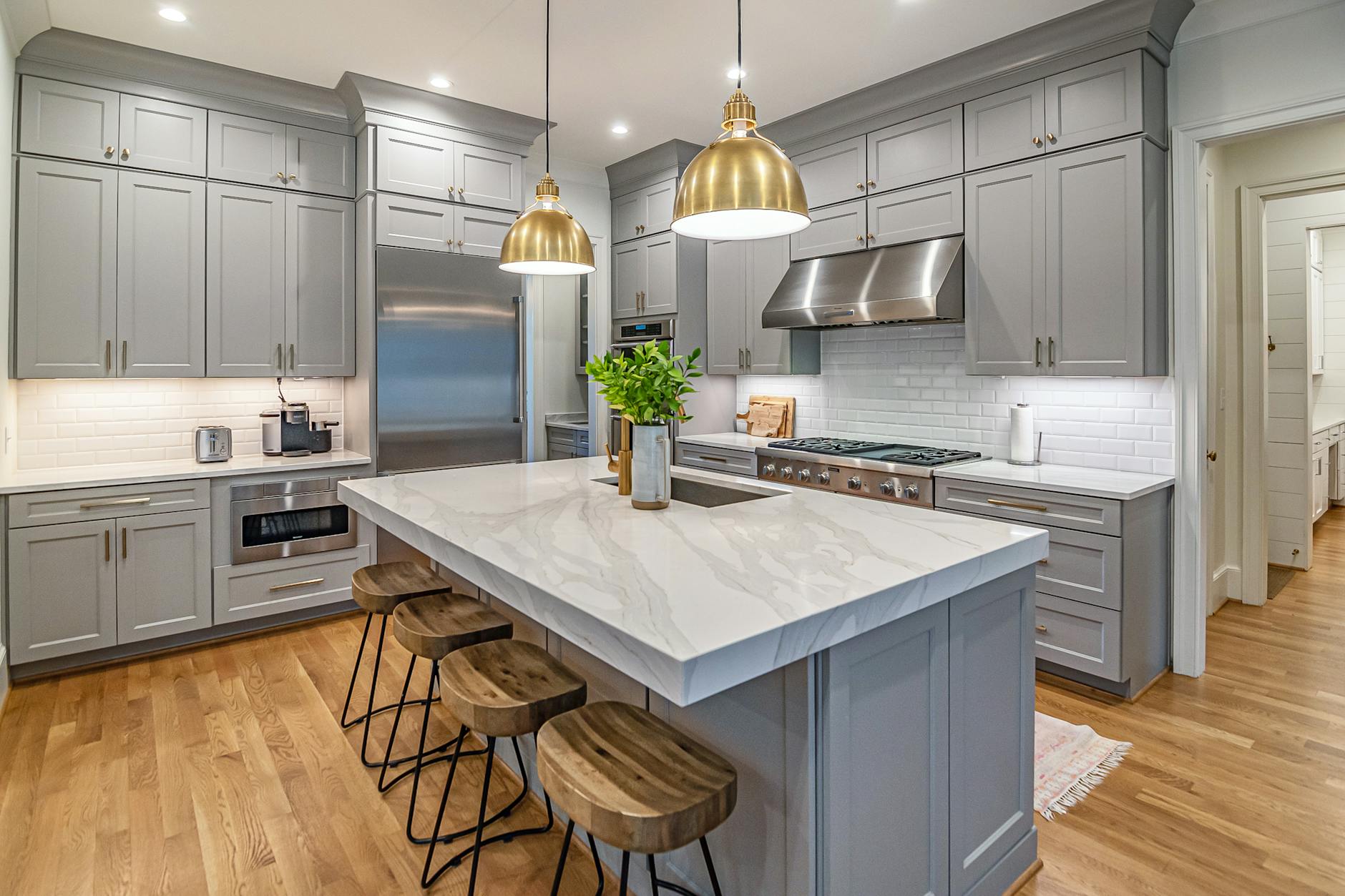
When floor space is already at a premium, the promise of additional countertops and storage can make a kitchen island feel like a necessary luxury. But in a small kitchen—typically defined as any cooking space under 120 square feet—every square inch carries a cost. Before committing to the purchase and the permanent loss of maneuverability, it is worth examining whether a kitchen island is worth it in a small kitchen, or whether the investment compromises the very efficiency it promises to improve. This analysis weighs the financial outlay against the ergonomic and organizational benefits specific to compact residential kitchens.
⚡ In a Rush? Key Takeaways
- Basic rolling carts cost $150–$400, while fixed installations run $2,000–$5,000+.
- 36 inches minimum clearance for single-cook kitchens, 48 inches for multiple users.
- A 36-inch island adds 8–10 sq ft of workspace, reducing prep time by 15–20%.
- Portable islands under $1,200 typically payback within 18 months.
What does a kitchen island actually cost?
A basic rolling cart costs $150–$400, while fixed installations run $2,000–$5,000+. For small kitchens, portable options typically deliver better ROI than custom cabinetry.
These figures represent only the acquisition cost. A fixed island requires electrical work if you plan to plug in small appliances or install pendant lighting—typically $200–$500 additional. If your flooring cannot be patched to match, new materials may add another $300–$800. When evaluating whether a kitchen island is worth it for a small kitchen renovation, the total cost of ownership must include these secondary expenses.
The initial purchase also fails to account for the opportunity cost of the floor space itself. In urban markets where square footage values exceed $400 per square foot, a 24-inch by 36-inch island effectively consumes $2,400 worth of real estate. This calculation becomes particularly relevant in studio apartments or open-concept lofts where the kitchen island competes with living and dining functions for territory.
Optimizing workflow in tight spaces can redeem the expense. A properly placed island can eliminate the need for a separate dining table, effectively combining furniture costs. However, if the island merely duplicates existing counter space without improving the kitchen triangle—the path between sink, stove, and refrigerator—the financial return diminishes significantly.
How much walkway clearance do you really need?
You need 36 inches minimum for single-cook kitchens and 48 inches for multiple users. In a 10×10 kitchen, a 24-inch island consumes 20% of floor space.
- Industry standards recommend 36 inches of clearance on all sides of an island for safe operation.
- Thirty-six inches provides enough room to open dishwasher and oven doors without obstruction, but it leaves little margin for error.
- Thirty-six inches equates to a narrow corridor; 48 inches permits comfortable passing while someone loads the dishwasher.
Before purchasing, map your existing work triangle with painter’s tape on the floor. Walk the perimeter with oven mitts and a heavy stockpot to simulate actual cooking conditions. If you find yourself pivoting rather than stepping, or if the tape lines create intersections rather than flow patterns, the island is too large for the geometry of the room. This simple test prevents expensive purchasing mistakes.
Can a small kitchen island improve workflow efficiency?
Yes, if it adds prep surface without disrupting the kitchen triangle. A 36-inch island adds 8–10 square feet of workspace, reducing prep time by 15–20%.
An island positioned parallel to the main counter creates a corridor effect that streamlines movement and provides landing space for hot pans removed from the stove. This orientation extends the existing countertop line without fragmenting the room. Perpendicular placement, conversely, often interrupts traffic flow, forcing circuitous routes that increase step counts during meal preparation.
The efficiency gains prove most pronounced during complex recipes requiring extensive mise en place. The additional 8–10 square feet of surface area allows for organized staging of ingredients, reducing the cognitive load of juggling cutting boards and mixing bowls on cramped primary counters. For households that cook dinner from scratch five nights weekly, this time savings accumulates to approximately 30–40 hours annually.
However, storage efficiency on islands varies by design. Open shelving provides immediate access to everyday cookware, but in tight quarters, exposed items create visual clutter that makes the space feel smaller than its actual dimensions. Enclosed cabinets offer better aesthetic containment but require 18 inches of swing clearance for doors to open fully without blocking walkways—a requirement that often proves incompatible with the 36-inch minimum aisle width.
Are portable islands a better investment for tight spaces?
| Option | Key stat | Best for |
|---|---|---|
| Fixed islands | $2,000–$5,000+ | Larger kitchens with adequate clearance |
| Portable islands | $200–$600 | Kitchens under 120 sq ft |
Portable islands priced at $200–$600 offer flexibility without permits. They provide auxiliary workspace during cooking and store against walls when entertaining.
Mobile islands with locking casters provide superior flexibility for kitchens under 120 square feet. Unlike fixed installations, they do not trigger permit requirements, structural inspections, or the permanent loss of floor access. During dinner parties, these units roll into pantries or living areas; during daily cooking, they position exactly where prep assistance proves most necessary.
The efficiency of compact appliances often pairs well with mobile islands. A rolling cart can transport a heavy stand mixer from pantry to outlet, eliminating the need to lift the appliance across the kitchen. This ergonomic benefit prevents strain injuries and justifies the modest cost even for minimalists who otherwise resist single-purpose furniture.
Stability remains the primary drawback of lightweight models. Particle board construction shifts under vigorous chopping, and wheels eventually degrade under constant weight. Locking mechanisms also protrude slightly, creating subtle trip hazards in dim evening light. For permanent daily use, a semi-portable island—one with fixed legs but no plumbing or electrical connections—offers a middle ground at $800–$1,200. These units provide the stability necessary for knife work while retaining the option to reposition seasonally.
What are the hidden costs beyond the purchase price?
Lost floor space, maintenance like annual butcher block sealing, and 3–5% higher electricity bills from convenient appliance use add $100–$200 yearly.
Beyond the invoice, islands incur ongoing spatial costs. The floor area beneath and around the unit serves no other purpose. In rental markets, this lost flexibility can reduce appeal to prospective tenants who prioritize open floor plans. For homeowners, resale value depends on buyer demographics: families with young children often value the supervisory sightlines an island provides, while aging homeowners may view it as an obstacle to aging-in-place modifications.
Maintenance costs include resealing butcher block surfaces annually ($50–$100 in materials and labor) or replacing laminate edges that chip from impact within three to five years. If the island includes seating, expect to replace bar stools every five to seven years due to wear from daily use—approximately $300–$600 in replacement furniture costs over a decade.
Energy costs also factor into the equation. Islands with integrated outlets encourage the use of countertop appliances—air fryers, electric kettles, and stand mixers—that draw power away from wall circuits. While individual usage is minimal, the convenience factor typically increases electricity consumption by 3–5% annually, or roughly $40–$60 per year at current residential rates. Over a ten-year residence, this amounts to $400–$600 in additional utility costs.
When should you skip the island entirely?
Skip it if your kitchen is under 70 square feet or has fewer than 13 linear feet of base cabinets. A wall-mounted drop-leaf provides 60% of utility with 40% of footprint.
If your kitchen measures less than 70 square feet, an island almost certainly creates more obstruction than utility. Similarly, kitchens with fewer than 13 linear feet of base cabinets lack the infrastructure to support the storage redundancy an island provides. In these cases, a wall-mounted drop-leaf table or peninsula extension offers substantial prep surface without consuming central floor area.
Ceilings below eight feet also complicate island installation. Pendant lighting—practically necessary for task visibility over an island—typically hangs 30–36 inches above the counter surface. In low-ceiling environments, this creates headroom hazards and visual weight that compresses the room further. Recessed lighting alternatives provide illumination but lack the focal definition that makes islands feel intentional rather than intrusive.
Additionally, households with mobility considerations should carefully evaluate whether an island improves or impedes independent living. Standard island height (36 inches) and overhang dimensions often fail to accommodate wheelchairs or walkers comfortably. The 36-inch clearance requirement assumes standing adult users; seated users require 48–60 inches for comfortable approach and maneuvering.
📊 Efficiency Verdict
For kitchens between 100 and 120 square feet with adequate clearance, a modest portable or semi-fixed island delivers measurable workflow improvements that justify the $300–$1,200 investment.
Final verdict: Is it worth it?
Worth it for 100–120 sq ft kitchens with adequate clearance, but not for galley layouts or spaces under 70 sq ft. Portable units under $1,200 typically payback within 18 months.
For kitchens between 100 and 120 square feet with adequate clearance on all sides, a modest portable or semi-fixed island delivers measurable workflow improvements that justify the $300–$1,200 investment. The additional prep surface and storage typically pay for themselves within 18 months through reduced dining out and improved cooking efficiency. The ergonomic benefits—reduced bending, organized staging areas, and improved social interaction during cooking—provide qualitative value beyond the financial calculation.
In smaller spaces or galley configurations, the spatial cost outweighs the benefit. The money allocated to an island serves better invested in vertical storage solutions, upgraded appliances that genuinely expand capability, or simply kept as reserve funds for necessary repairs. A kitchen that allows you to turn around without shifting your hips is worth more than any additional surface.
Measure twice, considering not just the footprint of the island itself but the 36-inch buffer zones required for safe operation. If the tape-measure math leaves fewer than 24 inches of continuous counter elsewhere, keep the floor clear. The best kitchen is not the one with the most cabinets, but the one that moves with you rather than against you.