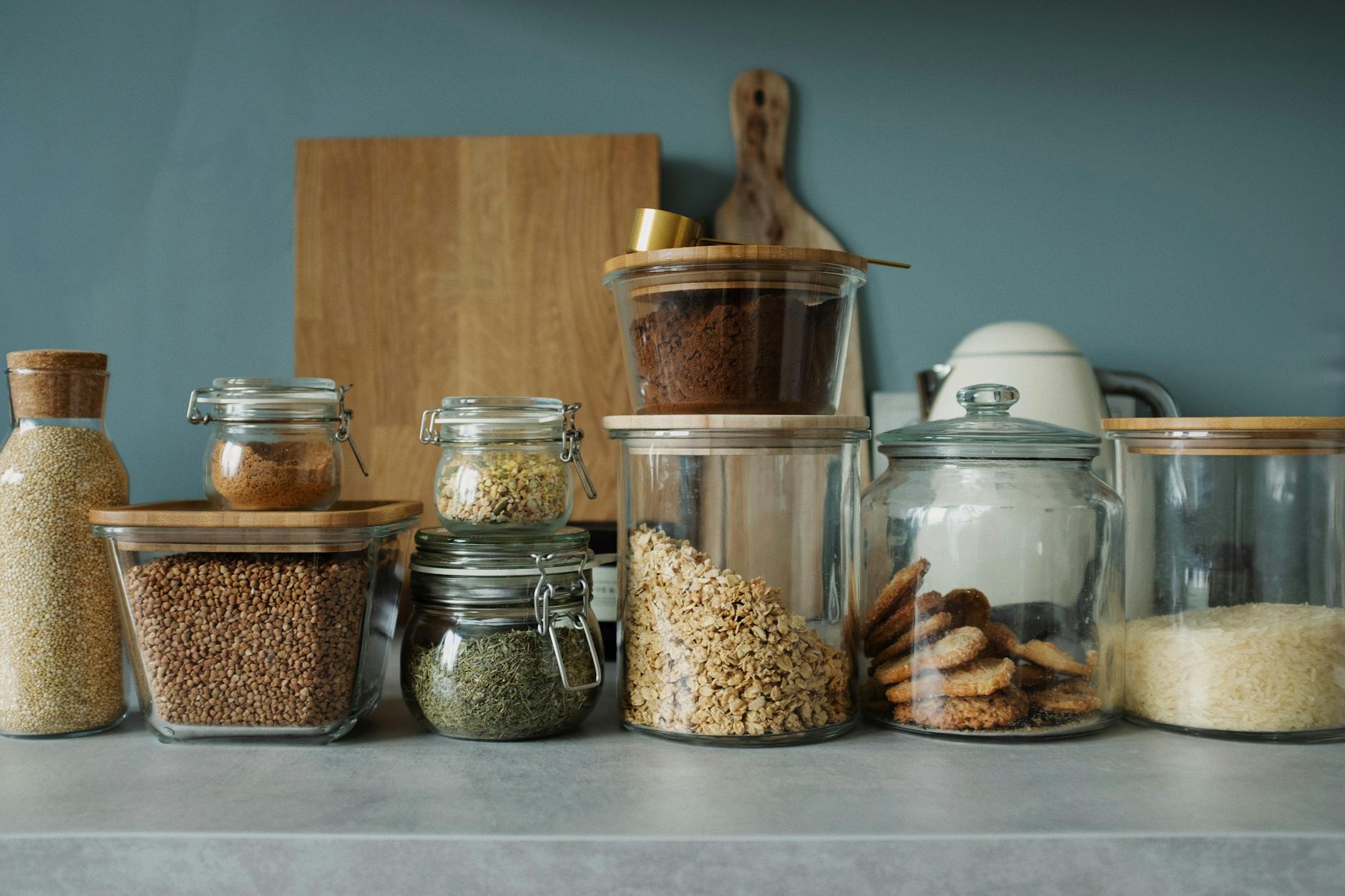
The average household discards £400-600 worth of food annually, much of it buried in pantries where Organisation has collapsed into archaeology. A pantry layout organisation map reverses this entropy through deliberate spatial design. Rather than treating storage as a vertical pit where items sink until forgotten, mapping creates accountable zones where every tin and jar occupies measured territory. This approach treats your pantry not as a cupboard but as a small logistics hub requiring the same planning you’d apply to a commercial kitchen.
⚡ In a Rush? Key Takeaways
- Disorganised pantries waste £400-600 annually through expired goods, duplicate purchases, and inefficient vertical space.
- Mapped pantries reduce perishable waste by 23% simply by enforcing visibility rules.
- Standard cereal boxes need 30cm height clearance, while oil bottles require 25cm.
- ✅ Create a pantry layout organisation map to save £600 annually through eliminated waste.
What is a pantry layout organisation map?
A pantry layout organisation map is a scaled diagram showing shelf heights, storage zones, and traffic flow patterns to maximise cubic footage efficiency.
This document functions as the architectural blueprint for your dry goods. Unlike a simple inventory list, the map specifies exact measurements: 30cm for standard cereal boxes, 15cm for tinned goods, 25cm for oils and tall bottles. It designates primary real estate— the shelves between 90cm and 120cm from the floor where daily items live— versus the archival storage above 150cm where seasonal baking supplies hibernate. The map accounts for door swing radius, ventilation requirements for onions and garlic, and the 60cm depth threshold beyond which items disappear from memory. When drawn to scale on graph paper or using a Kitchen Layout Planner, the map reveals whether your current shelving wastes 40% of available volume through poor vertical spacing.
How does poor pantry organisation affect household costs?
| Option | Key stat | Best for |
|---|---|---|
| Disorganised pantry | Wastes £400-600 annually through expired goods, duplicate purchases, and inefficient vertical space. | Those who don’t mind occasional waste and don’t have the time to organise. |
| Organised pantry | Reduces waste by 23% and saves £600 annually. | Those who want to save money and reduce waste. |
The mathematics of waste reveals itself in three line items. First, the repurchase penalty: when you cannot locate the turmeric purchased six weeks ago, you buy another. Second, the expiration cascade: pasta bags tipped on their sides spill contents that oxidise; cereal boxes wedged sideways crush corners and accelerate staleness. Third, the space inefficiency tax: standard 30cm deep pantries lose functional capacity when shelves are spaced 40cm apart when 35cm would suffice, forcing overflow into expensive countertop canisters. A 2024 kitchen efficiency study demonstrated that mapped pantries reduce perishable waste by 23% simply by enforcing visibility rules. The home organisation systems that persist longest begin with these cartographic principles rather than decorative baskets.
Which measurements matter most when mapping your pantry?
Standard cereal boxes need 30cm height clearance, while oil bottles require 25cm; misjudging by 5cm renders upper shelves unusable for 40% of typical inventory.
Precision prevents the awkward half-empty shelves that plague improvised pantries. Measure your tallest regular item— likely a 29cm cereal box or 32cm olive oil tin— then add 3cm for finger clearance when removing items. Standard 74cm high pantry units accommodate four such tiers if spaced correctly, but many builders default to three 24cm shelves that waste 10cm per level. Depth matters equally: 60cm standard cabinets lose 15cm at the rear to darkness unless you install roll-out drawers or implement tiered shelf systems. Width calculations must account for the structural reality of modern packaging: five standard pasta bags occupy 42cm, not the 40cm estimated by optimistic Planning. Record these measurements on your map before purchasing a single storage container.
How do you create zones in a pantry layout organisation map?
Effective pantry maps use five distinct zones: immediate access at 90-120cm height, bulk storage below 60cm, and occasional-use items above 150cm.
Zone theory applies the kitchen triangle principle to static storage. Zone One, the eyes-to-hips band, holds breakfast cereals, cooking oils, and daily spices. Zone Two, below knee height, stores the 5kg flour sacks and bottled water that weight prevents from climbing higher. Zone Three, above head height, archives the Christmas baking supplies and emergency tinned goods accessed quarterly. Zone Four, the door-mounted real estate, accommodates the shallow jars and packets that otherwise clutter countertops. Zone Five, the countertop staging area immediately outside the pantry, serves as the airlock where new purchases undergo triage— expiry dates checked, bulk goods decanted— before earning map coordinates inside. Each zone receives distinct storage languages: Zone One uses open front bins for grab-and-go efficiency, while Zone Three tolerates lidded containers that protect from dust but slow access.
Is professional pantry design worth the investment versus DIY mapping?
| Option | Key stat | Best for |
|---|---|---|
| Professional pantry design | Charges $800-2,500 with a break-even point at 18 months. | Complex pantries with appliance nooks and wine storage. |
| DIY mapping | Costs £50-150 with a break-even point in 3 months for standard pantries. | Standard 90cm reach-in cupboards. |
The decision hinges on your pantry’s architectural complexity. Custom butlers’ pantries with appliance nooks and wine storage justify professional CAD drawings, while standard 90cm reach-in cupboards yield to graph paper and a spirit level. Professional services deliver finite specifications— down to the millimetre— for retrofitting pull-out mechanisms and reconfiguring fixed shelving. However, the DIY planning tools available through systematic kitchen workflow guides provide templates sufficient for 80% of residential pantries. The essential investment either way is time: four hours measuring, drawing, and testing traffic patterns before installing hardware. Self-installation using adjustable wire shelving systems costs approximately £120 for a standard pantry versus £1,800 for fitted cabinetry. If your current waste runs £500 annually, the DIY approach pays for itself in three months; the professional install requires three years to amortise, suitable only for permanent homes rather than rental properties.
What essential tools and components complete the system?
Clear acrylic canisters, 5cm shelf risers, and adjustable wire shelving increase storage density by 40% while maintaining visibility of expiration dates.
The map remains theoretical without hardware that respects its measurements. Clear acrylic canisters with silicone seals eliminate the cardboard box crush that obscures contents; choose square over round profiles to eliminate the 14% air gaps between curved walls. Adjustable shelf risers create staggered display levels for tinned goods, allowing labels to face forward rather than stacking in opaque towers. A thermal label printer produces waterproof date labels that survive humidity better than masking tape. Critical to the map’s success is the implementation of “first in, first out” rail systems— simple inclined planes that roll older cans forward when new stock loads from behind. These components typically total £80-120 for a standard pantry refit, recovered within two shopping cycles through eliminated duplicate purchases.
How do you maintain pantry organisation long-term?
📊 Efficiency Verdict
Quarterly inventory audits and maintaining 15% empty shelf space prevent the gradual accumulation that typically consumes organised pantry systems within six months.
The map requires governance. Schedule three-hour quarterly audits aligned with seasonal changes: March, June, September, December. During these sessions, remove every item, verify expiry dates against your map’s inventory log, and wipe shelves with vinegar solution to prevent the grease films that attract dust. The 15% empty space rule proves hardest to enforce but preserves system integrity; a pantry packed to 100% capacity triggers the displacement cascade where new purchases evict existing items into chaotic sideways stacking. When the map shows 85% occupancy, pause purchasing until consumption creates breathing room. Photograph your mapped pantry when pristine; these reference images settle household disputes about whether the pasta belongs on shelf two or three. Finally, laminate the map and mount it inside the pantry door, where it serves as the authoritative spatial contract rather than a forgotten drawer document.
A pantry layout organisation map transforms storage from intuition into engineering. The specificity required— 30cm here, 90cm there— might seem excessive until you calculate the £600 saved annually through eliminated waste. Whether you draft the plans yourself or commission professional measurements, the result remains the same: a kitchen where every ingredient occupies accountable space, and nothing expires in the darkness.