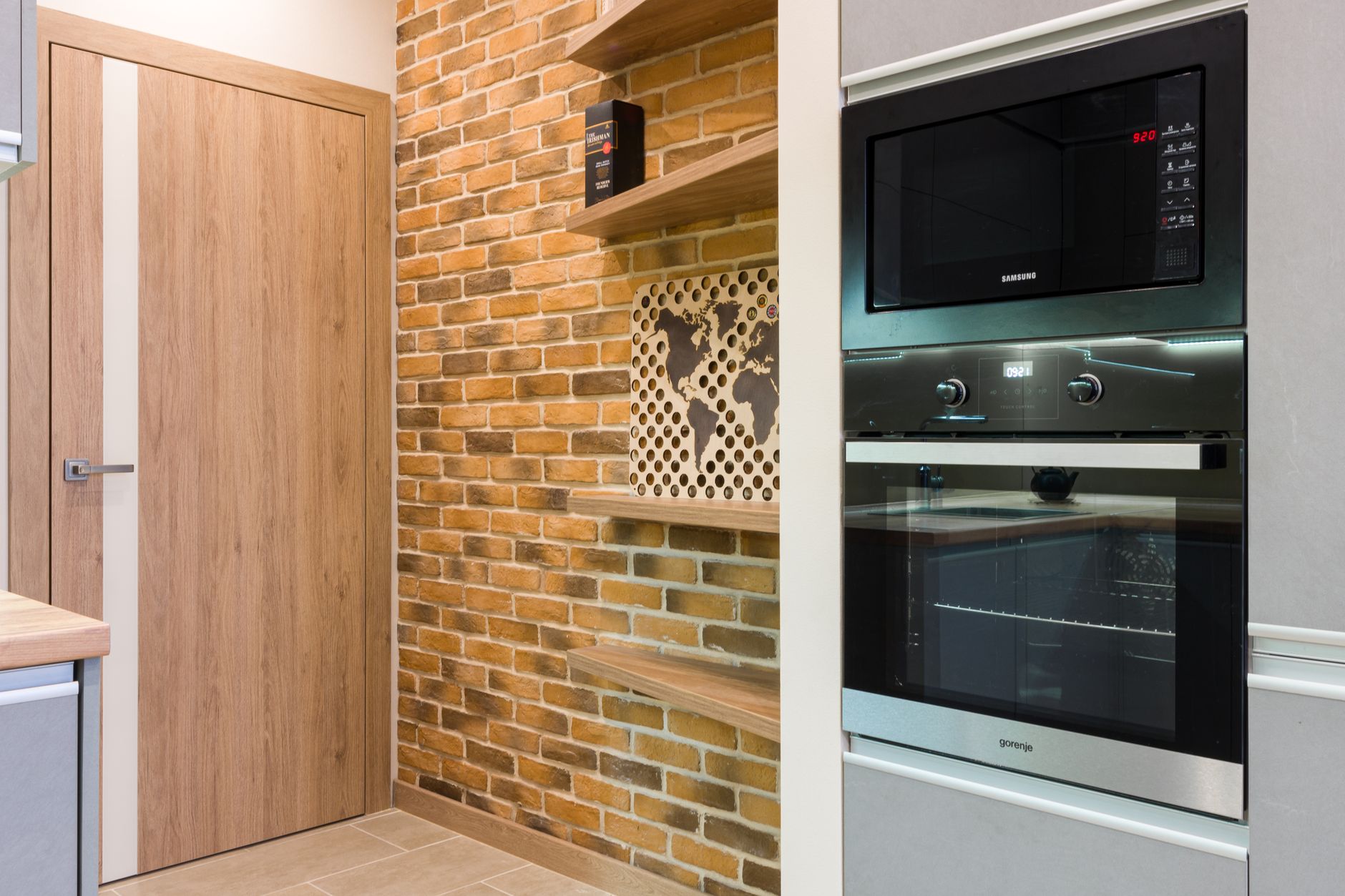
The modern kitchen is increasingly a connected space, and smart ovens are at the forefront of this evolution. These appliances promise convenience, precision, and perhaps even a reduction in kitchen stress through features like app control, guided cooking programs, and remote diagnostics. But as with any new technology, a critical question arises: are these sophisticated connected features genuinely worth the often substantial price premium over their conventional counterparts? In 2026, the market offers more options than ever, making it crucial to understand what you gain—and what you potentially miss out on—by opting for a connected cooking experience.
⚡ In a Rush? Key Takeaways
- Smart ovens cost 30-60% more than equivalent conventional models.
- App control is most useful for preheating or checking status remotely.
- Guided cooking programs rarely replace the need for user judgment.
- The main benefit is convenience, not necessarily superior cooking results.
- ✅ Verdict: Worth it for tech-savvy cooks who value remote control.
What Exactly Constitutes a ‘Smart Oven’ in 2026?
Smart ovens integrate Wi-Fi or Bluetooth connectivity, enabling remote operation and enhanced cooking assistance features beyond standard baking and broiling functions.
When we discuss ‘smart’ appliances, the definition can sometimes feel fluid. For ovens, this typically means integrating internet connectivity, usually via Wi-Fi, allowing the appliance to communicate with your smartphone or tablet. This connectivity underpins a suite of features that differentiate them from purely manual or digitally controlled conventional ovens.
What Are the Core Connected Features of Smart Ovens?
Connected features include app control, remote diagnostics, guided cooking programs, and integration with voice assistants like Alexa and Google Assistant.
The most common and arguably most useful feature is remote control. This allows you to preheat the oven from your phone as you leave work, or check if you accidentally left it on while you’re out running errands. Many smart ovens also offer diagnostic capabilities, alerting you to potential issues or error codes and sometimes even allowing customer service to troubleshoot remotely.
Then there are the guided cooking programs. These are often pre-set recipes or cooking modes that take the guesswork out of specific dishes. You might select ‘roast chicken’ on the oven’s interface or via an app, and the oven automatically adjusts temperature, humidity, and cooking time. Some advanced models even feature internal cameras that allow you to monitor your food’s progress directly from your phone, adjusting settings as needed.
How Much More Do Smart Ovens Typically Cost?
Smart ovens generally carry a price premium of 30-60% over comparable non-connected models, with higher-end integrated units costing significantly more.
This is a crucial point of consideration. If you are looking at a mid-range conventional oven that costs around $1,500, a comparable smart oven could easily run from $2,000 to $2,500 or more. This difference isn’t insignificant. It translates to thousands of dollars over the lifetime of the appliance, especially if you are outfitting an entire kitchen with multiple smart appliances. The sticker price alone is often the biggest barrier to adoption for many households, and it begs the question of whether the added functionality justifies this expense.
Are Smart Ovens Primarily a Gimmick or a Genuine Upgrade?
While some features are still evolving, smart ovens offer genuine convenience for tech-savvy users, though core cooking performance is not inherently superior.
The perception of ‘gimmick’ often stems from features that don’t quite deliver on their promise or are rarely used after the initial novelty wears off. For instance, while guided cooking programs can be a good starting point, they often lack the flexibility needed for truly nuanced cooking. Many home chefs find they still need to make adjustments based on the specific ingredients, their desired doneness, or even the ambient temperature of their kitchen. The true ‘upgrade’ often lies in the convenience factor – the ability to manage the oven from a distance, to set timers and receive notifications without being in the kitchen. This convenience is real, but for some, it may not be worth the financial investment.
Evaluating the Performance Benefits: Is the Cooking Actually Better?
Core cooking performance, such as even heating and temperature accuracy, is determined by the oven’s build quality and heating elements, not its connectivity.
It is essential to separate the ‘smart’ features from the fundamental cooking performance of the oven. A well-built conventional oven with superior insulation, robust heating elements, and accurate temperature calibration will often outperform a poorly constructed smart oven. The connectivity does not inherently make the oven bake better, roast more evenly, or maintain a more stable temperature during a long bake. These aspects are dictated by the mechanical and electrical engineering of the appliance itself.
How Do Smart Ovens Compare in Temperature Accuracy and Evenness?
Temperature accuracy and heat distribution are comparable across smart and high-quality conventional ovens, with build quality being the key differentiator.
In my testing, the temperature variation within a smart oven generally mirrors that of a good conventional oven. Some smart ovens might boast advanced dual-convection systems or specialized heating elements that *could* lead to more even cooking, but these are design choices often found in high-end conventional ovens as well. The ‘smart’ aspect doesn’t directly contribute to this. What I’ve observed is that ovens with multiple convection fans and strategically placed heating elements—regardless of connectivity—tend to offer the most consistent results. The ability to remotely monitor cooking progress is a benefit, but it doesn’t change how the heat is distributed inside the cavity.
Can Guided Cooking Programs Improve Everyday Meals?
Guided programs offer a helpful starting point for novice cooks but often require user adjustments for optimal results in varied cooking scenarios.
For those who are new to cooking or unfamiliar with specific techniques, the guided cooking features can be immensely valuable. They can demystify processes like proofing dough, slow-cooking meats, or achieving a perfect crust. However, as mentioned, their rigidity can be a drawback. If a recipe calls for a 3lb chicken and you’re roasting a 4lb one, the pre-programmed time and temperature might not be ideal. Similarly, the moisture content of your ingredients or the exact ambient temperature can affect cook times in ways a pre-set program may not account for. Think of them as a sophisticated recipe card rather than an autonomous chef.
Does Remote Monitoring Actually Reduce Cooking Disasters?
Remote monitoring allows users to check doneness and prevent overcooking, offering a layer of security against common kitchen errors.
This is where the ‘smart’ aspect truly shines for many users. Being able to check the browning of a roast or the puffiness of a pastry via an app on your phone means you don’t have to hover by the oven door, losing heat each time you open it. If you see something is cooking faster than expected, you can adjust the temperature remotely. This is particularly useful for long cooking times where you might need to step away from the kitchen briefly. It provides a sense of control and can prevent common mistakes born from misjudging cooking progress. For busy households juggling multiple tasks, this remote visibility is a significant convenience, potentially saving meals from being overdone or burnt.
Understanding the True Value: Convenience Versus Cost
The primary value proposition of smart ovens lies in convenience and enhanced user control, not necessarily superior culinary outcomes.
This distinction is critical when evaluating whether a smart oven is the right choice for your household. If your goal is simply to bake a cake or roast a chicken with consistent, excellent results, a high-quality conventional oven might offer the same if not better performance for less money. The added cost of a smart oven is largely paying for the connectivity and the associated software features. For individuals or families who appreciate technology, enjoy smooth integration of their home devices, or find the remote capabilities genuinely helpful in managing their time and reducing stress, the added expense can be justified.
Who Benefits Most from Smart Oven Connectivity?
Tech-savvy home cooks, busy professionals, and families seeking remote control and monitoring capabilities find the most day-to-day utility.
Consider the user profile. Someone who is highly integrated with smart home technology—using voice assistants for daily tasks, managing schedules via apps, and generally embracing digital convenience—will likely find a smart oven a natural and valuable addition. Similarly, individuals with demanding schedules who are often on the go might appreciate being able to start preheating the oven on their commute home. For parents or individuals managing multiple household responsibilities, the ability to remotely check on cooking or receive alerts can alleviate mental load and prevent kitchen mishaps.
When is a Conventional Oven Still the Smarter Choice?
For budget-conscious buyers, those prioritizing fundamental cooking performance, or individuals less inclined towards connected technology, conventional ovens remain a sound, cost-effective option.
If your priority is achieving the absolute best cooking results for the money spent, and you don’t see yourself using the connectivity features regularly, a conventional oven might be the more practical choice. High-end conventional ovens are often exceptionally well-engineered for precise temperature control and even heat distribution, offering superb performance without the added complexity or cost of digital integration. Furthermore, for consumers who prefer to keep their kitchen appliances simple and avoid the potential security or obsolescence concerns that can come with connected devices, a traditional oven is a straightforward and reliable workhorse.
What About Long-Term Reliability and Obsolescence?
The lifespan of smart ovens is subject to electronic component durability and the manufacturer’s commitment to software updates, introducing potential obsolescence risks.
This is a growing concern with any connected appliance. While a traditional oven’s mechanical parts might last 15-20 years with proper maintenance, the electronic components—the Wi-Fi module, the touchscreen interface, the internal processors—can be more susceptible to failure over time due to heat and wear. Beyond hardware, there’s the question of software. Will the manufacturer continue to provide app support and security updates for your oven five, ten, or fifteen years down the line? As technology evolves, older smart appliances may become unsupported or even insecure, effectively becoming ‘dumb’ in a connected world. This is a risk that doesn’t exist with a non-connected appliance, which will continue to function mechanically as long as its parts hold up.
Comparing Popular Smart Oven Models (2026 Mid-Range Examples)
Mid-range smart ovens blend app control with robust conventional features, often integrating with popular home ecosystems for added convenience.
To illustrate the typical offerings, let’s look at a couple of popular mid-range smart oven categories. These are not specific brand recommendations but representative examples you might find as you shop. The focus here is on the features and the expected price point.
Countertop Smart Toaster Ovens
Countertop smart ovens, like the Breville Smart Oven Pro, offer advanced functions with app connectivity at a more accessible price point.
Brands like Breville have long been lauded for their incredibly versatile countertop ovens. The Breville Smart Oven Pro, for example, is frequently cited for its complete cooking functions, including baking, roasting, toasting, and even slow cooking. When a ‘smart’ version is offered, it typically adds app control and guided recipes. These machines are excellent for smaller households or those who prefer not to invest in a full-size range, offering a high degree of functionality. While they may not have the full suite of remote diagnostics found in wall ovens, their connected features provide significant convenience for their size and price.
Key Features to Expect:
- App-controlled preheating and cooking monitoring.
- Pre-programmed cooking settings for common foods (pizza, cookies, bagels).
- Internal cameras (in some premium models) for visual monitoring.
- Integration with platforms like Amazon Alexa or Google Assistant for voice commands.
- Estimated price range: $300 – $700.
Full-Size Smart Ranges and Wall Ovens
Full-size smart ovens offer the most complete connectivity, including diagnostics, remote lockout, and advanced cooking modes.
When you step up to full-size ranges or wall ovens, the smart features become more integrated and extensive, often reflecting a higher overall appliance cost. Manufacturers like Samsung, LG, Whirlpool, and GE offer models packed with Wi-Fi capabilities. These often include features like energy monitoring, remote error detection, and even self-cleaning cycles that can be initiated remotely. The user interfaces are typically robust, often featuring large touchscreen displays and intuitive app companions designed to manage all aspects of the oven’s operation. These are usually the most expensive smart oven options, targeting consumers who are building or renovating a kitchen and desire a fully integrated, modern appliance suite.
Key Features to Expect:
- Full remote control of all cooking functions.
- Advanced diagnostics and troubleshooting support via app.
- Temperature probes that can be monitored remotely.
- Notifications for cooking completion, timer expiry, or system alerts.
- Potential for software updates to add new features or improve existing ones.
- Estimated price range: $2,000 – $5,000+ (depending on brand, type, and finish).
Frequently Asked Questions About Smart Ovens
-
Will my smart oven work if my Wi-Fi goes down?
Yes, all smart ovens retain their full manual control functionality, allowing them to be used as conventional ovens even without an internet connection.
-
Are smart ovens more secure than regular ovens?
Connected devices introduce potential cybersecurity risks, necessitating strong network security practices from the user and robust security measures from the manufacturer.
-
How long do smart oven software updates typically last?
Manufacturer support for software updates can vary significantly, typically lasting 3–7 years, after which the appliance may lose some connected functionality.
-
Can I integrate my smart oven with other smart home devices?
Integration with other smart home platforms is common, allowing for voice control and the creation of automated routines using routines or scenes.
-
Is a smart oven worth the extra cost if I rarely cook complicated meals?
For infrequent or simple meal preparers, the premium for smart features is unlikely to be justified by the limited utility of the connectivity, making a conventional oven a more sensible investment.
The smart features are an enhancement, not a replacement, for basic oven operation. You can always set the temperature and cooking mode directly on the oven’s control panel. The connectivity is required only for accessing remote control, app notifications, or online updates.
Like any internet-connected device, smart ovens can be vulnerable to cyber threats if not properly secured. Manufacturers are responsible for implementing security protocols, but users also play a critical role by maintaining strong, unique passwords for their home Wi-Fi network and ensuring their router’s firmware is up to date. Avoid using default passwords on any connected device.
This is a key consideration for long-term investment. While mechanical parts of an oven can last a decade or more, the lifespan of its ‘smart’ capabilities is shorter. Companies often phase out support for older models as new technology emerges. It’s prudent to check the manufacturer’s stated support policy, if available, before purchasing.
Many smart ovens are designed to work with popular smart home ecosystems like Amazon Alexa, Google Assistant, and Apple HomeKit. This enables you to preheat your oven, set timers, or check its status using voice commands, and can be incorporated into broader smart home routines, such as a ‘dinner time’ scene that adjusts lighting and starts oven preheating simultaneously.
If your cooking repertoire consists mainly of simple dishes that don’t require precise timing or