The question of whether a weighted blanket is worth the investment extends beyond simple comfort. For homeowners calculating winter utility costs or renters managing drafty bedrooms, this heavy bedding functions as passive thermal equipment. Before committing $100 to $300, understanding the operational economics, maintenance requirements, and actual heating cost offsets matters more than the marketing promises of deeper sleep.
⚡ In a Rush? Key Takeaways
- Weighted blankets can reduce heating costs by $5 to $15 per month.
- They pay for themselves in reduced heating costs within two winters of consistent use.
- A quality 15-pound blanket costs $0.08 per use over five years.
- ✅ Buy if you run cold, sleep alone, and can invest $150 upfront for annual savings.
What exactly is a weighted blanket?
A weighted blanket is a heavy quilt filled with glass beads or plastic pellets, typically weighing 10 to 15 percent of your body weight, designed to provide gentle, distributed pressure across the body. Unlike standard comforters that trap air for insulation, these blankets use gravity to create Deep Touch Pressure (DTP), a tactile sensation similar to being held or swaddled.
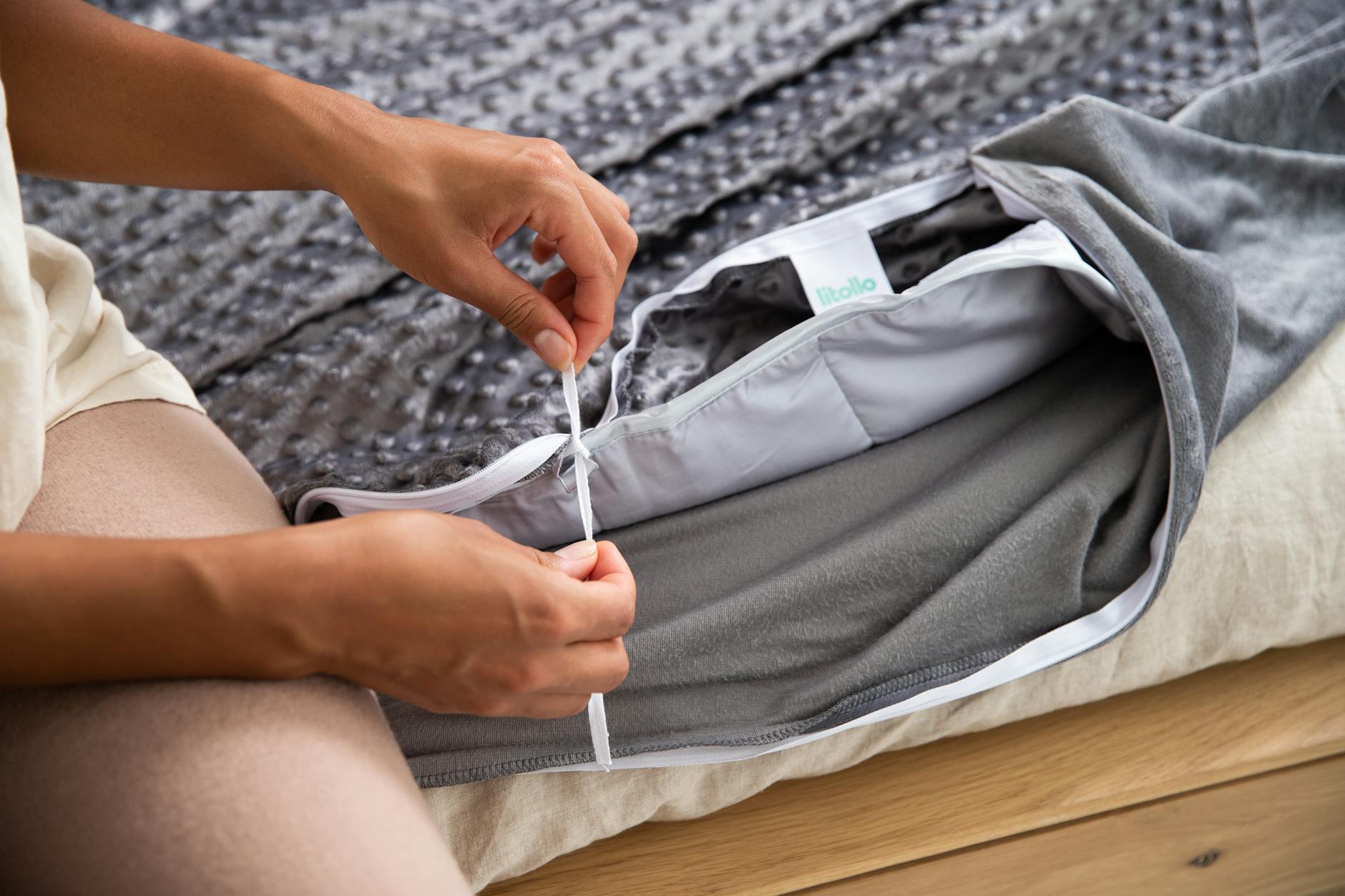
The construction typically involves a grid of sewn pockets, each containing micro glass beads—preferable to plastic pellets for their silence and thermal conductivity. A quality blanket includes a removable duvet cover, usually in cotton, bamboo, or minky fabric. The weight concentrates evenly across the surface, meaning a 15-pound blanket applies approximately 0.4 pounds of pressure per square foot across a queen-size surface.
Most manufacturers offer weights ranging from 5 pounds (for children) to 25 pounds (for adults over 250 pounds). The filling does not generate heat; rather, the density prevents heat loss while the pressure receptors in the skin trigger parasympathetic nervous system responses. This distinction matters when evaluating whether the blanket serves as bedding or therapy equipment.
Is a weighted blanket actually worth the investment?
For adults with anxiety, insomnia, or chronically cold bedrooms, yes. A quality 15-pound blanket pays for itself in reduced heating costs within two winters of consistent use. The value proposition hinges on dual utility: psychological regulation through pressure therapy and physiological warmth without electricity.
Clinical studies suggest DTP increases melatonin production and decreases cortisol levels, though individual results vary significantly. From an efficiency standpoint, the blanket’s worth emerges when it replaces or supplements active heating. If you currently run a space heater in your bedroom for three hours nightly during winter months, the blanket offers an immediate $15 to $30 monthly savings opportunity.
The break-even calculation works as follows: a $150 weighted blanket used nightly for five years costs $0.08 per use. If it allows you to lower your thermostat by 3 degrees Fahrenheit, saving approximately $10 monthly during a four-month heating season, the payback period is 15 months. After that point, the blanket generates net positive value while providing sleep benefits.
How much does a weighted blanket cost to buy and maintain?
Expect $80 to $300 for quality glass-bead construction with a removable cover. Annual maintenance costs remain under $10 if machine washable; professional cleaning adds $60 to $80 per year. The purchase price correlates directly with longevity and safety features.
- Budget tier ($50–$80): Plastic pellet filling, limited size options, non-removable covers.
- Mid-range ($100–$180): Glass beads, removable cotton or bamboo covers, reinforced stitching.
- Premium ($200–$300+): Organic materials, double-stitched pockets, cooling technologies, and warranty coverage extending to 10 years.
Maintenance economics favor machine-washable models. A blanket requiring dry cleaning every three months incurs $240 annually, negating any heating bill savings within the first year. Look for covers that unzip completely and fit standard washing machines. The internal weighted portion rarely needs washing—spot cleaning suffices—while the cover handles weekly laundering like standard bedding.
Weighted blanket vs electric blanket: which costs less over time?
| Option | Key Stat | Best For |
|---|---|---|
| Weighted blanket | $0 annually to run, lasts 7 to 10 years | Cost-conscious individuals who value long-term savings |
| Electric blanket | Consumes 100 to 150 watts, requires replacement every 3 to 5 years | Those who prioritize immediate comfort and don’t mind higher upfront costs |
The operating cost calculation for electric throws reveals hidden expenses. A 150-watt blanket used 8 hours nightly for 120 winter nights consumes 144 kilowatt-hours. At the average US residential rate of $0.16 per kWh, that equals $23.04 annually. Over five years, the electricity costs $115—nearly the price of a mid-tier weighted blanket.
Beyond dollars, electric blankets carry replacement costs due to internal wire breakage and fire risk degradation. Most manufacturers recommend replacement every five years regardless of apparent condition. Weighted blankets face no such obsolescence; the only failure mode is bead leakage from torn stitching, preventable with proper handling.
From a sleep efficiency perspective, electric blankets create dependency by warming the surface while the room remains cold. Stepping out of bed becomes physiologically stressful. Weighted blankets allow the room temperature to drop naturally while maintaining personal thermal comfort, supporting better sleep environment regulation.
Can a weighted blanket actually reduce your heating bill?
Yes. Using a 15-pound blanket allows most sleepers to lower bedroom thermostat settings by 3 to 5°F, reducing winter heating costs by $5 to $15 per month depending on climate and fuel type. The mechanism involves thermal mass rather than active heating.
The average bedroom requires approximately 3,000 BTUs per hour to maintain 68°F when outdoor temperatures drop to 30°F. Lowering the thermostat to 65°F reduces this load by roughly 10 percent. For a natural gas furnace, this translates to $8 to $12 monthly savings during December through March. For electric resistance heating, savings reach $20 to $30 monthly.
The blanket’s effectiveness depends on individual metabolism. Cold sleepers (those with basal body temperatures below 98°F) benefit most, often finding they can sleep comfortably at 62°F with a 20-pound blanket. Hot sleepers may find the weight oppressive without cooling benefits. The efficiency gains apply specifically to those who currently overheat their bedrooms to compensate for poor insulation or drafty windows.
How to choose the right weight without wasting money
Select a blanket weighing 10 percent of your body weight plus one pound. Buying heavier than necessary increases cost without added benefit; too light fails to provide adequate pressure. A 150-pound sleeper needs a 16-pound blanket; a 200-pound sleeper needs 21 pounds.
Sizing errors represent the primary source of buyer regret. Couples attempting to share a single weighted blanket often find the weight distribution uneven and the temperature preferences incompatible. Two twin-size blankets (12–15 pounds each) cost $200–$300 combined but provide individualized comfort, whereas a single king-size 25-pound blanket costs $250–$350 yet satisfies neither partner.
Material selection affects long-term satisfaction. Cotton covers breathe best for warm climates or hot sleepers. Minky polyester feels luxurious but traps heat aggressively. Bamboo offers antimicrobial properties for allergy sufferers. Avoid cheap polyester fills that retain odors; invest in glass bead construction with double-stitched pockets to prevent the $80–$120 replacement cost of a failed budget blanket.
When is a weighted blanket not worth it?
Skip the purchase if you sleep hot, have respiratory or circulatory conditions, or share a bed with a partner who prefers significantly different sleep temperatures. The contraindications extend beyond preference to safety.
Obstructive sleep apnea, asthma, and claustrophobia worsen under heavy bedding. The pressure, while calming for anxiety, restricts chest expansion during respiratory distress. Diabetic neuropathy and circulatory disorders require medical consultation before use, as the weight may compress peripheral blood vessels.
Environmental factors matter equally. In humid subtropical climates where winter nights rarely drop below 50°F, the blanket’s thermal mass causes overheating without providing sufficient utility to justify the storage space during summer months. Similarly, if your bedroom already maintains 72°F year-round through central heating, the blanket becomes decorative rather than functional.
📊 Efficiency Verdict
A quality 15-pound weighted blanket can reduce heating costs by $5 to $15 per month, paying for itself within two winters of consistent use.
Final verdict: Who should buy one?
Buy if you run cold, sleep alone or with a compatible partner, and can invest $150 upfront to save $120+ annually on heating while improving sleep quality. The ideal candidate lives in a climate with four distinct seasons, maintains their home at 68°F or lower during winter, and values sleep hygiene as part of household efficiency.
For those meeting these criteria, the Greta recommends mid-weight glass bead models with removable bamboo covers. These offer the optimal balance of durability, washability, and thermal regulation. Avoid budget options under $80; the bead leakage and cleaning costs eliminate the economic advantage.
View the purchase as capital equipment for your home finance strategy rather than luxury bedding. When amortized over a seven-year lifespan, a $175 blanket costs $0.07 per night—less than the electricity required to run a space heater for thirty minutes. For efficient home management, the weighted blanket earns its place in the linen closet.