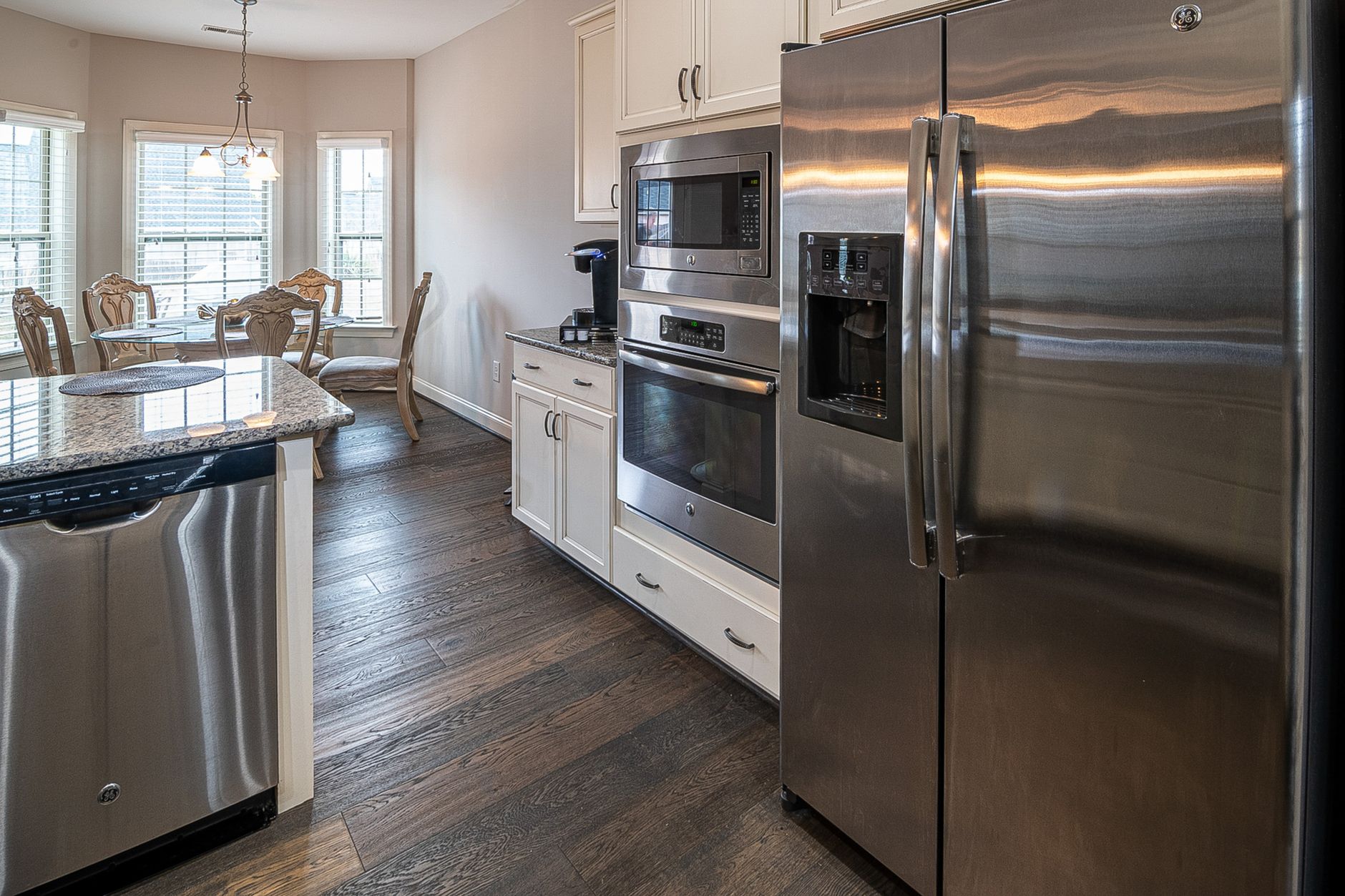
When undertaking a kitchen renovation or simply replacing aging appliances, the allure of a bundled package is undeniable. Retailers often present these as smart, cost-effective solutions, promising a cohesive look and a lower overall price. But are these enticing packages truly a wise investment, or merely a marketing tactic designed to move more inventory?
⚡ In a Rush? Key Takeaways
- Appliance bundles can save 20% (or $500-$2,000) versus individual purchases.
- Savings depend heavily on brand, timing, and specific package components.
- Bundles offer convenience but limit customization of brands and features.
- Total cost of ownership, not just upfront price, dictates true value.
- ✅ Best value: Bundles are worth it when aligned with your needs and budget.
How Much Can You Truly Save with a Kitchen Appliance Bundle?
Kitchen appliance bundles typically offer savings of 15-20% compared to purchasing each item separately, averaging $500 to $2,000.
What is a Kitchen Appliance Bundle?
A kitchen appliance bundle, often referred to as a package or suite, is a curated collection of major kitchen appliances sold together by a retailer. These typically include a refrigerator, range (or cooktop and wall oven), dishwasher, and often a microwave (either an over-the-range model or a countertop unit). The primary appeal lies in the perceived cost savings and the assurance of a coordinated aesthetic across your kitchen.
What Are the Typical Components of a Bundle?
While the exact configuration can vary, most common bundles include these four core appliances:
- Refrigerator: Usually a French door or side-by-side model, often with an ice maker.
- Range: This can be a freestanding electric or gas range, or sometimes a separate cooktop and corresponding wall oven.
- Dishwasher: Available in various finishes and noise levels.
- Microwave: Most often an over-the-range model that doubles as a ventilation hood, though some packages might offer a countertop microwave.
Some higher-end packages may also include a dedicated range hood or a wine cooler, but these are less common in standard offerings. The key benefit is that all appliances within a bundle are designed to match in terms of finish, style, and often brand, ensuring a cohesive look.
What Are the Average Savings on Appliance Packages?
Retailers promote bundles as a way to achieve significant upfront cost reductions, often highlighting savings of up to 20%.
The promise of saving money is a primary driver for consumers considering appliance packages. Many retailers, from big-box stores like Home Depot and Lowe’s to smaller independent appliance dealers, feature these bundles prominently. The advertised savings can range from a few hundred dollars to well over a thousand, depending on the brands included and the overall price point of the collection. For instance, a package with a combined retail price of $5,000 might be offered for $4,000, representing a $1,000 saving. This immediate reduction in expenditure is a powerful incentive, especially for those undertaking extensive renovations where appliance costs can quickly escalate.
However, it’s crucial to understand that these advertised savings are not always as straightforward as they appear. The “individual purchase price” used as a benchmark might be a manufacturer’s suggested retail price (MSRP), which is rarely the price consumers actually pay when buying items separately through sales or promotions. Conversely, the bundle price might reflect a genuinely reduced offering. The actual savings can be influenced by the timing of the purchase – during major sale events like Black Friday or Memorial Day – and the specific brands being bundled. Some brands, known for their premium pricing, may offer more substantial percentage savings in bundle deals than budget-friendly options.
Is It Cheaper to Buy Kitchen Appliances Individually?
Individual appliance purchases can sometimes be cheaper than bundles during promotional periods or by mixing brands for optimal value.
The Role of Sales and Promotions
Major holidays and retail events are prime times to find significant discounts on individual appliances. Black Friday, Memorial Day, Labor Day, and the Fourth of July often see retailers offering substantial price reductions, rebates, and financing deals on appliances. If you happen to be replacing appliances during one of these periods, you might find that purchasing each item separately during staggered sales allows you to accumulate savings that could rival or even exceed those offered in a pre-defined bundle. For example, you might find a sale on a specific refrigerator model one week and a separate sale on a compatible dishwasher the next.
Furthermore, floor models, clearance items, and open-box deals can offer remarkable savings when buying individual appliances. These items are often sold at a steep discount to clear inventory, and while they might have minor cosmetic blemishes, their functionality is typically unimpaired. Successfully coordinating purchases of individual items during such opportune moments requires patience and a willingness to hunt for deals, which can be a trade-off against the convenience of a bundle.
Mixing and Matching Brands for Value
Bundles typically consist of appliances from a single brand or a small selection of brands curated by the retailer. This approach ensures aesthetic consistency but may not always align with the best value across different appliance categories. For instance, a particular brand might excel in refrigerator technology but offer a less efficient or more expensive dishwasher compared to another manufacturer. When buying individual appliances, you have the freedom to select the best-performing and most cost-effective model for each category, irrespective of brand. This allows for a more tailored approach, potentially leading to a higher-quality kitchen ensemble at a lower total cost, even if it means a slight variation in finish or design nuances.
Consider this scenario: Brand A offers a stellar, highly-rated refrigerator for $1,800. Brand B, known for its exceptional dishwashers, offers a comparable model for $800, while Brand C’s range is priced at $1,500, and Brand D’s microwave at $300. If a bundle from Brand A includes these appliances priced at $4,500, the individual purchase price ($1,800 + $800 + $1,500 + $300 = $4,400) might only be marginally different, or even less. However, if Brand A’s refrigerator is $2,000, its range is $2,000, and its dishwasher is $1,200, the bundle price of $5,500 might be significantly higher than piecing together a superior kitchen from different brands, even with modest savings on the bundle.
| Appliance | Bundle Price (Brand A) | Individual Price (Brand A) | Individual Price (Best Value Mix) |
|---|---|---|---|
| Refrigerator | $2,000 | $2,200 | $1,800 (Brand B) |
| Range | $2,000 | $2,300 | $1,500 (Brand C) |
| Dishwasher | $1,200 | $1,400 | $800 (Brand D) |
| Microwave | $800 | $1,000 | $300 (Brand E) |
| Total Bundle Price | $6,000 | ||
| Total Individual (Same Brand) | $6,900 | ||
| Total Individual (Best Value Mix) | $4,400 |
As this hypothetical example illustrates, buying individually from the same brand might offer only modest savings, or none at all. However, by mixing brands, the potential savings can be substantial, alongside the possibility of acquiring higher-performing units in specific categories. This approach sacrifices the perfect visual match for potential cost and performance benefits.
What Happens When You Buy Appliances Individually?
When you choose to purchase appliances one by one, you gain unparalleled control over your selections. You can meticulously research each appliance type, comparing models from various brands based on features, energy efficiency, reliability ratings, and, of course, price. This granular approach allows you to allocate your budget more strategically, perhaps opting for a premium refrigerator and a more budget-friendly, yet still capable, dishwasher. It also enables you to adapt to the market; if a new, highly-reviewed appliance is released for a specific category, you can integrate it into your kitchen plan without being constrained by a pre-selected bundle.
The primary challenge with buying individually is the potential for a mismatched aesthetic. Not all stainless steel finishes are identical, and subtle differences in handle design or control panel layout can become apparent when viewed side-by-side. This is where careful coordination and potentially compromising on certain features of one appliance might be necessary to achieve a visually harmonious kitchen. For many homeowners, the trade-off between perfect aesthetic uniformity and tailored performance or cost savings is a decision that requires careful consideration of personal priorities.
The Hidden Costs and Considerations of Appliance Bundles
Beyond the sticker price, bundles introduce complexities in delivery, installation, and potential feature limitations impacting long-term value.
Delivery and Installation Complexities
Retailers often include delivery as part of the bundle package, which is a significant convenience. However, the specifics can vary widely. Some packages might only deliver to your doorstep, leaving you responsible for moving the heavy appliances into your home and connecting them. Others offer full white-glove service, including unpacking, installation, removal of old appliances, and hauling away the packaging. Understanding precisely what is included in the delivery and installation services is crucial to avoid unexpected charges or logistical headaches.
For example, if the bundle price seems exceptionally low, it might be because it excludes the installation of the gas range, which requires a professional plumber, or the complex hookup of a water line for an ice maker. Similarly, the disposal of your old appliances, a process that can incur separate fees when buying individually, may or may not be included. If you’re replacing appliances in an older home, you might encounter unexpected installation challenges. Countertop microwaves may require shelf modifications, and over-the-range microwaves demand proper ventilation ducting. Always clarify the scope of delivery and installation to accurately compare the total cost and effort involved versus buying piecemeal.
Limited Customization and Feature Trade-offs
The most significant drawback of appliance bundles is the lack of customization. You are often selecting from pre-determined configurations, which may not perfectly align with your specific needs or preferences. For example, a bundle might feature a refrigerator with a water dispenser and ice maker, but you might prefer a model without these features to maximize internal storage space and reduce potential repair issues. Similarly, the dishwasher included might be a standard model when you desire a quieter, higher-end unit with specialized wash cycles.
These limitations can force a compromise. You might end up with an appliance that has features you don’t need (and that contribute to its cost) or one that lacks a feature you consider essential. This is particularly true for higher-end bundles where specific design lines or advanced technologies are bundled together. While the intention is convenience through coordination, it can lead to a situation where you get a great deal on a package but are slightly disappointed with one or more of the individual components. This is where the ‘total cost of ownership’ becomes more relevant than the initial purchase price; settling for a less-than-ideal appliance could lead to dissatisfaction or higher maintenance costs over time.
Brand Consistency vs. Best-in-Class Performance
Appliance bundles inherently favor brand consistency. This is excellent for achieving a uniform look, but it means you may be tied to a brand that doesn’t offer the absolute best performing appliance in every category. For instance, a brand might be renowned for its refrigerators but lag behind competitors in dishwasher quietness or oven precision. When buying a bundle, you often accept the brand’s offerings across the board to secure the package deal. If achieving the highest possible performance in each appliance category is your priority, then individual selection is clearly the superior path.
Consider a scenario where you are particularly passionate about cooking. You might prioritize an oven with superior convection capabilities, precise temperature control, and a steam-cleaning function. If the bundle’s oven doesn’t meet these exacting standards, you might find yourself regretting the package deal when you’re in the midst of preparing complex meals. In such cases, paying a premium for an individual, top-tier oven and then selecting other appliances based on a balance of aesthetics and value might be a more fulfilling long-term strategy. The decision hinges on whether visual harmony or absolute peak performance in each appliance category is the paramount goal for your kitchen workflow.
The Total Cost of Ownership Implication
When evaluating appliance purchases, especially bundles, it is vital to look beyond the upfront price and consider the total cost of ownership over the lifespan of the appliances. This includes not only the purchase price but also energy consumption, water usage, maintenance, and potential repair costs. A seemingly attractive bundle price might mask higher energy usage in a less efficient refrigerator or dishwasher, or a brand known for more frequent breakdowns. Over 10-15 years, the cumulative cost of energy and repairs can significantly outweigh the initial savings from a bundle.
For example, a refrigerator from an older bundle might use 500 kWh more electricity annually than a newer, more efficient model. At an average US electricity rate of $0.16/kWh, this difference equates to $80 per year, or $1,200 over 15 years. If the bundle saved you only $700 upfront, you’ve effectively lost money in the long run by choosing the less efficient model. Similarly, if a bundle includes appliances with a higher propensity for repairs, the out-of-pocket expenses for service calls and parts can quickly erode any initial discount. For this reason, research into Energy Star ratings, consumer reliability reports (such as those from Consumer Reports), and warranty details is essential before committing to any appliance purchase, bundle or individual.
When Are Kitchen Appliance Bundles Worth It?
Bundles offer excellent value when your needs align with the package (brand, style, features) and you purchase during a favorable sales period.
Alignment with Your Aesthetic and Needs
The most straightforward cases for buying appliance bundles are when the included appliances perfectly match your desired aesthetic and functional requirements. If you envision a sleek, minimalist kitchen with all stainless steel appliances from a specific high-end brand, and a retailer offers a bundle that precisely fits this vision, the convenience and cost savings become highly compelling. This is especially true if you are undertaking a complete kitchen remodel where all appliances are being replaced simultaneously, and sticking to a single brand streamlines design choices.
Consider a scenario where you’ve already decided on a particular brand for its design language or a specific feature that is important to you, such as a unique refrigerator configuration or a specific type of range. If that brand offers a package that includes the other necessary appliances that also meet your criteria, the bundle becomes a logical and cost-effective choice. It eliminates the time and effort required to source individual pieces, ensuring visual harmony and potentially a better overall price than buying each item separately from the same brand. This “perfect fit” scenario is where bundles offer the most undeniable value