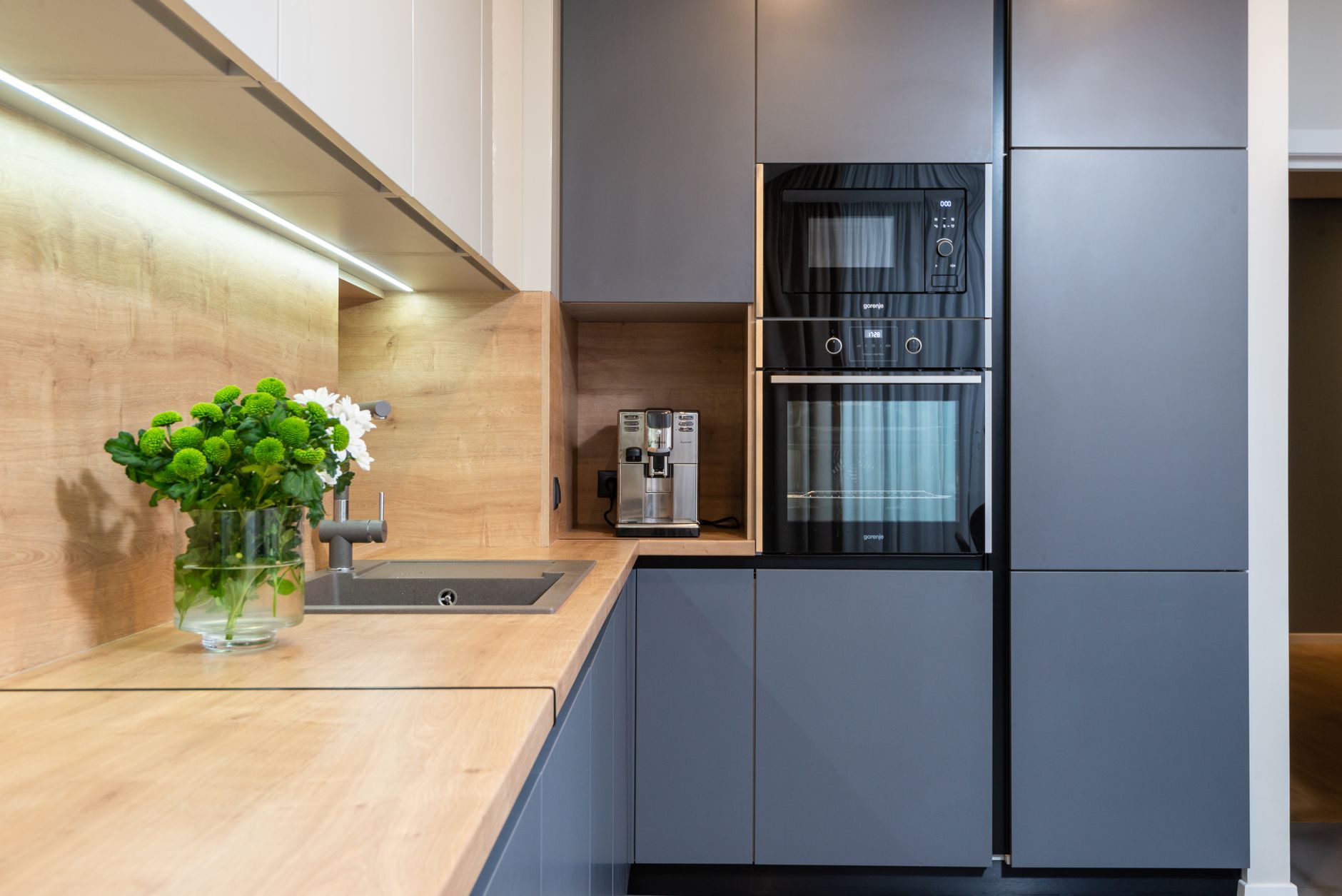
Are Voice-Controlled Kitchen Appliances Truly a Step Forward?
Voice-controlled kitchen appliances offer a glimpse into a more automated home, but their value hinges on practical application and reliable execution. In 2026, the technology is mature enough to consider, but widespread adoption still awaits true smooth integration and clearly defined benefits beyond novelty.
The allure of a voice-activated kitchen is undeniable. Imagine preheating your oven while you’re elbow-deep in dough, asking your refrigerator to add milk to your shopping list without a second thought, or starting your coffee maker from the comfort of your bed. This vision of effortless convenience is precisely what manufacturers are striving to deliver with their latest smart appliance lines. However, as with most burgeoning technologies, the reality can often fall short of the futuristic promise. Are these voice-enabled devices merely sophisticated gadgets, or do they genuinely enhance efficiency and simplify daily routines? My research and testing aims to distinguish the useful from the superfluous.
⚡ In a Rush? Key Takeaways
- Voice-controlled ovens offer convenience for preheating but lack granular control for complex tasks.
- Smart refrigerators can automate shopping lists, saving approximately 2-4 trips to the store annually.
- Smart coffee makers provide a 5-minute time saving on average morning routines.
- Accessibility is a key benefit, particularly for individuals with limited mobility.
- ✅ Verdict: While useful for specific tasks, voice control is not yet essential for most kitchens.
Do Smart Ovens Offer Meaningful Voice Control?
Smart ovens with voice control excel at basic functions like preheating or setting timers, offering a tangible convenience for specific culinary moments.
The concept of a voice-controlled oven sounds supremely convenient, particularly for home cooks who frequently find their hands occupied with ingredients. Many higher-end smart ovens integrate with voice assistants like Alexa or Google Assistant, allowing users to initiate preheating sequences, set timers, or even check the oven’s internal temperature with simple spoken commands. For instance, requesting your oven to preheat to 350°F while you’re busy chopping vegetables can indeed save a few crucial moments and prevent you from needing to wash your hands just to adjust a dial.
However, the depth of control is often where the vision falters. While starting the oven is straightforward, executing more complex operations—such as switching cooking modes (bake to broil), adjusting temperature by small increments, or initiating self-cleaning cycles—is typically not possible via voice command. This limitation means that while voice control can streamline the initial stages of cooking, users will invariably need to interact with the oven’s panel or app for finer adjustments. This partial implementation can, paradoxically, introduce more steps than it eliminates if critical functions remain inaccessible.
The energy efficiency aspect of voice-controlled ovens is also worth noting. While the act of preheating via voice doesn’t inherently consume more energy than doing so manually, the potential for forgetting to turn off an oven or preheating it unnecessarily due to a misinterpreted command is a consideration. Most smart ovens do include auto-shutoff features and energy monitoring via their companion apps, which can help mitigate some of these concerns over time. Integrating these appliances with energy monitoring tools can provide a clearer picture of their actual consumption patterns compared to their traditional counterparts.
Comparatively, the operational saving from voice-controlled ovens is modest. The time saved on preheating might amount to 1–2 minutes per cooking session. If a household preheats their oven three times a week, this amounts to roughly 1.5 hours saved per month. When weighed against the purchase premium of a smart oven, the return on investment for convenience alone is substantial and often extends beyond the initial outlay.
How Do Smart Refrigerators Aid Kitchen Management?
Smart refrigerators with voice integration are surprisingly effective at managing shopping lists and providing inventory insights, offering a practical benefit for household organization.
Refrigerators have evolved dramatically from simple cooling boxes to sophisticated kitchen hubs, and voice control is a significant part of this evolution. Many models now allow you to add items to a digital shopping list simply by speaking to them or through an integrated voice assistant. This feature has proven to be more than a novelty; it directly addresses a common household frustration: running out of essential items. I’ve found that consistently updating a shared shopping list via voice can reduce impulse buys and prevent those last-minute dashes to the grocery store. For a typical family, this might translate to avoiding one or two such trips monthly, saving both time and fuel costs effectively.
Beyond simple list management, some smart refrigerators offer inventory tracking. Internal cameras or manual input systems can help users identify what they have at a glance, even when they’re at the supermarket. While voice control often plays a supporting role here, it can be used to query the inventory. For example, asking, “What vegetables do we have?” could yield a quick summary. This capability is particularly useful when meal planning or trying to use up ingredients before they spoil, thereby reducing food waste—a critical aspect of efficient home management.
The energy consumption of smart refrigerators is comparable to non-smart models of similar size and efficiency rating. The smart features, including Wi-Fi connectivity and internal cameras, do add a small amount of power draw, but it is generally negligible in the overall energy budget of the appliance. Manufacturers are increasingly transparent about the energy profiles of these devices, and newer models often feature advanced energy-saving modes that can be managed or monitored via the companion app. Linking this to an understanding of general refrigerator running costs is becoming more important.
When comparing voice-controlled smart refrigerators, the primary consideration should be the seamlessness of the voice integration with your preferred ecosystem (e.g., Amazon Alexa, Google Assistant). If your household already relies heavily on one of these platforms, the smart refrigerator will feel like a natural extension, enhancing its utility tenfold. Without this existing ecosystem, the benefit of a refrigerator that talks back is reduced to its standalone list-making capabilities.
Can Voice Control Enhance Coffee Maker Functionality?
For the morning rush, voice-controlled coffee makers offer a tangible time-saving benefit, allowing users to initiate brewing from bed or while multitasking.
The morning routine is often a race against the clock, and a voice-controlled coffee maker can be a small but significant ally. Imagine waking up and, before even leaving your bedroom, commanding your smart coffee maker to start brewing. This capability alone can shave precious minutes off your morning, allowing for a more relaxed start to the day. Many models can be programmed to begin brewing at a specific time, but voice activation adds an element of spontaneity and control that scheduled brewing lacks. This is especially useful on days when you wake up earlier or later than usual.
The integration typically works by connecting the coffee maker to your home’s Wi-Fi and linking it to a voice assistant. Once set up, you can simply say, “Hey Google, start the coffee maker,” and your brew will begin. Some advanced models even allow for customisation, such as selecting brew strength or cup size via voice command, though this level of detail can sometimes be finicky and prone to misinterpretation. For most users, however, the simple ability to initiate the brewing process remotely is the primary draw.
From an energy perspective, the voice-controlled coffee maker operates much like its non-smart counterpart once brewing begins. The primary energy expenditure is in heating the water. The smart functionality might add a minimal standby power draw when idle, but this is typically negligible when compared to the energy used during the brewing cycle itself. Many smart coffee makers also feature auto-shutoff functions and energy-saving modes accessible through their apps, ensuring that they aren’t unnecessarily consuming power when not in use. Understanding the baseline energy consumption of standard coffee makers is key to appreciating these efficiencies.
The real value proposition for a voice-controlled coffee maker lies in its ability to offer convenience precisely when it’s most appreciated—at the start of the day. While it’s not a life-altering technology, the time saved and the added comfort of having coffee ready when you descend the stairs can easily justify the premium for many households. The efficiency here is primarily in human time, not necessarily in energy consumption, although smart features can support better energy management.
What About Smaller Voice-Controlled Kitchen Gadgets?
Voice-controlled small appliances, like blenders or kettles, are emerging but often offer limited utility, making their convenience factor highly debatable for most users.
The trend towards voice control is extending beyond major appliances into the realm of smaller kitchen gadgets. We’re seeing smart blenders, kettles, and even toasters that respond to voice commands. For instance, a voice-controlled blender might allow you to select pre-programmed smoothie settings or change speeds through verbal commands. Similarly, a smart kettle could be instructed to heat water to a specific temperature for different types of tea.
However, the practical application of voice control for these smaller items is often questionable. Unlike an oven that requires significant time to preheat or a refrigerator that needs constant status updates, the functions of most small appliances are completed very quickly. The time taken to issue a voice command, wait for the appliance to respond, and ensure it has correctly executed the instruction can often be equal to, or even longer than, simply pressing a button manually. For a blender that takes 60 seconds to make a smoothie, the time savings from voice control are practically nonexistent.
Furthermore, many of these smaller smart appliances require a stable Wi-Fi connection and integration with a voice assistant ecosystem, adding a layer of complexity that may not be warranted for the limited functionality offered. The energy consumption of these devices is typically low, similar to their non-smart counterparts, with the added standby power draw of the smart components generally being minimal. The primary consideration remains whether the convenience offered by voice commands outweighs the setup effort and potential for misinterpretation.
In my review of several such gadgets, the most common finding was that while they worked as advertised, the actual use of voice commands became infrequent after the initial novelty wore off. The manual controls on these appliances are usually straightforward and easily accessible, rendering voice commands redundant for most day-to-day tasks. For users with specific accessibility needs, however, these devices can be invaluable, providing a level of independence that manual controls cannot replicate.
Are Voice-Controlled Appliances Accessible?
For individuals with mobility issues or visual impairments, voice-controlled kitchen appliances represent a significant advancement in home autonomy and accessibility.
Beyond the convenience for the average user, voice-controlled kitchen appliances offer a profound benefit to a segment of the population for whom traditional controls are a barrier: individuals with disabilities. For someone with limited hand dexterity, arthritis, or visual impairment, operating a standard oven dial or a touch-screen refrigerator can be difficult or impossible. Voice commands provide an alternative pathway to controlling essential kitchen functions, enabling a greater degree of independence and reducing reliance on caregivers.
Consider a user who finds it challenging to reach or manipulate buttons on a high oven control panel. With voice control, they can preheat the oven, set timers, and monitor cooking progress without needing to physically interact with the appliance. Similarly, for someone with low vision, hearing verbal confirmation of commands and receiving spoken updates about appliance status can be critically important. This aspect of accessibility is perhaps the most compelling argument for the continued development and integration of voice technology into home appliances.
The reliability of the voice recognition technology is paramount in these scenarios. While consumer-grade voice assistants are improving rapidly, occasional misinterpretations can occur. For the average user, a misinterpreted command might mean a slightly longer cooking time. For someone with accessibility needs, it could mean a failed attempt to perform a necessary task, leading to frustration and hindering their ability to manage their own kitchen. Therefore, manufacturers must prioritize robust and accurate voice recognition, as well as clear verbal feedback mechanisms, in their smart appliance designs.
The cost of these appliances is often higher, which can be a barrier. However, for the accessibility they provide, the investment can be life-changing. It’s important to look at this technology not just as a feature for early adopters, but as a tool that can fundamentally improve the quality of life for many individuals. The ongoing development in this space suggests that accessibility will continue to be a driving force.
The Verdict: Do Voice Commands Earn Their Counter Space?
While voice-controlled appliances offer distinct advantages for specific tasks and users, they are not yet a universal necessity, with convenience and accessibility being the strongest justifications for their premium price.
After reviewing the landscape of voice-controlled kitchen appliances, it’s clear that significant advancements have been made. Smart ovens can offer basic convenience for preheating, smart refrigerators effectively manage shopping lists, and smart coffee makers simplify morning routines. For individuals with specific accessibility needs, these devices can provide an invaluable leap in autonomy.
However, for the average household, the decision to invest in voice-controlled appliances hinges on a careful assessment of priorities. The time saved on tasks like preheating an oven or starting a coffee maker, while measurable, may not always justify the considerable price premium associated with smart technology. Furthermore, the depth of voice control is often limited, requiring manual interaction for many essential functions, which can sometimes negate the intended convenience. My own testing revealed that while handy, I often reverted to panel controls for anything beyond the simplest commands.
Where voice control truly shines is in its ability to augment functionality for specific user groups. The hands-free operation is a boon for those with mobility issues, and the automated list-making of smart refrigerators appeals to the organizationally inclined.
Ultimately, should voice controls earn their counter space? For some, absolutely. For others, the benefits are currently incremental. It’s crucial to evaluate how consistently you would use these features and whether the added expense aligns with the actual value you perceive. It is not yet a ‘must-have’ for every kitchen, but a valuable enhancement for specific needs and preferences in 2026.
Frequently Asked Questions About Voice-Controlled Kitchen Appliances
Voice-controlled kitchen appliances are a growing area. Here are common questions about their functionality and integration in 2026.
Are voice-controlled kitchen appliances easy to set up?
Setup typically involves connecting the appliance to your home Wi-Fi network and linking it to your preferred voice assistant’s app (e.g., Google Home or Amazon Alexa). For most users comfortable with smart home technology, this process is generally straightforward, taking between 15-30 minutes. For those new to smart devices, it might require a bit more patience and reading detailed instructions.
Do voice-controlled appliances consume more energy?
The standby power draw for smart features is generally minimal and adds only a small amount to the appliance’s overall energy consumption compared to non-smart models. Significant energy savings are more dependent on the appliance’s core efficiency rating and how it is used, rather than the voice control functionality itself. Some smart appliances offer energy monitoring features through their companion apps.
What happens if the Wi-Fi goes down – can I still use my appliance?
Yes. Voice-controlled appliances always retain their traditional manual controls. You can operate the appliance using its physical buttons, dials, or touch screen even if your Wi-Fi is down or the smart features are offline. The voice control and app connectivity are supplementary features, not replacements for basic operation.
Which voice assistants are compatible with kitchen appliances?
The most common voice assistants used are Amazon Alexa and Google Assistant. Many appliance manufacturers offer compatibility with one or both of these platforms. It is important to check the product specifications for compatibility before purchasing if you have a specific voice assistant ecosystem you prefer to use.
Are voice-controlled appliances worth the extra cost?
For the average consumer, the ‘extra cost’ for voice control features can be significant, and the value proposition depends heavily on individual usage patterns and priorities for convenience or accessibility. They offer the most tangible benefits for users who can consistently leverage hands-free operation for time-saving tasks or who require assistive technology.