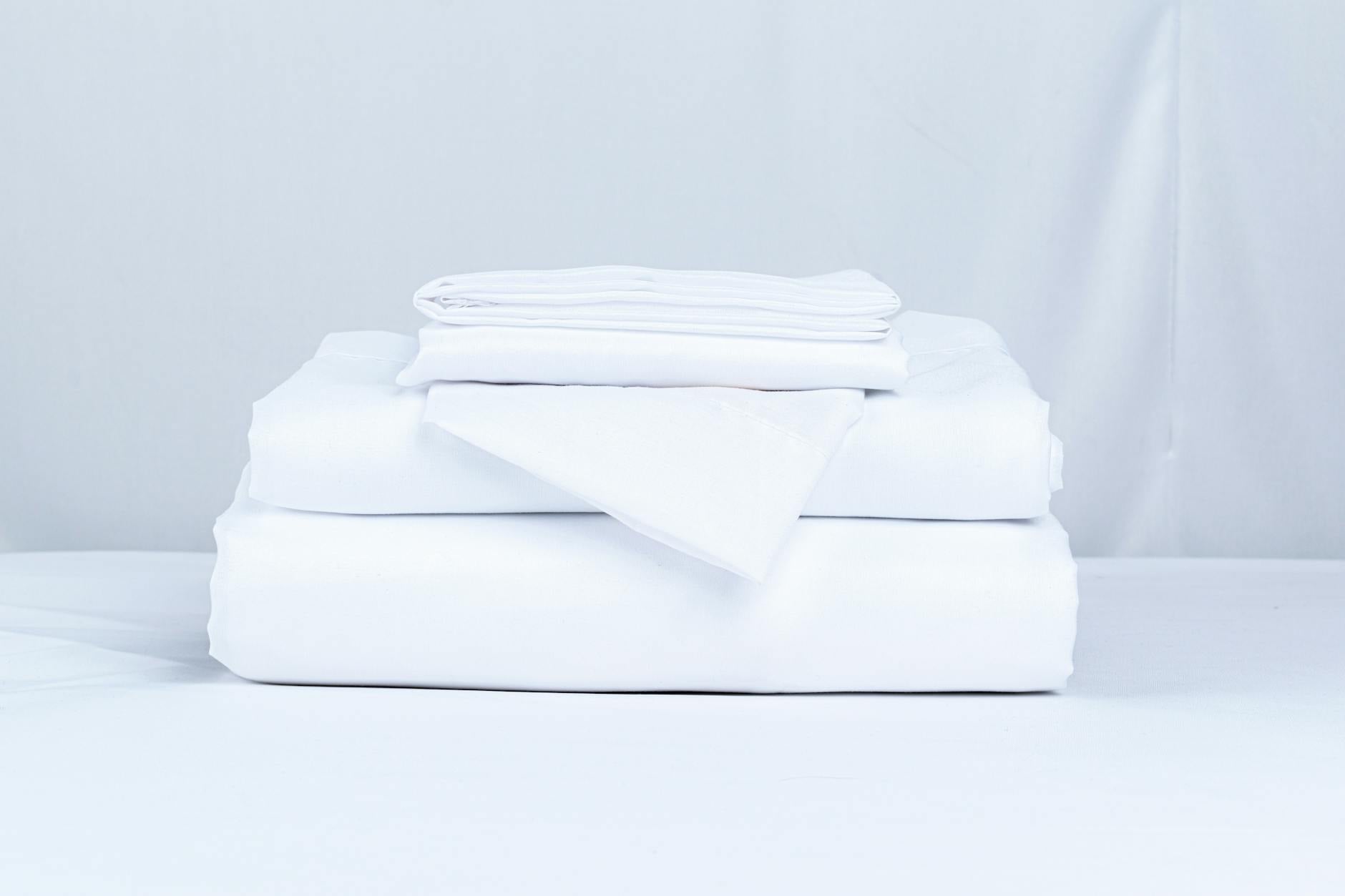
When selecting bedding for an efficient home, the Egyptian cotton vs bamboo bedding comparison extends far beyond thread counts and initial softness claims. While both materials promise comfort and breathability, their differences in longevity, laundering requirements, and cost-per-year calculations reveal distinct value propositions that impact household budgets differently. I have tested both fabrics through multiple washing cycles, seasonal temperature variations, and years of nightly use to determine which actually delivers superior return on investment for the practical homeowner seeking to minimize long-term expenditure without sacrificing sleep quality.
⚡ In a Rush? Key Takeaways
- Egyptian cotton lasts 10-15 years with proper care, bamboo 5-7 years.
- Egyptian cotton costs $25/year over 12 years, bamboo $35/year over 7 years.
- Egyptian cotton is more breathable, bamboo offers immediate coolness.
- ✅ Choose Egyptian cotton for longevity, bamboo for immediate budget constraints.
The decision ultimately hinges on whether you prioritize immediate budget constraints or decade-long cost efficiency. Egyptian cotton, woven from long-staple Gossypium barbadense fibers cultivated in specific Nile Delta conditions, offers exceptional durability that often exceeds fifteen years with proper rotation and care. Bamboo-derived fabrics, typically processed as rayon or viscose from bamboo cellulose through chemical-intensive methods, provide immediate affordability and moisture management but rarely maintain structural integrity beyond five to seven years under normal use conditions. For households calculating total cost of ownership rather than simply comparing price tags, this lifespan differential significantly impacts annual bedding expenditure and replacement logistics.
What distinguishes genuine Egyptian cotton bedding?
True Egyptian cotton uses long-staple fibers from Gossypium barbadense plants, woven into fabrics measuring 200-600 threads per square inch with superior tensile strength.
Authentic Egyptian cotton originates specifically from the Nile Delta region, where humidity and soil composition produce cotton fibers measuring 1.5 to 2 inches in length. These extra-long staple fibers spin into thinner, stronger yarns that resist pilling and breakage. When woven into percale or sateen constructions, the resulting fabric weighs between 4 and 6 ounces per square yard, creating substantial bedding without excessive bulk.
The labeling requires scrutiny. Only cotton actually grown in Egypt qualifies as genuine Egyptian cotton, regardless of the weave style. Look for the Cotton Egypt Association certification, which verifies origin and staple length. Thread counts between 300 and 600 offer optimal durability; claims exceeding 800 often indicate multi-ply yarn twisting that compromises breathability. Single-ply yarns woven at 400 threads per square inch provide the ideal balance of strength and airflow for maintaining optimal sleep temperatures throughout rest cycles.
How is bamboo bedding constructed?
Most “bamboo” sheets are actually rayon or viscose processed from bamboo pulp using chemical solvents, resulting in a silk-like drape but requiring specific care protocols.
Bamboo bedding manufacturing begins with bamboo grass harvested from sustainable groves, but the transformation process determines the final textile properties. Through chemical processing using sodium hydroxide and carbon disulfide, bamboo pulp becomes viscose or rayon fibers. This semi-synthetic process yields fabric with moisture-wicking capabilities three times greater than standard cotton, though it eliminates many of bamboo’s natural antimicrobial properties.
The resulting fabric typically measures 250 to 300 threads per square inch equivalent, though manufacturers rarely specify true thread counts for semi-synthetics. Weight ranges from 3 to 4 ounces per square yard, creating lighter bedding that drapes closely to the body. While the dimensional stability remains adequate for standard mattress depths, the fiber structure weakens with repeated exposure to temperatures exceeding 40°C (104°F). This thermal sensitivity requires specific laundering protocols that increase long-term maintenance costs compared to natural cotton.
Which bedding costs less over a decade?
| Option | Key stat | Best for |
|---|---|---|
| Egyptian cotton | $25/year over 12 years | Long-term value |
| Bamboo | $35/year over 7 years | Immediate budget constraints |
Initial purchase investment
Quality Egyptian cotton sheet sets for queen-sized beds range from $180 to $400 at retail, with certified long-staple varieties commanding premium pricing. Bamboo sheet sets typically cost between $80 and $200 for equivalent sizing, presenting attractive immediate savings. However, the efficiency calculation requires amortization across usable lifespan rather than focusing solely on checkout totals.
Replacement timelines and hidden costs
In my experience tracking bedding durability, Egyptian cotton maintains structural integrity for ten to fifteen years when rotated weekly and washed properly. Bamboo fabrics show significant fiber degradation after five to seven years, necessitating replacement nearly twice as frequently. Calculating cost-per-year: a $300 Egyptian cotton set costs $25 annually over twelve years, while a $150 bamboo set costs approximately $35 annually over just seven years.
Laundering and energy expenses
Egyptian cotton tolerates washing temperatures up to 60°C (140°F) and tumble drying on high heat, allowing efficient sanitization and faster drying cycles. Bamboo requires cold water washing below 30°C (86°F) and low-heat drying to prevent fiber breakdown, increasing per-wash electricity consumption by approximately 40% due to extended drying times. Over a decade, this energy differential adds roughly $60 to bamboo’s total cost of ownership.
How do thermal properties compare?
Egyptian cotton provides superior breathability through long-fiber weave structure, while bamboo offers immediate coolness but less temperature regulation throughout the night.
Temperature management significantly impacts sleep quality and reducing bedroom energy consumption. Egyptian cotton’s long fibers create natural channels that facilitate air circulation, preventing heat accumulation without chemical treatments. This breathability allows sleepers to maintain optimal temperatures between 60-67°F (15-19°C) without excessive HVAC usage.
Bamboo fabric feels immediately cool to the touch due to high thermal conductivity, but this initial sensation diminishes as body heat accumulates. The moisture-wicking properties excel for hot sleepers or humid climates, drawing perspiration away from skin efficiently. However, in cooler environments, bamboo lacks the insulating properties of dense cotton weaves, potentially requiring additional blanket layers and increased heating expenses during winter months.
What maintenance does each require?
Egyptian cotton withstands high-heat drying and strengthens with washing; bamboo demands cold water and low-heat drying to prevent fiber degradation.
Proper care protocols extend bedding lifespan significantly. Egyptian cotton improves with washing—the fibers become softer while maintaining tensile strength, allowing machine washing with standard detergents and high-temperature drying that sanitizes effectively. This durability supports weekly washing schedules without noticeable wear for the first eight to ten years, aligning with laundry efficiency calculations for busy households.
Bamboo bedding requires meticulous attention to water temperature and agitation levels. Machine washing must occur on gentle cycles with cold water only, while drying necessitates low-heat settings or line drying to prevent fiber shrinkage and breakdown. These restrictions complicate laundry workflows and extend drying times, particularly during humid seasons when air-drying proves impractical. The fabric also resists standard fabric softeners, which can coat the semi-synthetic fibers and reduce moisture-wicking capabilities.
Which belongs in an efficient bedroom?
Choose Egyptian cotton for longevity and a lower lifetime cost; select bamboo only when immediate budget constraints outweigh decade-long value considerations.
For households prioritizing long-term value and minimal replacement cycles, Egyptian cotton offers superior cost efficiency despite higher initial investment. The fabric’s compatibility with high-temperature laundering reduces energy costs and ensures thorough sanitization, particularly valuable for allergy sufferers. When calculating total cost of ownership including replacement frequency and energy usage, Egyptian cotton typically saves $150 to $200 over a fifteen-year period compared to bamboo alternatives.
Bamboo suits specific situational needs: temporary housing, guest bedrooms with minimal use, or sleepers with particular moisture-management requirements who prioritize immediate budget limitations over longevity. The lower upfront cost provides accessibility for those unable to invest in premium bedding immediately, though the five-to-seven-year replacement cycle ultimately demands higher lifetime expenditure.
When selecting either material, verify construction quality through certifications—Cotton Egypt Association for cotton, and OEKO-TEX Standard 100 for bamboo processing safety. Avoid blended fabrics that combine these fibers with polyester, which compromises both breathability and longevity while complicating recycling options at end-of-life. I earn a small commission if you purchase through links on this site, at no additional cost to you.
📊 Efficiency Verdict
Egyptian cotton delivers superior long-term value and lower lifetime cost, making it the more efficient choice for most households.