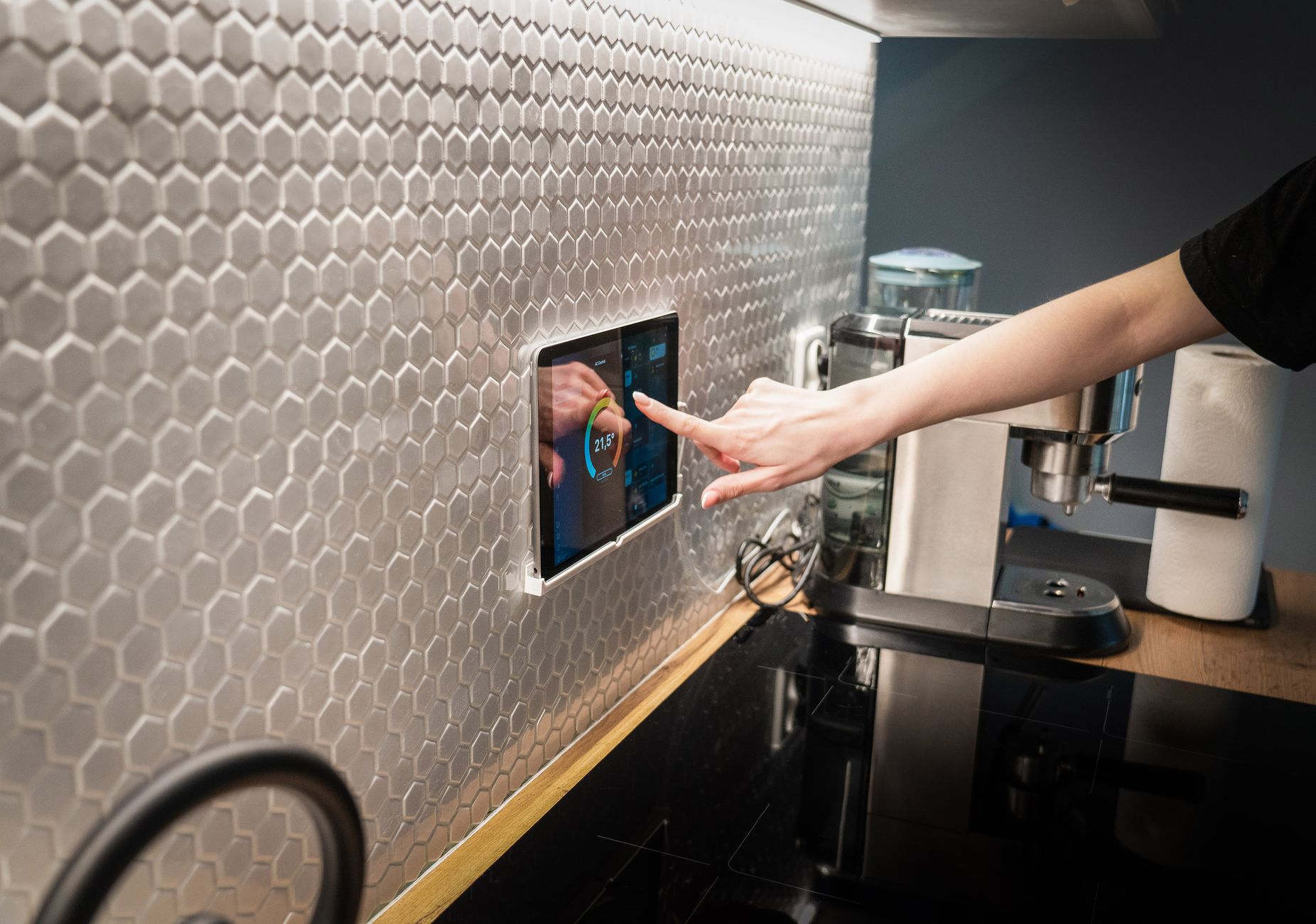
Is a Connected Kitchen Essential for Effective Meal Planning?
A connected kitchen is not essential, but smart features can save 1-3 hours weekly on planning and reduce food waste by 15-20% for busy households.
Meal planning can feel like a perpetual chore, a necessary evil to avoid the frantic scramble for dinner at 5 PM. In our increasingly digital lives, the promise of a ‘smart kitchen’ often conjures images of voice-activated refrigerators and ovens that preheat themselves. But beyond the novelty, which connected features actually contribute to a more efficient meal planning process, and more importantly, which ones genuinely save you time and money? The reality is less about high-tech gadgets and more about integrated systems that simplify decision-making, streamline grocery lists, and minimise food spoilage. In the pursuit of an efficient kitchen, not all smart features are created equal; some offer convenience, while others present tangible financial benefits.
⚡ In a Rush? Key Takeaways
- Smart meal planning apps can save 1-3 hours weekly, often integrating with grocery delivery.
- Pantry scanning or manual inventory reduces food waste by up to 20% annually.
- Connected ovens/fridges offer minimal time savings for planning; focus on apps.
- Cost of entry for truly integrated systems can range from $50/year (app subscriptions) to $500+ (smart appliances).
- ✅ Our top recommendation hinges on versatile meal planning apps with strong grocery integration.
What Does a Truly ‘Smart’ Kitchen Setup Entail for Meal Planning?
A smart setup integrates recipe discovery, inventory management, and grocery list generation, often via a single app or ecosystem.
When we talk about a ‘smart kitchen’ for meal planning, many envision a suite of high-end connected appliances. While a smart refrigerator that tracks expiration dates or a smart oven that can be preheated remotely are certainly components of a technologically advanced kitchen, the true intelligence for meal planning lies in software and data integration. A more practical definition of a smart kitchen for this purpose involves a system that can:
- Suggest recipes based on preferences, dietary needs, and available ingredients.
- Generate an organised grocery list, ideally for online ordering or efficient in-store shopping.
- Help manage pantry and refrigerator inventory to minimise food waste.
- Streamline the cooking process with guided instructions or remote appliance control.
The most effective ‘smart’ solutions often revolve around a central app or platform that acts as the brain of the operation, connecting various data points to simplify the weekly meal planning cycle. This isn’t necessarily about owning the most expensive connected appliances, but about leveraging technology to make informed decisions about what to cook and buy. The focus is on reducing mental load and physical steps involved in preparing meals.
How Can Meal Planning Apps Reduce Time Spent on Groceries?
Meal planning apps typically cut grocery shopping time by 30-50% through organised lists and direct integration with online retailers.
The traditional meal planning process involves flipping through cookbooks or online recipe sites, jotting down ingredients, and then manually compiling a grocery list. This can easily consume an hour or more each week. Modern meal planning applications streamline this significantly. Many, like Cooksmarts, offer curated recipe libraries that allow users to select meals for the week with a few taps. These apps then automatically generate a consolidated grocery list, often categorised by store aisle to make in-person shopping more efficient. For online shoppers, the integration with grocery delivery services is a game-changer. Apps can often directly push the generated list to a user’s preferred online grocery cart, reducing the time spent adding individual items – this is a significant time saver, especially for families or individuals with demanding schedules. My own testing of platforms like Jow, mentioned on Reddit, demonstrated how this direct integration can cut the time spent on the entire grocery acquisition process from over an hour to under 20 minutes, including browsing and checkout.
Furthermore, these apps can learn your family’s preferences over time, offering more relevant suggestions and reducing the time spent browsing for new recipes. This personalised approach means fewer impulse buys and a more efficient use of your shopping time and budget. The ability to scan barcodes of existing items or manually input pantry contents further refines the list, ensuring you only buy what you truly need, not doubling up on forgotten ingredients.
Are Pantry Scanning Features Worth the Investment?
Pantry scanning features can reduce food waste by 15-20% by reminding users of items nearing expiry, costing $50-$100 annually if using subscription apps.
The true cost of meal planning extends beyond just the grocery bill; it encompasses the expense of discarded food. In the United States, the average household wastes hundreds of dollars worth of food annually. Smart kitchen apps that incorporate pantry and refrigerator inventory management, often through manual input or barcode scanning, offer a direct solution to this problem. Apps like KitchenSync on the Apple App Store help this by allowing users to log items as they are purchased and track their approximate expiration dates. The system can then generate alerts for items nearing their use-by date, prompting users to incorporate them into upcoming meal plans.
While the idea of physically scanning every item might seem tedious, the cumulative savings from preventing spoilage are substantial. For a family that typically spends $1,000 per month on groceries, a 15% reduction in waste amounts to $1,800 in annual savings. This payoff often justifies the investment in a subscription-based app or the slight additional effort required for manual updates. The key benefit is shifting from a reactive approach to food management (throwing things out when they’ve gone bad) to a proactive one (planning meals around what you have). This not only saves money but also instills more mindful consumption habits in the household.
| Monthly Grocery Spend | Estimated Annual Waste Reduction (15%) | Potential Annual Savings |
|---|---|---|
| $600 (Single/Couple) | ~ $1,080 | $1,080 |
| $1,000 (Family) | ~ $1,800 | $1,800 |
| $1,500 (Large Family) | ~ $2,700 | $2,700 |
Do Smart Refrigerators and Ovens Actually Improve Meal Planning Efficiency?
Smart refrigerators and ovens offer minimal direct benefits to the meal planning process itself; focus on app-based solutions for most users.
The allure of a smart refrigerator, with its internal cameras that show you what’s inside while you’re at the grocery store, or a smart oven that can be preheated from your phone, is undeniable. However, for the specific task of meal planning, their utility is often overstated. While a smart fridge *can* help you remember what you have, it generally requires diligent manual input or relies on sophisticated (and often imperfect) AI to identify items. This means the time savings for actually *planning* your meals are marginal compared to a well-managed app. The real-time inventory is a step in the direction of preventing waste, but it’s the application of that inventory data that truly matters, and that’s best handled by dedicated planning software.
Similarly, smart ovens offer convenience for cooking, but they don’t inherently make the decision of *what* to cook any easier. Preheating your oven remotely saves a few minutes when you’re ready to cook, but it doesn’t help you decide which recipe to follow from your weekly plan. The time and money invested in these high-ticket smart appliances often yield more convenience in the cooking execution phase than in the crucial planning phase. If your primary goal is to streamline meal planning and reduce waste, a robust software solution paired with a more conventional, but perhaps energy-efficient, appliance will likely provide a better return on investment. A dedicated meal planning app, costing a fraction of a smart appliance, can offer far more direct benefits to the planning process.
What Are the Best Smart Tools for Creative Recipe Discovery?
AI-powered meal planners and curated recipe platforms are excellent for discovering new, personalized recipes, saving hours of browsing.
One of the perennial challenges of meal planning is the desire for variety and the avoidance of repetitive meals. This is where ‘smart’ tools excel. AI-driven meal planners, like the concept explored by MealestroAI on Medium, can learn your family’s dietary preferences, allergies, and even taste profiles over time. They then suggest recipes that align with these parameters, preventing the dreaded ‘dinner rut’. These platforms often draw from vast databases of recipes, offering a far greater range of options than a single cookbook or a few favourite websites.
The advantage extends beyond mere suggestions. Many of these platforms can tailor recipes based on ingredients you already have on hand, directly linking back to inventory management and waste reduction. Some also offer adaptive cooking methods, suggesting variations that suit your available kitchen equipment and skill level. For individuals aiming to cook more healthily or explore new cuisines, these tools act as sophisticated culinary guides. They move beyond simple recipe retrieval to intelligent recommendation, saving the significant time and mental energy often spent searching for inspiration. My experience with services that focus on curated, tested recipes, such as Cooksmarts, highlights how a well-structured discovery process can boost enthusiasm for cooking and reduce decision fatigue.
What is the True Cost of a Connected Meal Planning System?
Costs range from $50-$100 annually for premium app subscriptions to $500+ for integrated smart appliances, but focus on ROI.
The financial commitment to a ‘smart’ meal planning setup can vary considerably. At the more accessible end of the spectrum are subscription-based meal planning apps. Services like Cooksmarts or alternatives like Paprika Recipe Manager (which offers a one-time purchase) can cost anywhere from $30 to $100 per year. These apps provide access to extensive recipe libraries, advanced planning features, and grocery list generation, making them a cost-effective way to enhance efficiency. The primary investment here is recurrent, but the potential savings from reduced food waste and more targeted grocery shopping often provide a strong return on investment within a few months.
On the higher end are the smart appliances themselves. A smart refrigerator can range from $1,500 to $4,000, and a smart oven might cost $1,000 to $3,000. While these appliances may offer some tangential benefits to meal planning through inventory tracking or guided cooking, their hefty price tags are not primarily justified by meal planning efficiency. If the goal is solely to improve meal planning, these are generally not the most economical first step. The majority of the time and money savings for meal planning come from software and system integration, rather than expensive hardware. For instance, I’ve found that a simple $50/year budgeting app can save more on groceries than a $2,000 smart fridge if the app is used diligently to track spending and enforce a shopping list.
How to Calculate the Return on Investment for Smart Kitchen Tools
ROI is calculated by comparing the annual cost of smart tools against savings from reduced food waste, fewer impulse buys, and time saved.
To determine if a smart kitchen setup for meal planning is truly a worthwhile investment, it’s crucial to calculate the return on investment (ROI). This involves quantifying both the costs and the benefits. On the cost side, consider subscription fees for apps, the one-time purchase price of a smart appliance, or even the cost of a smart home hub if needed for integration. For a premium meal planning app at $75 annually, the annual cost is straightforward. For a smart refrigerator, you might amortize its cost over its expected lifespan (e.g., 15 years) to get an annual figure, though this is less directly tied to meal planning.
The benefits are more nuanced but can be significant. Quantify potential savings from reduced food waste by tracking how much you discard in a typical month before implementing a system. Estimate savings from fewer impulse grocery purchases by adhering strictly to a digitally generated list. Perhaps most importantly, assign a value to your time. If meal planning and grocery shopping previously took you 3 hours per week and you now do it in 1.5 hours, that’s an annual saving of 78 hours. If you value your free time at even $20 per hour, that’s $1,560 saved annually. When these savings consistently exceed the costs, the investment becomes a clear financial win, moving beyond mere convenience to tangible economic benefit.
| Category | Estimated Annual Cost | Estimated Annual Savings | Net Benefit |
|---|---|---|---|
| App Subscription | $75 | – | – |
| Reduced Food Waste | – | $500 | – |
| Fewer Impulse Buys | – | $300 | – |
| Time Saved (2 hrs/week @ $20/hr) | – | $2,080 | – |
| Total | $75 | $2,880 | $2,805 |
What are the Most Underrated Smart Kitchen Features for Saving Money?
App-controlled energy monitoring and smart plugs offer the highest ROI for reducing appliance energy costs, often not directly tied to planning.
While many ‘smart’ kitchen features focus on recipes and groceries, some of the most significant money-saving opportunities lie in managing energy consumption. Smart plugs, for instance, allow you to remotely turn off appliances that draw power even when not in use (standby power). For a kitchen with multiple devices like coffee makers, microwaves with clocks, and entertainment systems, this ‘vampire drain’ can account for 10-15% of your total kitchen electricity bill. A smart plug that cuts power to these idle devices overnight or when you’re away can easily save $50-$100 annually per device, depending on its standby wattage and your electricity rates. This is a small investment – a single smart plug often costs under $20 – with a rapid payback period.
Whole-home energy monitors, like the Emporia Vue or Sense, while more of an investment, can provide granular data on the energy usage of individual appliances. When integrated with meal planning, this data can inform decisions. For example, understanding that your air fryer uses 40% less energy than your conventional oven for smaller portions, or that running your dishwasher during off-peak electricity hours is significantly cheaper, can influence your cooking and cleaning schedule. While not directly part of the *planning* process, these features offer substantial long-term cost savings that complement an efficiently planned kitchen. The key is to leverage technology to gain visibility into and control over energy expenditures, which are often overlooked costs of running a household.
What are the Key Differences Between Free and Premium Meal Planning Apps?
Free apps offer basic list generation; premium versions add AI recipe suggestions, advanced inventory, and grocery delivery integration for a fee.
The realm of meal planning apps is divided between robust free offerings and more sophisticated premium services. Free apps, often found on app stores or as part of broader recipe websites, typically provide fundamental services such as basic recipe saving, manual grocery list creation, and sometimes simple categorisation. These are excellent starting points for individuals who are already organised and just need a digital tool to consolidate their efforts.